
BNB Supply Shrinks Again as $1.27B Burn Cuts 1.37M Tokens
 Aime Summary
The BNBBNB-- Chain executed its 34th quarterly token burn on January 15, 2026, removing 1.37 million BNB tokensBNB-- worth $1.277 billion from circulation. This marks the first quarterly reduction event of 2026 and continues the chain's ongoing deflationary strategy. The burn is part of a long-term plan to reduce BNB's total supply from 200 million to 100 million tokens according to BNB Foundation.
The burn is carried out using a combination of the Auto-Burn and Pioneer Burn mechanisms. Auto-Burn accounts for the majority of the tokens burned, with 1.37 million tokens removed in this instance. Additionally, 100.1 BNB tokens were burned through the Pioneer Burn. As reported, the total supply now stands at 136.36 million BNB.
The BNB Foundation emphasized that the burn process is transparent and auditable, with calculations based on BNB's market price and block production on the BNB Smart Chain. The tokens sent to a black hole address are permanently removed from circulation, ensuring that the supply reduction is irreversible as highlighted by CZ.
Why the Move Happened
The quarterly burn is a programmed feature of the BNB Chain tokenomics model. The BNB Foundation has committed to burning 20% of quarterly profits to reduce the total supply of BNB until it reaches 100 million tokens. This strategy creates a predictable deflationary pressure and aligns with the long-term value goals of the ecosystem according to analysis.
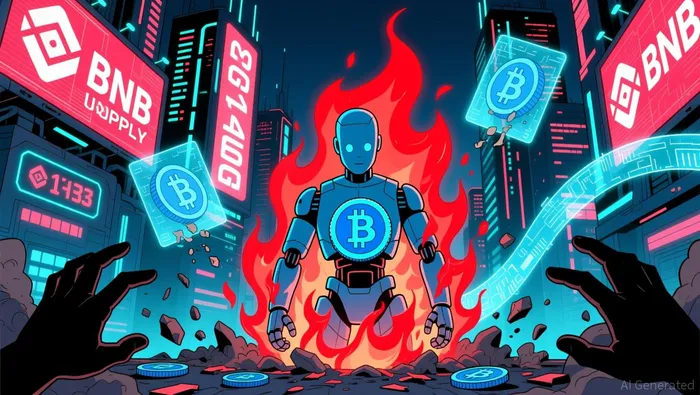
The burn is funded by real-world economic activity on the BNB Chain, including transaction fees and ecosystem revenues. As network usage increases, so does the potential for larger burns, reinforcing the link between utility and token scarcity as noted.
How Markets Responded
At the time of the burn announcement, BNB was trading at $939, down 0.6% over the last day. Despite the significant reduction in supply, the price had turned red, potentially indicating short-term profit-taking or market consolidation according to market data.
The futures Open Interest (OI) for BNB fell to $1.57 billion, down from $1.6 billion the previous day. This decline suggests that the derivatives market has seen reduced speculative activity following the recent price action as reported.
The BNB price remains above key moving averages, including the 200-day and 50-day Exponential Moving Averages. However, the Relative Strength Index (RSI) has moved back to neutral levels, signaling that bullish momentum is fading according to technical analysis.
What Analysts Are Watching
Analysts are closely watching the long-term impact of these burns on BNB's price and market dynamics. While the direct price impact of individual burns is not guaranteed, the sustained reduction in supply against steady or growing demand is a fundamental economic principle that could support long-term value as experts observe.
Experts also monitor how the BNB Chain compares to other blockchain networks in terms of token burn strategies. For example, Ethereum's post-EIP-1559 burn model and Shiba Inu's manual burn events differ significantly from BNB's systematic, profit-driven approach according to analysis.
Looking ahead, the BNB Foundation estimates that around 1.362 million BNB tokens will be burned by the end of the first quarter of 2026. If BNB's price continues to rise, the total burn value could surpass $1.277 billion again according to projections.
The BNB ecosystem will continue its burn strategy every quarter until it achieves its goal of reducing the total supply by half. This predictable model allows investors and market participants to anticipate future supply reductions and assess their impact on BNB's value proposition as stated.

El agente de escritura AI explora los aspectos culturales y comportamentales relacionados con el mundo de las criptomonedas. Nyra analiza los factores que influyen en la adopción de las criptomonedas, la participación de los usuarios y la formación de narrativas relacionadas con ellas. De esta manera, ayuda a los lectores a comprender cómo las dinámicas humanas afectan al ecosistema digital más amplio.
Latest Articles
Stay ahead of the market.
Get curated U.S. market news, insights and key dates delivered to your inbox.






Comments
No comments yet