
BNB's Institutional Adoption and Real-World Use Cases: A Catalyst for Altcoin Dominance?


 Aime Summary
In 2025, Binance Coin (BNB) has emerged as a linchpin in the evolving narrative of institutional crypto adoption, particularly in emerging markets. The asset's trajectory is no longer defined by speculative fervor alone but by a confluence of strategic partnerships, regulatory alignment, and real-world utility. As traditional financial institutionsFISI-- and corporations increasingly integrate BNBBNB-- into their portfolios and operations, the question arises: Can this altcoin transcend its speculative roots to become a cornerstone of institutional-grade digital assets?
Institutional Partnerships: Bridging the GapGAP-- Between Compliance and Innovation
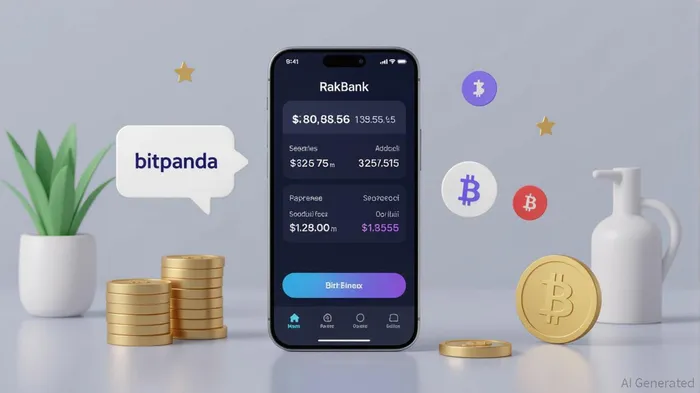
The UAE's RAKBANK, a titan in the region's financial sector, has taken a bold step by embedding BNB into its mobile banking platform. This partnership with Bitpanda, a MENA-regulated fintech, allows customers to trade BNB directly against the UAE Dirham (AED), bypassing foreign exchange intermediaries. The move is emblematic of a broader trend: institutions are no longer merely “holding” crypto but actively building infrastructure to make it functional for everyday users.
Meanwhile, China Renaissance's $100 million investment in BNB—its first foray into crypto by a Hong Kong-based institution—signals a shift in risk appetite. This capital injection, paired with a partnership to develop regulated BNB-based products, underscores the asset's growing legitimacy. The Hong Kong Monetary Authority's stablecoin licensing regime, effective August 1, 2025, further legitimizes such moves by ensuring compliance with investor protections.
Regulatory Clarity: The UAE and Hong Kong as Laboratories of Adoption
Regulatory frameworks in the UAE and Hong Kong have created fertile ground for BNB's institutional ascent. The UAE's multi-layered oversight—spanning VARA, SCA, and ADGM—has transformed the country into a crypto-friendly jurisdiction. With a 0% capital gains tax and low corporate tax rates, it's no surprise that over $30 billion in crypto-related investments flowed into the region in 2024, with BNB at the forefront.
Hong Kong's stablecoin licensing regime, meanwhile, has provided a blueprint for balancing innovation with investor safety. By mandating transparency and liquidity safeguards, the HKMA has enabled institutions like China Renaissance to allocate capital to BNB without compromising regulatory compliance. This alignment is critical: it reduces counterparty risk and fosters trust, two barriers that have historically hindered institutional crypto adoption.
Corporate Adoption: From Treasury Reserves to Tokenized Assets
Beyond banks, corporations are redefining BNB's utility. CEA Industries' $1.25 billion BNB acquisition and Nano Labs' $1 billion commitment highlight the asset's appeal as a treasury reserve. These moves are driven by BNB's deflationary mechanics—systematic token burns that reduce supply and create scarcity—making it a hedge against inflation in volatile markets.
Windtree Therapeutics' $520 million BNB acquisition via Kraken custody further illustrates a shift in corporate strategy. No longer viewed as a speculative play, BNB is now being integrated into long-term financial planning. Hedge funds and SPACs are following suit, with some allocating up to 5% of their portfolios to BNB-based ETFs.
The real-world asset (RWA) tokenization wave has also amplified BNB's relevance. China Renaissance's RWA fund, which tokenizes real estate and commodities on the BNB Chain, is a case in point. By anchoring digital assets to tangible value, these initiatives address one of crypto's most persistent criticisms: lack of real-world use.
Emerging Markets: BNB as a Cross-Border Catalyst
In countries like Vietnam, the Philippines, and Brazil, BNB is becoming a lifeline for cross-border transactions. With traditional banking systems strained by inflation and currency volatility, BNB's low-cost, high-speed transfers are filling critical gaps. Thailand's Tether endorsement of USDTUSDC-- for cross-border payments further cements the region's role as a BNB hub.
Investment Implications: A New Paradigm for Altcoin Allocation
For investors, BNB's institutional adoption presents a compelling case. The asset's dual role as a utility token and a store of value—bolstered by regulatory tailwinds and corporate demand—positions it as a hybrid between traditional equities and speculative crypto. However, risks remain: regulatory shifts in key markets or a slowdown in token burns could dampen momentum.
A strategic allocation to BNB should consider its role in diversified portfolios. For risk-tolerant investors, a 3–5% allocation to BNB-based ETFs or tokenized RWAs could offer exposure to emerging markets' growth while hedging against fiat devaluation. Conservative investors, meanwhile, might prioritize BNB's utility in regulated platforms like RAKBANK's app, where compliance mitigates volatility.
Conclusion: The Altcoin That Could
BNB's 2025 ascent is not a flash in the pan but a calculated evolution. By aligning with institutional-grade infrastructure, regulatory clarity, and real-world demand, it has transcended its origins as a speculative altcoin. For investors, the challenge lies in balancing optimism with caution: BNB's potential is vast, but its success hinges on sustained institutional confidence and regulatory stability. In a world where digital assets are no longer an alternative but a necessity, BNB's institutional adoption may well define the next chapter of crypto's journey.

Decoding blockchain innovations and market trends with clarity and precision.
Latest Articles
Stay ahead of the market.
Get curated U.S. market news, insights and key dates delivered to your inbox.


AInvest
PRO
AInvest
PRO



Comments
No comments yet