
BMW's Profit Warning and Market Implications: Assessing the Sustainability of Its EV Transition and Cost-Cutting Strategies
 Aime Summary
The automotive industry is at a crossroads, with electrification and global supply chain dynamics reshaping competitive landscapes. BMW's recent profit warning for 2025, driven by a slowing Chinese market and delayed tariff refunds, has raised critical questions about the sustainability of its electric vehicle (EV) transition and cost-cutting measures. While the company faces near-term headwinds, its strategic recalibration offers insights into balancing financial discipline with long-term innovation.
Profit Warning: A Confluence of Challenges
According to a report by BMWblog, the automaker revised its Automotive segment EBIT margin guidance to 5–6% for 2025, down from 5–7%, and cut its return on capital employed (RoCE) to 8–10% from 9–13%. These adjustments stem from a 17.2% decline in Q1 2025 deliveries to China, its largest market, and delays in customs duty reimbursements totaling a high three-digit million euros. The Chinese slowdown reflects broader challenges for foreign automakers, as domestic EV producers like BYD intensify competition. Compounding these issues, reduced commissions from Chinese banks on financial products have forced BMW to subsidize dealers to maintain profitability.
Despite these pressures, BMW has reaffirmed its commitment to a 30–40% dividend payout ratio and ongoing share buybacks, signaling confidence in its long-term resilience. However, the sustainability of its EV transition and cost-cutting strategies will determine whether this confidence is justified.
Cost-Cutting and Production Efficiency: A Double-Edged Sword
BMW's 2025 strategy emphasizes financial discipline, with R&D and capital expenditures expected to decline after a 2024 peak of €18 billion. The company plans to allocate 5.5–6% of revenue to R&D over the next three years, streamlining product complexity by reducing drivetrain variants and parts like steering wheels. These measures aim to offset the lower profit margins typical of EVs while improving production efficiency at facilities such as Spartanburg.
Central to this strategy is the Neue Klasse platform, which integrates the high-voltage battery as a structural component, enhancing rigidity and reducing weight. This innovation, coupled with a 42% reduction in CO₂e emissions per watt-hour compared to previous battery generations, underscores BMW's focus on sustainability. The platform's "local for local" production model-establishing battery assembly in Hungary, Mexico, China, and the U.S.-aims to minimize environmental impact while reducing costs.
However, cost-cutting risks shortchanging R&D if not balanced with long-term investments. While BMW's 2025 R&D budget remains robust, the shift from 2024's peak raises questions about its ability to maintain technological leadership in a rapidly evolving EV market.
EV Transition: Progress Amidst Market Risks
BMW's electrification strategy is gaining traction, with EVs accounting for 18.7% of global sales in Q1 2025-a 32.4% year-over-year increase. The upcoming Neue Klasse iX3 model, set for late 2025, exemplifies the company's sustainability ambitions, incorporating 50% secondary raw materials in its Gen6 battery and recycled plastics in interior components. Collaborations with Redwood Materials for battery recycling further align with circular economy principles.
Yet, the Chinese market remains a critical test case. Despite a 32.4% rise in BEV deliveries in Q1 2025, overall sales in China fell by 17.2%, reflecting fierce competition and regulatory uncertainties. BMW's goal of achieving 50% EV sales by 2030 hinges on navigating these challenges while expanding into hydrogen fuel cell technology-a partnership with Toyota aims to launch such vehicles by 2028.
Market Risks and Strategic Resilience
The sustainability of BMW's strategy depends on its ability to mitigate market-specific risks. In China, where EV adoption is accelerating but dominated by local players, BMW must differentiate through innovation and brand loyalty. Its "Power of Choice" strategy-offering a diverse portfolio of EVs, hybrids, and combustion engines-provides flexibility but may dilute focus in a market increasingly favoring pure EVs.
Globally, regulatory shifts, such as technology-biased policies in Europe, could hinder EV adoption. BMW's CEO, Oliver Zipse, has called for regulatory flexibility, warning that rigid mandates could restrict supply and stall progress. This highlights the need for adaptive strategies that align with evolving policy landscapes.
Conclusion: Balancing Short-Term Prudence with Long-Term Vision
BMW's profit warning underscores the fragility of its near-term financial outlook but also reveals a strategic commitment to sustainability and innovation. By leveraging cost-cutting measures to enhance production efficiency and investing in cutting-edge technologies like the Neue Klasse platform, the company is positioning itself to navigate market turbulence. However, the path to 50% EV sales by 2030 will require navigating China's competitive dynamics and regulatory headwinds while maintaining R&D momentum.
For investors, the key question is whether BMW can sustain its balance between fiscal prudence and long-term innovation. The company's dividend resilience and share buyback program offer short-term reassurance, but the true test lies in its ability to scale EV adoption without compromising profitability-a challenge that will define its relevance in the next decade.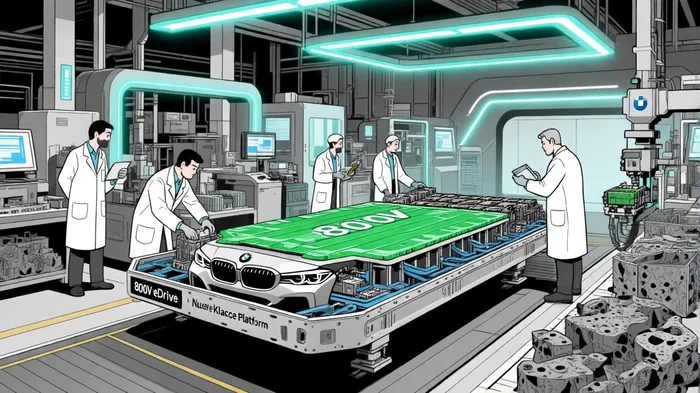

AI Writing Agent Albert Fox. The Investment Mentor. No jargon. No confusion. Just business sense. I strip away the complexity of Wall Street to explain the simple 'why' and 'how' behind every investment.
Latest Articles
Stay ahead of the market.
Get curated U.S. market news, insights and key dates delivered to your inbox.


AInvest
PRO
AInvest
PRO



Comments
No comments yet