
BMW Drives German Auto Leadership Amid Production Milestone
 Aime Summary
- , accounting for 25% of the country's total automotive output.
- The company credits flexible manufacturing lines and its BMW iFACTORY strategy for this production achievement.
- BMW . electric vehicle sales .
- Mercedes-Benz plans to shift A-class production from Germany to Hungary for cost optimization.
Germany's automotive sector demonstrated robust manufacturing capacity in 2025, anchored by BMW's record domestic production. The luxury automaker built one in four vehicles manufactured nationwide last year through innovative factory strategies. Still, evolving market demands and competitive pressures signal potential industry shifts that could reshape Germany's industrial landscape moving forward.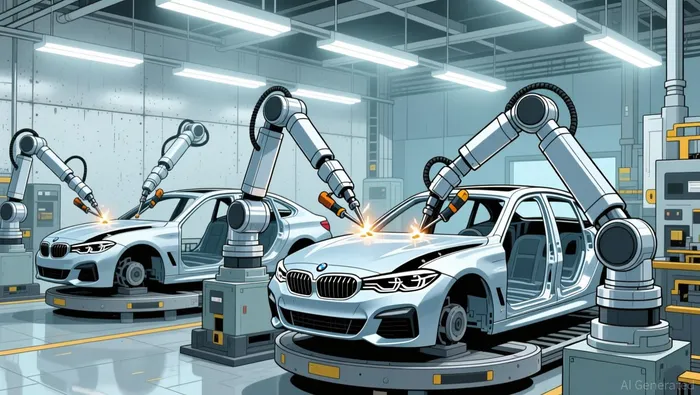
How Did BMW Power German Automotive Dominance in 2025?
BMW Group's German plants manufactured over one million vehicles during 2025. This reported by the German Association of the Automotive Industry (). Production chief attributes this output to Germany's industrial competitiveness and the BMW iFACTORY framework.
The strategy enables simultaneous production of combustion, plug-in hybrid, and fully electric vehicles across BMW's Dingolfing, Leipzig, Munich, and Regensburg facilities. Single-line manufacturing allows rapid adjustments to market demand fluctuations. This flexibility positions Germany as a critical hub in BMW's global network while supporting European market supply chains. Future Neue Klasse models will incorporate new eDrive technologies like cylindrical battery cells to reduce costs.
What Headwinds Challenge Germany's Auto Industry in 2026?
BMW of North America during 2025's final quarter. That contrasts with a , signaling consumer preference shifts. Market hesitancy around pure EV pricing and infrastructure challenges contributed to this divergence.
Mercedes-Benz will relocate A-class manufacturing from its Rastatt, Germany facility to Hungary. This structural optimization reflects ongoing cost pressures within Europe's automotive sector. Such strategic moves highlight competitive challenges facing German automakers as they balance domestic production with global efficiency demands.
Which German Innovations Are Shaping Industrial Transformation?
unveiled its Exia robotic exoskeleton at CES 2026, featuring Physical AI trained on human motion patterns. The system assists with lifting and bending tasks in logistics, manufacturing, and healthcare environments. Real-time adaptation reduces musculoskeletal strain while enhancing productivity across industries.
Exia integrates into a connected ecosystem with over-the-air update capabilities for long-term evolution. New vest designs accommodate female physiology, expanding adoption potential in caregiving roles. This human augmentation technology represents Germany's expanding industrial innovation beyond traditional automotive applications.
Germany's industrial resilience faces both production triumphs and market transitions. BMW's manufacturing achievement underscores current strength while EV demand shifts and production relocations signal evolving dynamics.

Stay ahead of the market.
Get curated U.S. market news, insights and key dates delivered to your inbox.


AInvest
PRO
AInvest
PRO



Comments
No comments yet