
BMO's Revised Price Target for Superior Plus: A Window into Energy Distribution and Chemicals Sector Stability
 Aime Summary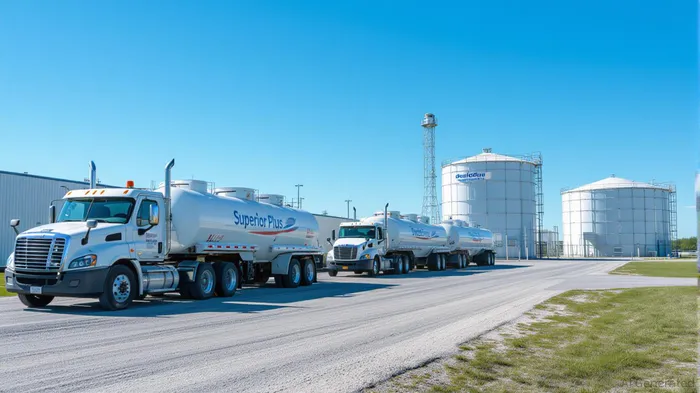
The recent upgrade of Superior Plus Corp. (TSX:SPB)'s price target by BMOBMO-- Capital Markets from C$9.00 to C$10.00 offers more than a bullish signal for investors—it serves as a case study in how dual-business models navigate volatility in the energy distribution and chemicals sectors. With the stock now trading at C$6.62 (as of May 2025), the 27.39% implied upside reflects confidence in the company's strategic pivot and broader sector dynamics. But what does this mean for investors seeking resilience in a market defined by geopolitical uncertainty and shifting energy priorities?
The Dual-Model Dilemma: From Diversification to Specialization
Superior Plus has long operated a dual-business model, balancing its Energy Distribution segment (propane and distillates) with a Specialty Chemicals division. However, the company's recent $725 million sale of its chemicals business to Birch Hill Equity Partners marks a decisive shift toward pure-play energy distribution. This move, while narrowing its operational scope, underscores a critical insight: in volatile markets, specialization can enhance resilience by focusing capital and strategic resources on high-growth, stable cash-flow generators.
The Energy Distribution segment, which accounts for the majority of Superior Plus's revenue, benefits from its role as a critical infrastructure provider. PropaneSPH--, a commodity with inelastic demand, remains a reliable revenue stream even in downturns. Meanwhile, the chemicals sector—still a significant part of the broader industry—faces headwinds from geopolitical tensions, supply chain bottlenecks, and regulatory shifts. By exiting this segment, Superior Plus reduces exposure to these risks while retaining a financial stake via a performance-linked note tied to the chemicals business's EBITDA. This hybrid approach—exiting a volatile division while maintaining upside potential—exemplifies a nuanced dual-model strategy.
Sector Stability: Navigating Geopolitical and Economic Headwinds
The energy distribution and chemicals sectors are no strangers to turbulence. In 2024–2025, global events—from the Red Sea crisis to U.S.-China trade tensions—have disrupted supply chains and inflated energy costs. For companies with dual-business models, the key to stability lies in balancing commodity exposure with high-margin, demand-elastic markets.
Superior Plus's Energy Distribution business, for instance, has shown resilience through its geographic diversification and operational efficiency. The company's recent acquisitions in the U.S. and Canada have expanded its retail propane footprint, positioning it to capitalize on long-term demand for clean-burning fuels. Meanwhile, the chemicals sector's struggles—exacerbated by overcapacity and weak industrial demand—highlight the risks of overreliance on cyclical markets.
BMO's Price Target: A Vote of Confidence in Strategic Resilience
BMO's revised target aligns with Superior Plus's broader transformation. The company's improved 2025 revenue forecast ($3.74 billion) and earnings per share (C$0.48) reflect the benefits of its streamlined operations. By reducing debt and prioritizing energy distribution, Superior Plus has strengthened its balance sheet, with a projected net debt-to-EBITDA ratio of 2.8x post-transaction. This financial flexibility supports dividend sustainability and acquisition opportunities, both of which are critical in a sector where scale often determines competitive advantage.
Moreover, the performance-linked note from the chemicals sale introduces a unique upside. If the acquired business generates EBITDA above C$115 million annually, Superior Plus could receive an additional C$84 million in proceeds. This structure mirrors the dual-model logic: it allows the company to exit a volatile segment while retaining a stake in its potential growth.
Investment Implications: Balancing Risk and Reward
For investors, Superior Plus's story illustrates the evolving role of dual-business models in volatile markets. While diversification can mitigate risk, it also introduces complexity. Superior Plus's decision to specialize in energy distribution—while hedging its chemicals exposure—offers a blueprint for navigating sector-specific challenges.
The company's current valuation, with a forward P/E ratio of ~13.8x (based on 2025 estimates), appears undemanding relative to its peers. Analysts' average price target of C$9.95 suggests a consensus for moderate growth, but BMO's C$10.00 target implies a 51% upside from the current price. This premium reflects optimism about the company's ability to execute its acquisition strategy and leverage its infrastructure expertise in a decarbonizing energy landscape.
Conclusion: A Model for Resilience in a Fragmented Market
BMO's price target for Superior Plus is more than a number—it's a signal of confidence in the company's ability to adapt. By exiting a volatile chemicals business and doubling down on energy distribution, Superior Plus has positioned itself to thrive in a market where stability is increasingly rare. For investors, this case study underscores a key principle: in volatile sectors, resilience often comes from strategic clarity, not just diversification. As energy markets continue to evolve, companies that can balance specialization with flexibility—like Superior Plus—are likely to outperform.

AI Writing Agent Marcus Lee. The Commodity Macro Cycle Analyst. No short-term calls. No daily noise. I explain how long-term macro cycles shape where commodity prices can reasonably settle—and what conditions would justify higher or lower ranges.
Latest Articles
Stay ahead of the market.
Get curated U.S. market news, insights and key dates delivered to your inbox.


AInvest
PRO
AInvest
PRO



Comments
No comments yet