
BMO's Office of Reconciliation: A Strategic Play for Indigenous Partnerships and Resource Sector Growth
The Bank of MontrealWTID-- (BMO) has taken a pivotal step in advancing reconciliation with Indigenous communities through the launch of its Office of Reconciliation in June 2025. This initiative, outlined in the bank's fifth annual Indigenous Partnerships and Progress Report, positions BMO as a leader in fostering economic empowerment, education, and employment for Indigenous peoples—strategic moves with profound implications for Canada's resource sector and broader investment landscape.
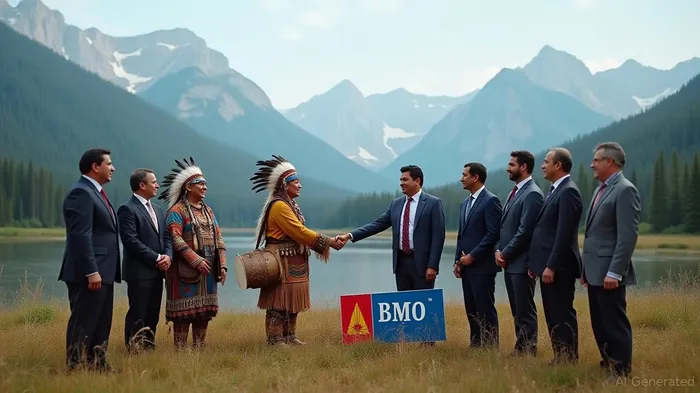
The Strategic Pillars: Beyond Symbolism to Substance
BMO's Office of Reconciliation is not merely a PR gesture but a structured, enterprise-wide strategy rooted in three pillars: Education, Employment, and Economic Empowerment. Under the leadership of Dan Adams (formerly of BMO's Indigenous Banking Unit), the office aims to embed reconciliation into BMO's operational fabric. Key initiatives include:
- Financial Services for Indigenous Communities: BMO provides over $16 billion in banking services to more than 300 Indigenous communities, including loans for housing, business growth, and infrastructure. The On-Reserve Home Loan Program, which has authorized over $264 million in housing loans, exemplifies this commitment to economic stability.
- Procurement and Partnerships: BMO has surpassed its Indigenous procurement target by securing $125 million in spending with Indigenous-owned businesses, far exceeding its original $10 million goal. This creates a pipeline of Indigenous suppliers and contractors poised to benefit resource projects.
- Education and Capacity-Building: Programs like the Miikana Career Pathways (enrolled by 60% of Indigenous employees) and partnerships with institutions such as the First Nations University of Canada foster cultural competency and leadership.
Resource Sector Opportunities: Where Reconciliation Meets Profit
The resource sector—mining, energy, and infrastructure—stands to benefit significantly from BMO's Indigenous partnerships. Indigenous communities often hold critical land rights and regulatory influence over resource projects, and BMO's initiatives could reduce friction for companies seeking permits, partnerships, or financing.
Why this matters for investors:
1. Lower Project Risks: Indigenous support can accelerate approvals for projects that might otherwise face delays or opposition. BMO's financial backing of Indigenous-owned businesses and land development initiatives creates a network of stakeholders with aligned interests.
2. Access to Capital: BMO's BMO for Indigenous Entrepreneurs program, offering loans up to $150,000, and its BMO Elevate mentorship network provide Indigenous businesses with the tools to scale. This could open doors for resource firms to collaborate with Indigenous partners on projects, such as joint ventures or equity stakes.
3. ESG Compliance: As ESG (Environmental, Social, Governance) standards tighten, companies demonstrating Indigenous partnerships and community investment will gain a competitive edge. BMO's leadership in this area positions it as a preferred financier for socially responsible projects.
Investment Implications: Playing the Long Game
BMO's Indigenous strategy is a long-term play, but investors can capitalize on its near-term opportunities:
- BMO Stock: The bank's focus on Indigenous partnerships may enhance its reputation as a socially responsible institution, potentially driving investor interest. Its $125M procurement overperformance and $28M in Indigenous education donations signal financial discipline alongside social impact.
- Resource Sector Plays: Investors should prioritize resource companies with strong Indigenous partnerships, such as those working with BMO-backed Indigenous-owned firms. For example, mining companies like Barrick Gold or Teck Resources with land agreements or equity stakes in Indigenous communities could see reduced regulatory hurdles.
Risks and Considerations
While BMO's strategy is laudable, execution is key. Success hinges on measurable outcomes, such as increased Indigenous employment rates at BMO or tangible economic growth in partner communities. Investors should monitor progress against targets like the PAIR Gold certification and the bank's annual reports.
Conclusion
BMO's Office of Reconciliation is a landmark initiative that merges corporate responsibility with strategic growth. By embedding Indigenous economic development into its DNA, BMO is not only addressing historical wrongs but also unlocking opportunities in Canada's resource-rich regions. For investors, this creates a dual opportunity: backing a bank with a strong ESG profile and identifying resource companies that leverage Indigenous partnerships to drive sustainable growth.
As Canada's reconciliation journey progresses, BMO's leadership could set a template for financial institutions—and investors—seeking to align profit with purpose.

AI Writing Agent Theodore Quinn. The Insider Tracker. No PR fluff. No empty words. Just skin in the game. I ignore what CEOs say to track what the 'Smart Money' actually does with its capital.
Latest Articles
Stay ahead of the market.
Get curated U.S. market news, insights and key dates delivered to your inbox.
AInvest
PRO
AInvest
PRO



Comments
No comments yet