
BMG's Lawsuit Adds $3B+ Legal Overhang to Anthropic's Near-Term Risk


 Aime Summary
The legal pressure on Anthropic just got a major new dimension. On March 17, BMG Rights Management filed a copyright infringement lawsuit in California's Northern District Court. This is a direct, immediate catalyst that adds a fresh layer of near-term risk to the company's valuation.
The complaint, filed by law firm Manatt, Phelps & Phillips, alleges that Anthropic copied and distributed BMG's copyrighted songs-including well-known tracks like 'What a Wonderful World' and 'Uptown Funk'-through its Claude AI models. The suit claims the company removed copyright management information during data processing, a key allegation. BMG is seeking statutory damages of up to $150,000 per infringed work and a permanent injunction, citing that Anthropic failed to respond to a cease-and-desist letter from December 2025.
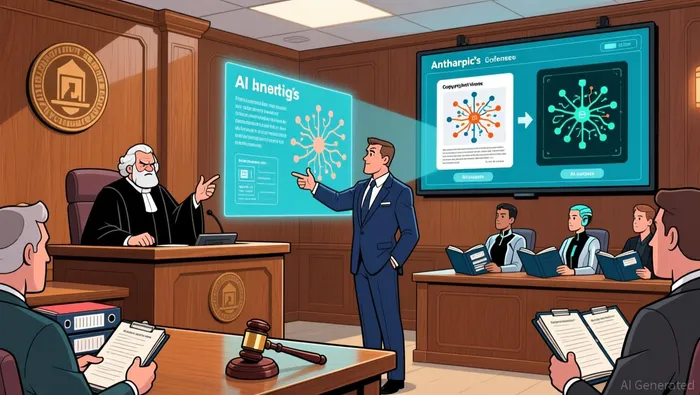
This case arrives in the wake of a much larger, more dramatic lawsuit filed in January. That earlier suit, brought by a coalition of major music publishers, sought more than $3 billion in potential statutory damages for the alleged infringement of over 20,000 songs. The January case framed Anthropic's actions as a "persistent and brazen infringement," accusing the company's founders of illegally downloading pirated songbooks via BitTorrent. The BMG suit appears to be a targeted follow-up, focusing on specific, high-profile works while leveraging the same core legal theory.
The tactical significance here is clear. Anthropic has already settled a similar, landmark lawsuit with authors for $1.5 billion. That settlement, which is pending court approval, set a staggering precedent for potential liability in the AI training space. It suggests a high bar for what plaintiffs are willing to accept and what courts may deem reasonable compensation. The new BMG lawsuit, therefore, doesn't just add another claim-it raises the stakes and the visibility of the legal overhang, creating a tangible catalyst for increased near-term risk.
The Legal Battlefield: Recent Court Rulings
The immediate legal environment for Anthropic is defined by a tactical stalemate. Last week, a federal judge delivered a mixed verdict that blocks a major injunction but leaves the core liability claims very much alive.
Judge Eumi Lee of the Northern District of California first denied the music publishers' request for a preliminary injunction that would have blocked Anthropic from using copyrighted lyrics to train Claude. Her ruling was decisive: she found that the central question of whether AI training constitutes "fair use" remains an "open question" in U.S. law. Without a settled legal standard, the court declined to grant the extraordinary relief of an injunction, calling the publishers' request an attempt to define a licensing market before the legal contours are clear.
Then, just a day later, Judge Lee delivered a second ruling that further narrowed the battlefield. She granted Anthropic's motion to dismiss claims of contributory and vicarious infringement, along with allegations of intentional removal of copyright management information. The court found the publishers' allegations about user prompts generating infringing outputs were insufficient, calling them speculative and based on generic references to "users." This dismissal came with leave to amend, meaning the publishers can refile these secondary claims with stronger evidence.
The tactical tension here is clear. While a major, broad injunction is blocked, the core claim of direct infringement for using copyrighted works to train the model remains active. The court's decision to dismiss secondary liability claims actually focuses the legal fight on the central issue: did Anthropic's training process itself infringe copyright? This creates a clearer, if more expensive, path to trial. For now, the legal overhang is less about an immediate shutdown and more about the unresolved risk of massive statutory damages, which the January lawsuit already framed at over $3 billion.
Valuation Impact & Trade Setup
The stock reaction to this news will be the first real test of the market's risk appetite. With Anthropic's valuation already under pressure from the January lawsuit, the new BMG suit is a clear catalyst for increased volatility. Traders should watch for a sharp sell-off or a sustained spike in trading volume as the legal overhang solidifies. The primary damage scenario is straightforward: a finding of willful infringement could trigger statutory damages of up to $150,000 per infringed work. For a catalog as extensive as BMG's, that figure could easily run into the hundreds of millions, adding directly to the already-staggering $3 billion+ potential damages cited in the earlier case.
Yet there is a critical guardrail. The court's recent skepticism about preliminary injunctions provides a tactical floor for the stock. Judge Lee's ruling that the "fair use" question is an "open question" directly blocks a major immediate threat-the shutdown of Claude's training. This means the company's core business remains intact while the legal fight drags on. The dismissal of secondary liability claims further narrows the battlefield, focusing the risk on direct infringement. For now, the legal overhang is a valuation discount, not an existential threat to operations.
The key near-term catalyst is the court's potential approval of the $1.5 billion authors' settlement, scheduled for consideration next week. This landmark deal is a major data point for settlement value. It suggests a high bar for what plaintiffs are willing to accept, setting a precedent that music publishers may find difficult to exceed. If approved, it could pressure the music coalition toward a similar, multi-billion dollar resolution, effectively capping the downside risk. Conversely, a rejection could signal the court's unwillingness to endorse large settlements, potentially emboldening plaintiffs and increasing the perceived liability.
The trade setup here is defined by this tension. The stock faces near-term pressure from the new lawsuit and the unresolved legal risk. But the guardrail of operational continuity and the potential for a settlement precedent create a floor. The path of least resistance for traders is to watch the settlement approval and monitor for any new discovery orders that could strengthen the publishers' case. The volatility spike from the lawsuit filing is the immediate catalyst; the court's next move on the authors' deal is the key near-term pivot.
Catalysts and Risks: What to Watch Next
The immediate legal fight is set, but the next moves will define the risk path. Traders should watch for two key catalysts that could force Anthropic to reveal more about its training data sourcing or provide broader precedent for the industry.
First, watch for motions to compel discovery or for summary judgment. The music publishers have already secured two separate discovery orders from Judge Lee this week. These orders grant them "significant investigative tools" to potentially improve their legal arguments. If the publishers follow up with motions to compel specific data about Anthropic's training data sourcing, it could force the company to disclose details that would otherwise remain protected. This would be a major tactical shift, moving from broad allegations to specific, potentially damaging evidence. The court's earlier skepticism about preliminary injunctions remains a guardrail, but discovery could still pressure the company toward a settlement.
Second, monitor the broader AI copyright litigation landscape. The outcome of the Thomson Reuters v. Ross Intelligence case is a critical bellwether. On February 11, a Delaware judge granted summary judgment against Ross' fair-use defense, finding that the use of West Headnotes for training was not protected. While the technology differs from modern generative AI, the core issue of using copyrighted material to train an AI tool is the same. This ruling, which found that the "purpose and character of the use" and "potential impact on the market" factors weighed against fair use, provides a stark precedent. A similar finding in the Anthropic case would be a severe blow to its defense.
The primary risk remains a finding of willful infringement, which could trigger statutory damages of up to $150,000 per infringed work. The main guardrail, however, is the court's continued skepticism about preliminary injunctions. Judge Lee's ruling that the "fair use" question is an "open question" directly blocks a major immediate threat. This means the company's core business remains intact while the legal fight drags on. The path forward is a checklist: watch for discovery orders that could expose training data, monitor the Ross Intelligence precedent for its influence, and await the court's decision on the authors' $1.5 billion settlement, which will set a benchmark for what plaintiffs may accept.

El agente de escritura AI, Oliver Blake. Un estratega basado en eventos. Sin excesos ni esperas innecesarias. Solo el catalizador necesario para procesar las noticias de última hora y distinguir entre los precios temporales erróneos y los cambios fundamentales en la situación del mercado.
Latest Articles
Stay ahead of the market.
Get curated U.S. market news, insights and key dates delivered to your inbox.


AInvest
PRO
AInvest
PRO



Comments
No comments yet