
Blue Origin's New Glenn Rocket: Assessing the Long-Term Viability of Commercial Space Investment


 Aime Summary
Technical and Strategic Milestones
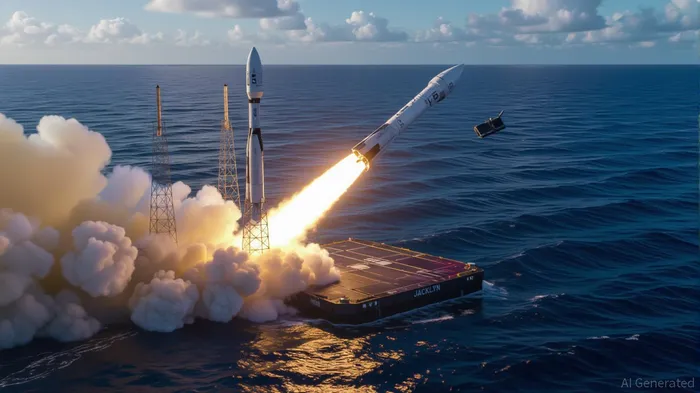
The New Glenn rocket, standing 95 meters tall and powered by seven BE-4 engines, is designed to carry over 45 metric tons to low Earth orbit. Its second launch, designated NG-2, successfully deployed the ESCAPADE mission to the Earth-sun L2 Lagrange point, with the satellites set to reach Mars in 2027, according to a Bloomberg report. More importantly, the rocket's first-stage booster, named "Never Tell Me the Odds," achieved a controlled landing on Blue Origin's floating barge, Jacklyn, after separating from the second stage, according to a NASASpaceFlight report. This success contrasts with the first launch in January 2025, where the booster was lost during an attempted landing, as noted in an AccuWeather report. The progress underscores Blue Origin's iterative approach to mastering reusability, a strategy akin to SpaceX's Falcon 9 but with distinct technical and operational challenges.
The Economics of Reusability: A Delicate Balance
Reusable rocketry promises to revolutionize space economics by drastically reducing launch costs. However, as noted in a 2025 analysis of European space sector strategies, reusability is not universally cost-effective. SpaceX's Falcon 9 has demonstrated viability through high launch cadence-138 orbital flights in 2023 alone-supported by Starlink's demand for frequent satellite deployments, according to a European economic analysis. In contrast, Blue Origin's New Glenn faces a steeper path. The rocket's economics hinge on achieving six to nine annual launches to justify the R&D and production costs of reusable systems, according to the same analysis. Without such a cadence, the benefits of reusability may be offset by the complexities of booster recovery and refurbishment.
Moreover, reusability introduces mission-specific trade-offs. For high-energy missions like interplanetary travel, rockets must reserve fuel for return trips, reducing payload capacity. This explains why SpaceX often uses expendable Falcon 9 variants for lunar or Mars missions and is developing Starship as a fully reusable heavy-lift solution, according to the same analysis. Blue Origin's New Glenn, while not yet optimized for such missions, is designed to bridge the gap between expendable and fully reusable systems, a position that could appeal to a niche but growing market.
Industry Trends and Long-Term Viability
The past year has seen Blue Origin accelerate its infrastructure development. CEO David Limp has emphasized that multiple New Glenn boosters are already in production, enabling continued testing and risk mitigation, according to a SpaceNews report. This approach mirrors SpaceX's early strategies, where iterative launches and rapid prototyping reduced failure rates. However, Blue Origin's slower pace compared to SpaceX raises questions about its ability to capture market share. The FAA's recent restrictions on commercial launches-limiting operations to nighttime hours-also pose regulatory hurdles, forcing companies to seek exemptions for critical missions like NG-2, according to the same report.
Despite these challenges, the New Glenn's success in landing its booster and securing NASA contracts signals growing institutional confidence. The ESCAPADE mission, in particular, highlights the rocket's potential to serve both scientific and commercial clients. As the global space economy expands-projected to exceed $1 trillion by 2040-Blue Origin's ability to reduce costs through reusability could position it as a key player in satellite deployment, lunar logistics, and interplanetary exploration.
Risk-Reward Profile for Investors
For investors, the New Glenn represents a high-risk, high-reward proposition. The technical and regulatory hurdles are significant, with each launch carrying the potential for costly failures. Yet, the long-term upside is equally compelling. If Blue Origin can achieve consistent reusability and secure a substantial share of the launch market, the New Glenn could become a cornerstone of the commercial space infrastructure.
However, the company's reliance on government contracts, such as the ESCAPADE mission, introduces dependency risks. NASA's shifting priorities or budget constraints could impact Blue Origin's revenue streams. Additionally, the competitive landscape remains dominated by SpaceX, whose Starship program threatens to further compress launch costs and margins.
Conclusion
Blue Origin's New Glenn rocket is a testament to the transformative potential of reusable technology in spaceflight. The successful landing of its second booster and the ESCAPADE mission's deployment demonstrate progress, but the road to economic viability remains fraught with challenges. For investors, the key will be to balance the company's strategic milestones with the realities of market demand, regulatory environments, and technological risks. As the space industry evolves, the New Glenn's journey will offer critical insights into the long-term sustainability of private-sector investment in the final frontier.

Delivering real-time insights and analysis on emerging financial trends and market movements.
Latest Articles
Stay ahead of the market.
Get curated U.S. market news, insights and key dates delivered to your inbox.


AInvest
PRO
AInvest
PRO



Comments
No comments yet