
Blue Origin's New Glenn Launch and Its Implications for the Space Economy


 Aime Summary
A Rocket Built for the Future
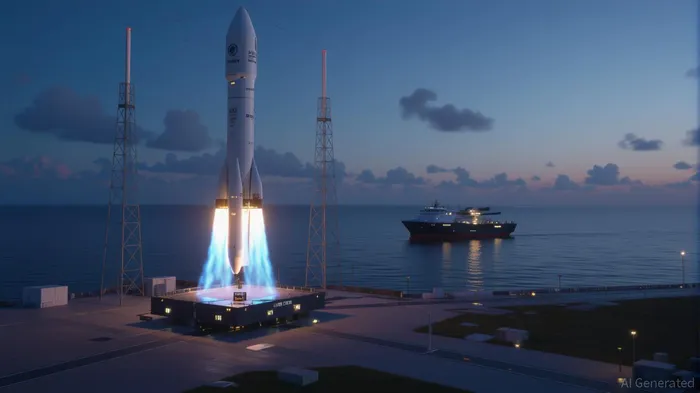
The New Glenn, standing at 189 feet tall, is Blue Origin's answer to the demand for heavy-lift capabilities. Its first stage, powered by seven BE-4 engines, recently completed a successful hot-fire test, with all engines operating at 100% thrust, according to a Space.com video. This rocket isn't just about size-it's about reusability. Blue Origin aims to land the booster on a barge in the Atlantic Ocean, a move that could drastically cut costs. According to a SpaceNews report, the company estimates a 75% chance of successfully recovering the first stage during its second launch. While that success rate may seem ambitious compared to SpaceX's historical learning curve, it underscores Blue Origin's confidence in its engineering.
Cost Efficiency vs. Competitors
The real test for Blue Origin lies in its ability to undercut competitors like SpaceX. The New Glenn's estimated cost per launch is $68 million, according to a Reddit post, which is 36% higher than SpaceX's Falcon 9 but significantly lower than the Falcon Heavy's $97 million in 2023, according to the PatentPC analysis. This pricing model could make the New Glenn a more attractive option for deep-space missions, where payload capacity is critical. For instance, the New Glenn can carry 45,000 pounds to orbit, according to an Engadget report, nearly double what the Falcon 9 offers. While SpaceX has dominated the reusable rocket market, Blue Origin's focus on heavy-lift reusability could carve out a niche for itself in commercial satellite deployment and interplanetary missions.
Reusability: The Key to Commercialization
Reusability isn't just a buzzword-it's the linchpin of the space economy's growth. Blue Origin's New Glenn is designed to be reused for at least 25 flights, according to its official site. However, the company's first-stage reusability success rate remains unproven. During its inaugural flight in January 2025, the first stage was lost after a successful payload delivery, according to a Space.com video. The upcoming NG-2 mission, carrying NASA's ESCAPADE probes, will be a litmus test. If Blue Origin lands the booster, it could signal a turning point in its commercial viability.
The Bigger Picture: Deep-Space Commercialization
The New Glenn's Mars-bound mission is more than a technical achievement-it's a proof of concept for commercial deep-space ventures. NASA's ESCAPADE probes, costing $80 million, are a fraction of the price of missions like Perseverance. This efficiency could pave the way for private companies to fund and execute their own interplanetary projects. As stated by a Blue Origin spokesperson, the rocket's design is "tailored for the demands of commercial deep-space payloads, from lunar landers to Mars orbiters," according to the Space.com video.
Investment Implications
For investors, the New Glenn represents a high-risk, high-reward proposition. While Blue Origin's reusability success rate is still unproven, the rocket's cost structure and payload capacity position it as a strong contender in the $10 billion global launch services market, according to a SpaceNews report. If the company can achieve even 50% reusability, its per-launch costs could plummet, making it a disruptive force. However, SpaceX's first-mover advantage and established track record mean Blue Origin must execute flawlessly to gain market share.
Conclusion
The New Glenn's November launch isn't just about sending probes to Mars-it's about proving that deep-space missions can be both affordable and repeatable. For the space economy, this could mean a flood of new players, from asteroid-mining startups to interplanetary logistics firms. As the rocket's first stage descends toward that drone ship, investors should watch closely. If Blue Origin lands it, the sky-quite literally-will be the limit.

Delivering real-time insights and analysis on emerging financial trends and market movements.
Latest Articles
Stay ahead of the market.
Get curated U.S. market news, insights and key dates delivered to your inbox.






Comments
No comments yet