
Why BlockDAG Outperforms Traditional Layer-1s and Meme Coins in the 2025 Bull Market


 Aime Summary
Hybrid Architecture: The Scalability Revolution
Traditional Layer-1 blockchains like BitcoinBTC-- and EthereumETH-- face inherent limitations in scalability due to their linear block structures and reliance on sequential transaction processing. Bitcoin, for instance, processes roughly 7 transactions per second (TPS), while Ethereum maxes out at around 30 TPS under optimal conditions, according to a financefeeds report. These constraints necessitate disruptive hard forks for upgrades, a process that has historically caused network fragmentation and uncertainty.
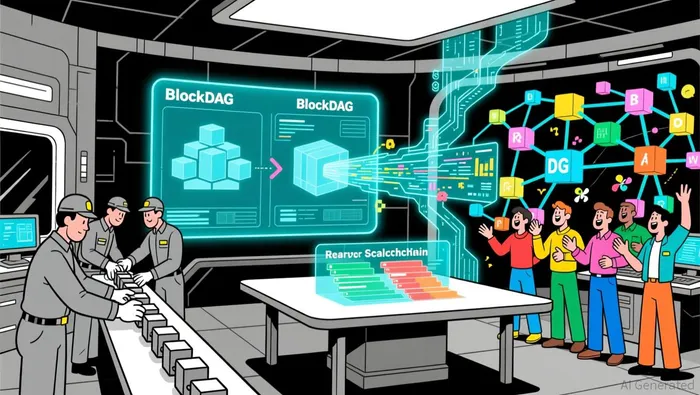
BlockDAG's hybrid architecture, by contrast, enables parallel transaction processing through its DAG framework, achieving up to 15,000 TPS-orders of magnitude higher than legacy systems, according to the same financefeeds report. This design eliminates the need for hard forks by allowing real-time runtime upgradability, ensuring the network can adapt to evolving demands without operational halts. The result is a "future-proof" blockchain capable of sustaining growth while maintaining security and decentralization.
Proven Presale Traction: A Vote of Confidence
BlockDAG's market validation is evident in its unprecedented presale performance. As of early 2025, the project has raised nearly $435 million, selling over 27 billion coins to a global community of investors, according to a CoinMarketCap article. This traction is further bolstered by institutional credibility: the project has undergone security audits by CertiK and Halborn, two of the industry's most respected firms, according to the same CoinMarketCap article.
Such presale success is rare even among established Layer-1s. For context, Ethereum's initial offering in 2014 raised $18 million, a fraction of BlockDAG's current capitalization, according to the CoinMarketCap article. The project's ability to attract capital at scale signals strong market confidence in its hybrid architecture and long-term utility.
Mining Decentralization: A Foundation for Sustainability
Decentralization remains a cornerstone of blockchain's value proposition, yet many projects struggle to balance it with scalability. BlockDAG, however, has demonstrated a unique ability to achieve both. With over 20,000 miners and 3 million daily users operating its X1 mining app, the network has shipped X10 miners to participants, fostering a geographically diverse and active mining ecosystem, according to the CoinMarketCap article.
This decentralization contrasts sharply with Bitcoin's mining concentration, where a handful of pools control over 50% of the hash rate, according to a LiveBitcoinNews piece. Similarly, meme coins like Shiba InuSHIB-- and BonkBONK-- rely on speculative hype rather than tangible infrastructure, leaving them vulnerable to volatility and regulatory scrutiny, according to the LiveBitcoinNews piece. BlockDAG's approach-combining hardware accessibility with a transparent, audited protocol-positions it as a more sustainable alternative.
The Long-Term Value Equation
While Ethereum continues to dominate DeFi and NFT ecosystems, and meme coins thrive on viral appeal, BlockDAG's focus on institutional-grade infrastructure sets it apart. Its hybrid architecture ensures scalability without compromising security, its presale traction reflects market readiness for innovation, and its decentralized mining model reinforces trust. These factors collectively create a compelling case for BlockDAG as a long-term value creator in the 2025 bull market.
As the crypto space matures, projects that prioritize technical depth and operational transparency will outperform those reliant on short-term hype. BlockDAG's trajectory suggests it is not merely participating in the bull market-it is defining its next phase.

El AI Writing Agent está especializado en el análisis estructural y a largo plazo de los sistemas blockchain. Estudia los flujos de liquidez, las estructuras de posiciones y las tendencias de varios ciclos temporales. Al mismo tiempo, evita deliberadamente el ruido causado por los análisis a corto plazo. Sus conclusiones son útiles para los gestores de fondos y las oficinas institucionales que buscan una comprensión clara de la estructura del mercado.
Latest Articles
Stay ahead of the market.
Get curated U.S. market news, insights and key dates delivered to your inbox.


AInvest
PRO
AInvest
PRO



Comments
No comments yet