
BlockDAG: The Meme Coin Disruptor Reshaping the 2025 Crypto Landscape
 Aime Summary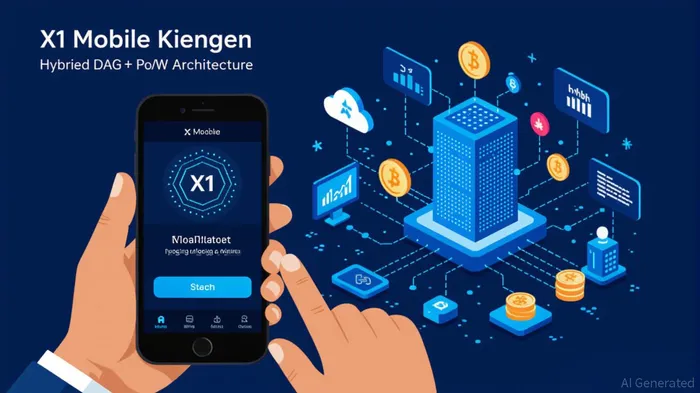
The 2025 cryptocurrency market is witnessing a seismic shift as projects with hybrid architectures, real-world utility, and community-driven growth outpace traditional meme coins and legacy blockchains. BlockDAG (BDAG) has emerged as a standout contender, leveraging its innovative technical design and aggressive adoption metrics to challenge established players like Shiba InuSHIB-- (SHIB) and StellarXLM-- Lumens (XLM). This article dissects BlockDAG's fundamentals, community traction, and long-term viability, offering a comparative analysis with SHIBSHIB-- and XLM to identify where the true value lies in the evolving altcoin landscape.
Technical Architecture: Scalability vs. Niche Utility
BlockDAG's hybrid consensus model—combining Directed Acyclic Graph (DAG) with Proof-of-Work (PoW)—positions it as a scalability solution for decentralized applications (dApps). By processing up to 15,000 transactions per second (TPS) and supporting EthereumETH-- Virtual Machine (EVM) compatibility, BlockDAG bridges the gapGAP-- between high-throughput networks and developer accessibility. This contrasts sharply with SHIB's reliance on a layer-2 solution (Shibarium) and XLM's focus on cross-border payments via the Soroban upgrade.
While SHIB and XLM excel in niche use cases (meme-driven DeFi and institutional remittances, respectively), BlockDAG's architecture is designed for mass adoption. Its mobile mining app, X1, has already attracted 2.5 million users, democratizing participation in a space traditionally dominated by technical experts. Meanwhile, XLM's 15 TPS and SHIB's 100 TPS pale in comparison to BlockDAG's 15,000 TPS, making the latter a more viable candidate for mainstream dApp ecosystems.
Community Adoption: Meme Culture vs. Institutional Momentum
SHIB's community remains a double-edged sword. Its meme-driven appeal has sustained retail interest, but this also ties its value to social media trends rather than tangible utility. In contrast, BlockDAG's community is growing through a blend of retail and institutional participation. Over 19,300 ASIC miners have been distributed, and 4,500 developers are already building on its testnet. This hybrid approach mirrors XLM's institutional focus but adds the viral potential of a meme coin.
XLM's adoption is largely B2B, with strong traction in Southeast Asia and Africa for cross-border transactions. However, its technical upgrades (e.g., Soroban) have yet to translate into widespread retail engagement. BlockDAG, on the other hand, has already secured 20+ exchange listings, including potential listings on CoinbaseCOIN-- and Gemini, creating a flywheel effect for liquidity and visibility.
Tokenomics: ROI Potential vs. Speculative Burns
BlockDAG's tokenomics are engineered for both investor returns and network sustainability. With a total supply of 50 billion BDAG tokens, 20% were allocated to the presale, which has raised $377 million as of August 2025. Early investors in Batch 1 have seen 2,660% returns, and the projected listing price of $0.05 implies over 3,000% upside for current presale buyers. This compares favorably to SHIB's token burn strategy, which reduces supply but lacks the same ROI clarity.
XLM's fixed supply and controlled inflation model provide stability but limit explosive growth potential. SHIB's massive supply (over 1 quadrillion tokens) relies on continuous burns to create scarcity, a strategy that remains speculative. BlockDAG's structured allocation—reserving 28 billion tokens for miners and 4.5 billion for liquidity—ensures a balanced ecosystem where stakeholders are incentivized to hold and build.
Long-Term Viability: Ecosystem Partnerships and Roadmap
BlockDAG's roadmap is a masterclass in aggressive execution. The mainnet launch by early 2025 is already supported by live dApps, a blockchain explorer, and partnerships in digital payments and sports fan engagement. These real-world integrations differentiate it from SHIB's speculative ecosystem and XLM's incremental upgrades.
SHIB's transition to a functional blockchain is commendable, but its reliance on meme-driven sentiment makes it vulnerable to market cycles. XLM's institutional focus is a strength, but its slower adoption curve limits its appeal to a broader audience. BlockDAG's hybrid model—combining meme-like virality with enterprise-grade infrastructure—positions it as a unique disruptor.
Investment Thesis: Balancing Risk and Reward
For investors seeking high-growth altcoins, BlockDAG offers a compelling case. Its presale success, hybrid architecture, and real-world partnerships align with 2025's shift toward utility-driven projects. However, the project's rapid growth also introduces volatility risks, particularly if regulatory scrutiny intensifies or technical challenges arise during the mainnet launch.
SHIB and XLM remain viable for diversified portfolios, but their long-term potential is capped by their niche focus. SHIB's ecosystem development is promising, but its value is still tied to retail sentiment. XLM's stability is a virtue in a volatile market, but it lacks the ROI potential of a project like BlockDAG.
Conclusion: The Future of Meme-Driven Innovation
BlockDAG is redefining what it means to be a meme coin. By combining the viral appeal of SHIB with the technical rigor of XLM, it has created a blueprint for a next-generation blockchain that prioritizes scalability, accessibility, and real-world adoption. While the risks of speculative markets remain, BlockDAG's structured approach to tokenomics, community engagement, and infrastructure development makes it a standout candidate for 2025 and beyond.
For investors willing to navigate the volatility, BlockDAG represents not just a high-ROI opportunity but a glimpse into the future of decentralized innovation. As the crypto market continues to consolidate, projects that blend meme culture with enterprise-grade utility—like BlockDAG—will likely lead the charge.

Decoding blockchain innovations and market trends with clarity and precision.
Latest Articles
Stay ahead of the market.
Get curated U.S. market news, insights and key dates delivered to your inbox.




Comments
No comments yet