
BlockDAG: A Game-Changer in Sports Tech and Blockchain, Outperforming Cardano and Chainlink


 Aime Summary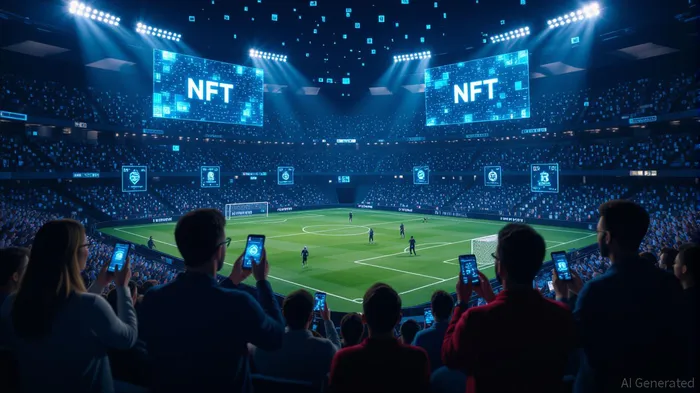
In the rapidly evolving 2025 crypto landscape, BlockDAG (BDAG) has emerged as a disruptive force, leveraging a $385 million presale and strategic sports technology partnerships to position itself as a formidable competitor to established Layer-1s like CardanoADA-- (ADA) and oracleORCL-- solutions like ChainlinkLINK-- (LINK). This article evaluates BlockDAG's unique value proposition, technical innovation, and real-world adoption strategies, arguing that its focus on sports-driven utility and liquidity could catalyze long-term outperformance.
Presale Success: A Barometer of Investor Confidence
BlockDAG's presale has raised $385 million across 29 batches, with the final batch (Batch 30) priced at $0.0276. The project is on track to hit its $600 million target, a feat that places it among the most ambitious fundraising campaigns in crypto history. This success is underpinned by a tokenomics model designed to balance scarcity and community growth. With 20% of the 50 billion BDAG tokens allocated to the presale, and 70% reserved for miners and ecosystem development, the project prioritizes decentralization and sustained demand.
The vesting schedule—40% of presale tokens unlocking at launch, followed by 20% monthly—prevents market saturation, a critical differentiator from projects plagued by dumping. Early investors in Batch 1 could see a 3,500% return if BDAG reaches $1 by 2026, a valuation target supported by its hybrid Directed Acyclic Graph (DAG) and Proof-of-Work (PoW) consensus model. This architecture enables 10,000–15,000 transactions per second (TPS), outpacing Ethereum's 30 TPS and Solana's 50,000 TPS (though the latter's recent outages highlight scalability risks).
Sports Tech Partnerships: Bridging Blockchain and Mainstream Adoption
BlockDAG's strategic alliances with global sports franchises—such as Inter Milan, the Seattle Orcas, and the Seattle Seawolves—demonstrate its ability to integrate blockchain into real-world use cases. These partnerships are not superficial branding exercises but functional integrations that enhance fan engagement, ticketing, and NFT utility.
For example, Inter Milan's NFT-based voting system allows fans to influence team decisions, while the X1 mobile app—used by 2.5 million users—gamifies mining and rewards participation with BDAG tokens. The Seattle Orcas and Seawolves have launched NFT collectibles tied to in-game moments, creating a secondary market that drives token demand. By tokenizing ticketing systems, BlockDAG also combats scalping and fraud, offering fans secure, tradable digital assets.
These partnerships are amplified by BlockDAG's 19,300 ASIC miners and 300+ decentralized apps (dApps), which provide the infrastructure for scalable, real-time interactions. The project's 20 confirmed exchange listings, including Tier 1 platforms like MEXC and BitMart, further validate its liquidity potential.
Differentiation from Cardano and Chainlink
Cardano's academic approach, while robust, prioritizes long-term scalability over immediate adoption. Its Hydra layer-2 solution aims to boost throughput but lacks the gamified, community-driven engagement that BlockDAG offers. Cardano's 33.6% weekly price surge in August 2025 reflects institutional confidence, but its ecosystem remains less developer-driven compared to BlockDAG's 4,500 active developers.
Chainlink, meanwhile, dominates oracle infrastructure with $93 billion in DeFi assets secured. However, its focus on data feeds for smart contracts leaves it disconnected from consumer-facing adoption. While Chainlink's partnerships with ICE and SWIFT are valuable, they cater to institutional clients rather than the 2.5 million mobile miners and sports fans BlockDAG targets.
Investment Thesis: Liquidity, Utility, and Execution
BlockDAG's six-month timeline to mainnet launch—accelerated by its hybrid DAG-PoW model—positions it to capitalize on the 2025 bull run. With a post-launch price target of $0.05 and a $1 valuation by 2026, the project's ROI potential is compelling. Its sports-driven partnerships create recurring engagement loops, ensuring token utility beyond speculative trading.
For investors, BlockDAG represents a high-liquidity, high-utility play in a market where traditional Layer-1s and oracles struggle to bridge the gap between technical innovation and mainstream adoption. The project's confirmed exchange listings and institutional audits by Halborn and CertiK further mitigate risk.
Conclusion: A New Era for Sports-Driven Blockchain
BlockDAG's $385 million presale and sports tech partnerships are not just milestones—they are blueprints for a blockchain project that prioritizes real-world utility, community engagement, and rapid execution. While Cardano and Chainlink remain strong in their niches, BlockDAG's focus on sports-driven adoption and hybrid scalability positions it as a standout in 2025. For investors seeking exposure to a project that bridges the gap between crypto innovation and mainstream utility, BlockDAG offers a compelling case.
Investment Advice: Allocate a portion of your crypto portfolio to BlockDAG, particularly if you're bullish on the 2025 bull run and the convergence of blockchain with sports tech. Monitor its mainnet launch and exchange listings for liquidity signals, and consider early participation in its presale if risk tolerance aligns with its high-ROI potential.

Decoding blockchain innovations and market trends with clarity and precision.
Latest Articles
Stay ahead of the market.
Get curated U.S. market news, insights and key dates delivered to your inbox.


AInvest
PRO
AInvest
PRO



Comments
No comments yet