
Blockchain Tech Is Powering Financial Innovation in 2026
 Aime Summary
Blockchain frameworks are becoming foundational for fintechs to enhance offerings through decentralization, security, and scalability according to industry analysis.
Tokenized loyalty programs are enabling users to convert rewards into real-world value through blockchain and crypto exchanges as research shows.
according to market projections.
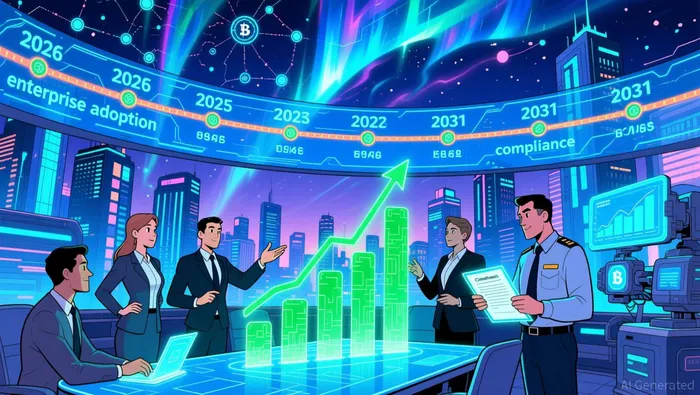
Blockchain is no longer just a buzzword—it's a foundational technology reshaping how financial institutions and consumers interact with money, assets, and value. In 2026, major fintech platforms and traditional banks are accelerating blockchain adoption to reduce costs, increase transparency, and streamline operations. From cross-border payments to tokenized real estate, the technology's applications are expanding rapidly.
This momentum is driven by frameworks like EthereumETH--, , and XRP Ledger, which offer tailored solutions for financial institutions. Meanwhile, real-world asset tokenization is making headway, and blockchain-based loyalty systems are giving users more control over their rewards. Investors and market participants are watching closely as this evolution unfolds.
What Blockchain Frameworks Are Powering Fintech Innovation in 2026?
Blockchain isn't a one-size-fits-all solution—different frameworks are tailored to specific use cases. For example, Corda, developed by R3, is designed for regulated industries and has been adopted by major banks to improve data privacy and compliance according to industry reports. Ethereum, on the other hand, supports a wide range of decentralized applications and smart contracts, making it ideal for digital assets and DeFi platforms.
Meanwhile, XRP Ledger is being used extensively for low-cost cross-border payments, helping financial institutions reduce their reliance on legacy systems. and are also gaining traction, especially in private and enterprise environments where security and customization are key concerns.
The growing ecosystem of blockchain frameworks is enabling financial institutions to develop scalable, secure, and efficient solutions—from settlement systems to asset tokenization platforms. As these technologies mature, they're becoming increasingly institutional-grade, supporting daily operations rather than just experimental projects.
How Is Blockchain Revolutionizing Loyalty Programs and Rewards Systems?
Loyalty programs have long been plagued by short expiration dates, limited redemption options, and poor engagement. Blockchain is changing that by enabling tokenized rewards, which can be transferred, traded, or redeemed across multiple platforms as industry analysis indicates.
In this new model, users can convert their loyalty points into real-world value using crypto exchanges like . This shift gives users greater control and flexibility—imagine using airline miles for hotel stays, or converting retail rewards into cash. The benefits are clear: increased transparency, interoperability, and security.
Behind the scenes, are automating compliance and reward distribution, reducing administrative overhead. This not only makes programs more efficient but also minimizes the risk of fraud or human error. As more businesses adopt this model, we may see a shift from abstract loyalty points to actual digital assets with real economic value.
Why Is Blockchain-Driven Tokenization Gaining Traction in 2026?
Tokenization is the process of converting ownership rights into blockchain-based tokens, and it's making waves in industries like real estate, art, and even carbon credits according to market analysis. In real estate, tokenization allows for fractional ownership, enabling global investors to buy into properties with lower minimums and faster transactions as industry reports show.
2026 marks a pivotal moment for , as the technology moves from experimental pilots to active markets. . The focus has shifted from just creating tokens to ensuring liquidity, compliance automation, and cross-border functionalityaccording to market analysis.
Regulated hubs in Singapore and Dubai are leading the way in legal clarity and infrastructure, attracting capital and innovation. As tokenization continues to mature, we can expect to see more traditional assets being digitized—bonds, stocks, real estate, and more—creating a new, more efficient financial ecosystem.
As the blockchain landscape evolves, the focus is shifting from theoretical possibilities to real-world execution. Investors who understand how these technologies are being applied across industries—from fintech to real estate—will be better positioned to navigate the opportunities and risks ahead.

Stay ahead of the market.
Get curated U.S. market news, insights and key dates delivered to your inbox.


AInvest
PRO
AInvest
PRO



Comments
No comments yet