
Blockchain Security Risks and Crypto Asset Allocation: Navigating DeFi Vulnerabilities in a Post-Hack Era
 Aime Summary
The Shifting Landscape of DeFi Security Threats
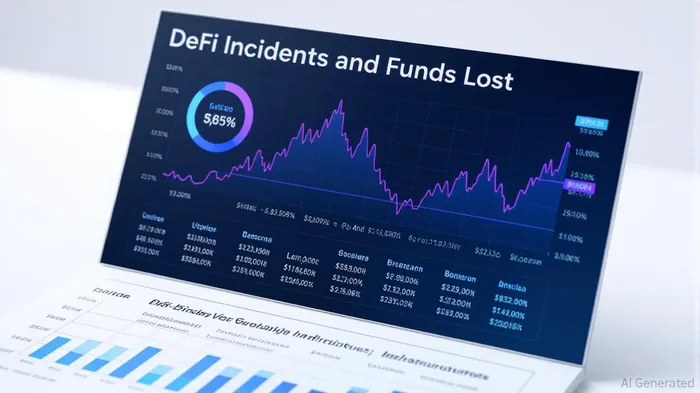
Recent data reveals a stark transformation in attack vectors. Off-chain vulnerabilities, particularly compromised user accounts, now account for 56.5% of all DeFi incidents and 80.5% of funds lost in 2024. These attacks often originate from social engineering tactics, such as fake job offers or investment pitches, which infiltrate developer environments and custodial systems according to research. Nation-state actors, notably North Korea, have industrialized these methods, leveraging infrastructure attacks on centralized exchanges and custodial providers to siphon over $2.7 billion in 2025 alone.
On-chain vulnerabilities remain equally perilous. Reentrancy attacks-where malicious actors exploit recursive function calls in smart contracts-have caused multi-million-dollar losses, as seen in the Rari Capital ($80 million) and Orion Protocol ($3 million) breaches reported by security researchers. Improper input validation and oracle manipulation further compound risks, enabling attackers to distort price feeds or manipulate contract logic.
Investor Sentiment and the Rise of Ecosystem-Wide Due Diligence
 The proliferation of these threats has recalibrated investor behavior. Institutional and retail participants alike are now prioritizing protocols that adopt institutional-grade security measures. For instance, only 19% of hacked protocols in 2024 utilized multi-sig wallets, while a mere 2.4% relied on cold storage according to recent data. This has spurred a shift toward multi-sig and MPC (multi-party computation) wallets, hardware security modules (HSMs), and multi-factor authentication (MFA) as baseline requirements for asset custody as detailed in reports.
Beyond technical safeguards, investors are demanding full ecosystem audits. Traditional smart contract audits are no longer sufficient; protocols must now demonstrate robustness in interactions with oracles, APIs, and market conditions as research shows. Real-time monitoring systems and AI-driven threat detection have emerged as critical tools, enabling early identification of anomalies such as irregular transaction patterns or price manipulations.
Risk Mitigation: From Reactive to Proactive Strategies
The maturation of DeFi has also spurred the development of advanced risk evaluation frameworks. AI methodologies, including reinforcement learning and anomaly detection, are now deployed to adapt to volatile market conditions and optimize liquidity strategies as reported in industry analysis. A utility-based evaluation model further allows investors to assess platforms based on metrics like transaction accuracy and real-time responsiveness according to academic research. Regulatory compliance has become another cornerstone of risk management. The EU's Markets in Crypto-Assets (MiCA) regulation and the U.S. GENIUS Act have compelled protocols to embed compliance tools directly into their architectures, ensuring adherence to anti-money laundering (AML) and know-your-customer (KYC) protocols without compromising decentralization as outlined in policy reviews. For example, zero-knowledge proofs and decentralized identity systems are being leveraged to anonymize user data while satisfying regulatory requirements as demonstrated in case studies.
Actionable Steps for Investors
To safeguard capital in this evolving ecosystem, investors should adopt a multi-layered approach:
1. Prioritize Protocols with Institutional-Grade Security: Favor platforms that use multi-sig or MPC wallets, cold storage, and HSMs for key assets.
2. Demand Ecosystem-Wide Audits: Ensure protocols undergo rigorous assessments of smart contracts, oracles, and API integrations.
3. Leverage AI-Driven Tools: Deploy real-time monitoring systems to detect and mitigate threats before they escalate.
4. Align with Regulatory Frameworks: Invest in protocols that proactively comply with MiCA, GENIUS, and other emerging regulations.
5. Diversify Exposure: Avoid overconcentration in protocols with unproven security models or high-risk governance structures.
Conclusion
The DeFi space is at a crossroads. While its promise of financial innovation remains intact, the frequency and scale of security breaches necessitate a paradigm shift in how investors evaluate risk. By treating blockchain security as a non-negotiable component of asset allocation, stakeholders can navigate the uncertainties of this nascent market with greater confidence. As the sector matures, those who integrate proactive risk management into their strategies will not only protect their capital but also position themselves to capitalize on the next wave of decentralized finance.

Blending traditional trading wisdom with cutting-edge cryptocurrency insights.
Latest Articles
Stay ahead of the market.
Get curated U.S. market news, insights and key dates delivered to your inbox.






Comments
No comments yet