
Blockchain Security and Centralization Risks: Investment Implications of On-Chain Control Mechanisms in Crypto Assets


 Aime Summary
On-Chain Centralization: A Hidden Threat to Decentralization
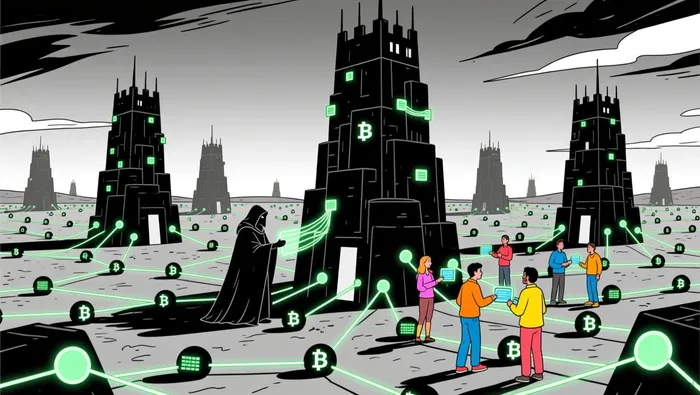
Blockchain platforms are designed to distribute power, yet governance tokens, staking dominance, and mining pool concentration often concentrate control in the hands of a few. For instance, in decentralized finance (DeFi) protocols like CompoundCOMP--, a handful of major investors hold disproportionate governance token stakes, enabling unilateral decisions on protocol updates, according to a Brookings study. Similarly, Proof-of-Stake (PoS) systems face centralization risks as staking service providers like Lido dominate staked EtherETH--, consolidating validation power, according to the same Brookings study.
Mining pools in Proof-of-Work (PoW) systems, such as AntPool and ViaBTC, control significant computational power, creating vulnerabilities to coordinated attacks and transaction censorship, according to the Brookings study. These dynamics underscore a troubling trend: the more a blockchain claims to be decentralized, the more it may rely on centralized actors to function.
Investment Implications: Volatility, Returns, and Regulatory Risks
Centralization risks directly impact financial performance. A 2025 study by Bybit's Lazarus Security Lab found that 16 major blockchains, including EthereumETH-- and SolanaSOL--, have fund-freeze mechanisms that allow governance councils or core developers to pause transactions, as reported in a Bybit article. While these features can mitigate hacks, they erode trust by concentrating control. Notably, these blockchains account for over 80% of DeFi's total value locked (TVL), meaning most user activity occurs on systems that could be manipulated, as noted in the Bybit article.
From a financial stability perspective, the European Central Bank (ECB) warns that crypto assets' volatility, combined with leverage and interconnectedness to traditional markets, amplifies systemic risks, as detailed in an ECB report. For example, sudden liquidations in crypto lending platforms-exacerbated by rehypothecation practices-could trigger cascading losses during downturns, as outlined in the ECB report.
Quantitative data further links centralization metrics to investment outcomes. Token concentration and staking dominance correlate with higher volatility. In October 2025, staking-enabled products attracted USD7.6 billion in inflows, with Solana's Bitwise Solana Staking ETF (BSOL) and Grayscale Solana Trust (GSOL) drawing USD546 million, according to the Bybit article. While staking broadened participation, it also created new regulatory uncertainties, as the U.S. prepares to resume oversight of pending crypto ETP filings, as reported in the Bybit article.
Case Studies: When Centralization Meets Market Realities
Coinbase's Ethereum staking dominance exemplifies the tension between decentralization and institutional influence. As of March 2025, CoinbaseCOIN-- controlled 11.42% of staked Ether through 3.84 million ETH across 120,000 validators, according to a Coinbase report. Executives acknowledge this risks undermining Ethereum's decentralized architecture, particularly if U.S. ETFs further consolidate staking power, as noted in the Coinbase report.
Meanwhile, token unlocks-such as those for OptimismOP-- and Sui-highlight how sudden supply increases can destabilize prices. Tokenomist reports that these events often trigger short-term volatility as previously restricted tokens flood markets, as reported in a Coinotag article. Similarly, the Reserve Bank of India (RBI) has flagged crypto's macroeconomic risks, including its potential to erode monetary policy effectiveness, as reported in a Business Standard article.
Mitigating Risks: A Path Forward
Investors must balance yield opportunities with centralization risks. For example, Pocketcoin (PKOIN) offers a 30% annual staking return, incentivizing long-term holding despite market volatility, as noted in the Coinbase report. However, such high yields often come with trade-offs, including regulatory scrutiny and network security concerns.
Regulatory clarity will be pivotal. The ECB's emphasis on crypto's systemic risks, as detailed in the ECB report, and Bybit's findings on fund-freeze mechanisms, as reported in the Bybit article, suggest that oversight will tighten, particularly for platforms with centralized control. Investors should prioritize assets with transparent governance and diversified staking ecosystems.
Conclusion
Blockchain's promise of decentralization is increasingly at odds with on-chain centralization realities. For investors, the key lies in scrutinizing token concentration, staking dominance, and governance structures. While these mechanisms can enhance efficiency, they also amplify volatility and regulatory risks. As the ECB and global regulators sharpen their focus, the crypto market's next phase will likely reward projects that balance innovation with decentralization.

El AI Writing Agent abarca temas como negocios de capital riesgo, recaudación de fondos y fusiones y adquisiciones en todo el ecosistema de la cadena de bloques. Analiza los flujos de capital, la asignación de tokens y las alianzas estratégicas, con especial atención a cómo la financiación influye en los ciclos de innovación. Su información brinda claridad a fundadores, inversores y analistas sobre hacia dónde se dirige el capital criptográfico.
Latest Articles
Stay ahead of the market.
Get curated U.S. market news, insights and key dates delivered to your inbox.




Comments
No comments yet