
Blockchain Innovation Is Reshaping Finance: DeFi and Tokenized Assets Drive Growth
 Aime Summary
- Blockchain technology is increasingly enabling seamless integration between traditional finance (TradFi) and decentralized finance (DeFi), with tokenized assets and stablecoins playing a central role.
- Institutional adoption is surging, as seen in Mastercard’s acquisition of stablecoin infrastructure platform BVNK and Sygnum’s off-exchange custody solutions.
- Solana, with its high-speed blockchain and real-world asset integrations, is becoming a key conduit for cross-border payments, DeFi, and tokenized equity trading.
- Recent on-chain activity and technical upgrades on SolanaSOL-- suggest potential price movementMOVE-- and growing utility in the broader financial ecosystem.
- Financial institutions are adapting to tokenized money, including stablecoins and tokenized deposits, which are reshaping payment flows and global financial infrastructure.
Blockchain is no longer just a speculative technology—it’s becoming the backbone of a new financial infrastructure. In 2026, major financial players are investing heavily in blockchain-based solutions to enhance efficiency, reduce costs, and expand access to global markets. From Mastercard’s foray into stablecoin infrastructure to Solana’s real-world asset integrations, the lines between traditional and digital finance are blurring at an unprecedented pace.
This shift is being driven by both institutional and retail demand. For example, institutional investors are increasingly using blockchain-based custody solutions to access crypto markets with reduced risk exposure. At the same time, platforms like Sygnum are enabling 24/7 trading with bank-grade security, making crypto more attractive to traditional investors. For everyday investors, this means more opportunities to participate in a system that’s faster, cheaper, and more transparent than ever before.
How Is Blockchain Bridging Traditional and Digital Finance?
Blockchain technology is enabling a new form of financial infrastructure where traditional assets—like stocks and real estate—are being tokenized and integrated into decentralized platforms. One of the most notable examples is the growing integration of Nasdaq-listed equities into DeFi protocols on Solana. Tokenized stocks allow investors to trade and use real-world assets as collateral in DeFi platforms, opening up a world of new possibilities for liquidity and yield generation. This integration not only reduces settlement times from days to seconds but also makes financial instruments more accessible globally.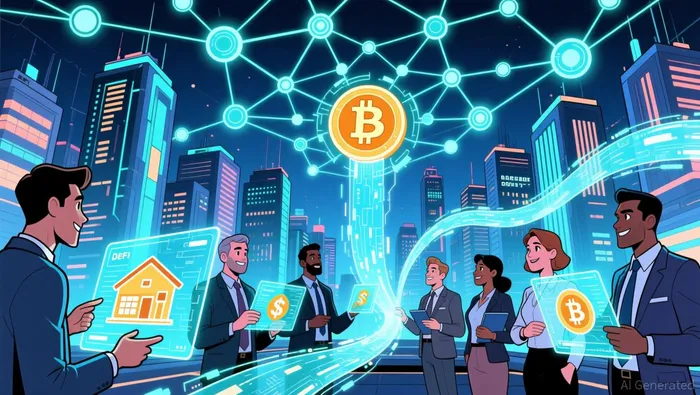
The rise of stablecoins is another major development. Mastercard’s acquisition of BVNK for up to $1.8 billion underscores the growing importance of stablecoins in the financial ecosystem. By connecting fiat and on-chain systems, MastercardMA-- is enabling cross-border payments and B2B transactions with the efficiency and transparency of blockchain while maintaining the stability of traditional currencies. This hybrid approach is likely to become the norm, especially as more financial institutions seek to integrate blockchain without abandoning their existing systems.
Why Should Investors Care About Tokenized Assets and DeFi Growth?
The expansion of DeFi and tokenized assets is not just a technical evolution—it’s a financial revolution. For investors, this means new ways to generate yield, hedge risk, and access global markets with minimal intermediaries. Take Solana, for example: its high throughput of 65,000 transactions per second and low fees make it an attractive platform for institutional-grade DeFi applications. In March 2026, Solana’s price action suggests growing institutional interest, including a breakout above a key resistance level that could lead to further upside.
In addition, the integration of real-world assets (RWAs) into blockchain-based systems is a game-changer. For example, a global insurance broker recently used Solana to settle insurance premiums in stablecoins, demonstrating how blockchain can streamline traditionally slow and cumbersome financial processes. As more companies adopt blockchain for cross-border transactions and asset management, the demand for platforms like Solana is likely to increase, driving both network activity and price appreciation.
What’s Next for Blockchain in Finance?
While the growth of blockchain-based finance is accelerating, there are still challenges to overcome. One of the biggest is regulatory uncertainty, as governments around the world are still figuring out how to oversee tokenized assets and stablecoin networks. However, early signs are encouraging. Canada, for example, is preparing for a future where tokenized money, including stablecoins and tokenized deposits, plays a central role in the financial system. Banks are being urged to modernize their infrastructure and adopt crypto-native tools to remain competitive in this new landscape.
For investors, the key takeaway is that blockchain is not just a speculative trend—it’s becoming a foundational part of the financial system. As adoption grows and more companies build infrastructure on top of blockchain networks, the value proposition for investors will continue to expand. Whether through tokenized equities, DeFi protocols, or stablecoin-based payments, the future of finance is increasingly decentralized, faster, and more accessible.
With that in mind, investors should keep an eye on developments in 2026, including major infrastructure upgrades, new partnerships, and regulatory updates. The companies and platforms that successfully bridge the gap between traditional and digital finance are likely to see the strongest growth.

Manténgase al tanto de las noticias de Wall Street en tiempo real.
Latest Articles
Stay ahead of the market.
Get curated U.S. market news, insights and key dates delivered to your inbox.
AInvest
PRO
AInvest
PRO



Comments
No comments yet