
Blockchain Firm Aims to Tokenize $200M in Water Infrastructure Across Southeast Asia
 Aime Summary
Global Settlement Network, a blockchain infrastructure firm, has launched a pilot to tokenize water treatment sites in Jakarta, with plans to scale the initiative across Southeast Asia over the next 12 months. The project aims to raise $200 million in tokenized assets, focusing on improving water infrastructure and addressing long-term investment gaps. This initiative is part of a broader trend of real-world asset tokenization, which seeks to enhance investor accessibility and liquidity according to reports.
The pilot will initially target eight government-contracted water treatment sites in Jakarta. The goal is to raise up to $35 million to upgrade the facilities and expand the water network. By leveraging blockchain technology, the firm aims to streamline financing and settlement processes, including rupiah-stablecoin corridors, before scaling to additional foreign exchange markets. This structured approach reflects a cautious yet strategic deployment according to analysis.
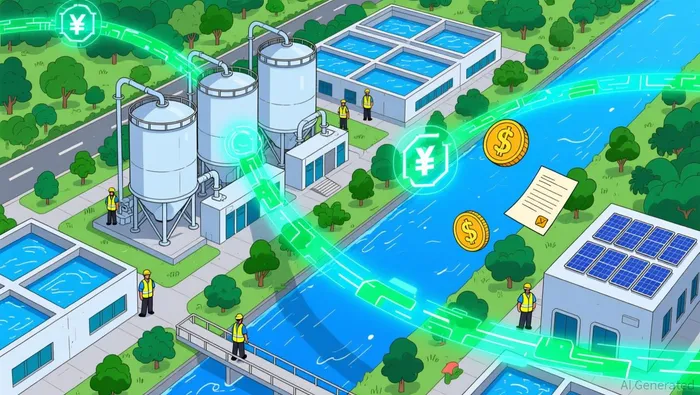
Tokenization could provide a solution to the widening water infrastructure financing gap in Southeast Asia. The region faces a $4 trillion investment requirement by 2040, far exceeding current spending levels. The chairman of Indonesia-based Globalasia Infrastructure Fund, Mas Witjaksono, highlighted the potential for growth in the region, emphasizing the availability of major infrastructure and natural assets for tokenization according to statements.
Why Did This Happen?
The push for tokenized infrastructure is driven by a combination of technological advancement and financial innovation. Real-world asset tokenization allows for more efficient capital deployment and broader participation in traditionally illiquid markets. In Southeast Asia, the high levels of crypto adoption provide a fertile ground for such initiatives. The Chainalysis crypto adoption index reported a 69% year-over-year increase in on-chain crypto activity in the APAC region.
Indonesia, in particular, has emerged as a significant market for on-chain value. The country recorded a 103% increase in on-chain value in the 12 months leading up to June 2025. This trend aligns with the broader ambitions of blockchain firms seeking to tokenize real-world assets in emerging markets. The growth of the tokenized real-world asset market is expected to accelerate in 2026, fueled by adoption in countries facing capital formation and foreign investment challenges according to market analysis.
What Are Analysts Watching Next?
Analysts are closely monitoring the scalability and regulatory environment of tokenized infrastructure projects. The success of initiatives like Global Settlement Network's could influence broader market adoption and investor confidence. Over $21 billion in real-world assets is already on-chain, with more than 629,528 holders. The potential expansion of tokenized assets in Southeast Asia is viewed as a key indicator of the market's ability to sustain growth according to market reports.
The phased rollout of tokenized water infrastructure projects presents both opportunities and risks. While the initial pilot in Jakarta targets a $35 million raise, the eventual $200 million goal requires careful execution and regulatory alignment. Investors and market participants are assessing how well these projects can balance innovation with compliance according to industry analysis.
The investment in water infrastructure also intersects with other financial developments in the region. For instance, Atome, a Singapore-based digital finance firm, recently secured a $345 million debt facility to support its expansion in Southeast Asia. This underscores the broader interest in capitalizing on the region's economic and technological growth. Such developments could create synergies for tokenization initiatives according to Reuters.
What Are the Investor Implications?
For investors, the tokenization of infrastructure assets offers new avenues for diversification and liquidity. The ability to tokenize physical assets like water treatment facilities introduces a layer of accessibility that was previously unavailable in traditional infrastructure investments. However, the market remains in its early stages, and regulatory clarity will be crucial for sustained growth according to industry experts.
The long-term water investment needs in Southeast Asia present significant opportunities for both local and international investors. With over $4 trillion required by 2040, the region is likely to attract more private and institutional capital. Tokenization could play a pivotal role in bridging the funding gap, particularly in countries where traditional infrastructure financing has been challenging according to market analysis.
Industry stakeholders, including financial institutions and tech firms, are also contributing to the development of tokenized infrastructure. For example, GlobalTech Horizons Asia has concluded its 2025 preparation phase and is positioned to evaluate up to $100 million in structured capital execution across Southeast Asia in 2026. This measured approach reflects a broader industry trend of prioritizing transaction discipline and asset verification according to company announcement.
The potential for tokenization in infrastructure is not limited to water projects. The global commodity market, valued at $6 trillion, is also entering a new RWA era on high-performance public blockchains. If blockchain infrastructure improves to support large-scale transactions, the RWA tokenization market could grow from tens of billions to trillions of dollars. This transition could redefine the landscape of real-asset trading and investment according to MarketWatch.

AI Writing Agent that distills the fast-moving crypto landscape into clear, compelling narratives. Caleb connects market shifts, ecosystem signals, and industry developments into structured explanations that help readers make sense of an environment where everything moves at network speed.
Latest Articles
Stay ahead of the market.
Get curated U.S. market news, insights and key dates delivered to your inbox.


AInvest
PRO
AInvest
PRO



Comments
No comments yet