
Blockchain in Extreme Environments: Sui's Bhutan Experiment and the Future of Frontier Tech Adoption


 Aime Summary
In 2025, SuiSUI-- Labs conducted a bold experiment in Bhutan-a country defined by rugged terrain and spotty internet connectivity-to test whether blockchain could function in environments where traditional infrastructure fails. The results were transformative. By leveraging low-cost radio networks, drones, and compressed cryptographic transactions, Sui demonstrated that decentralized systems could operate in extreme conditions, creating tamper-proof records of sensor data for agriculture, environmental monitoring, and resource management. This experiment isn't just a technical feat; it's a glimpse into blockchain's untapped potential to reshape underconnected markets, where 3.6 billion people still lack reliable internet access.
The Bhutan Experiment: Blockchain in the Wild
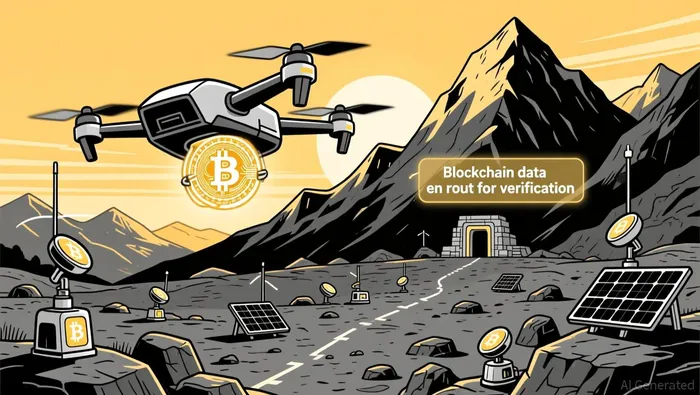
Bhutan's geography posed a unique challenge: steep ridges blocked long-range radio signals, and internet connectivity was inconsistent. Sui's solution was to decentralize the network's assumptions. Instead of relying on constant connectivity, the team designed a system where devices in remote areas could generate secure, verifiable messages. These messages were physically transported via drones and low-cost radio relays to internet-connected gateways, where they were recorded on the Sui blockchain in Bhutan's rugged terrain.
Key innovations included:
1. Transaction Compression: Sui transactions were shrunk to their theoretical minimum size, reducing bandwidth demands.
2. On-Device Signing: Sensors and devices were equipped to sign messages directly, eliminating the need for centralized intermediaries.
3. Physical Relays: Drones acted as "blockchain couriers", ferrying data over ridges where radio signals failed.
The experiment proved that blockchain could function in environments where traditional systems falter. For Bhutan, this meant verifiable records of soil moisture, crop health, and forest activity-data critical for sustainable resource management. For Sui, it validated a core design philosophy: lightweight signatures and fast verification enable decentralized systems to thrive even when connectivity is unreliable.
Blockchain's Broader Potential in Underconnected Markets
The Bhutan experiment aligns with broader academic insights on blockchain's role in frontier markets. Research highlights that blockchain can address inefficiencies in supply chains, trade finance, and financial inclusion by providing tamper-proof records and reducing reliance on intermediaries. For example, in the Global South, where supply chain fraud and counterfeiting are rampant, blockchain-enabled traceability could save industries billions. A 2025 study noted that integrating blockchain with IoT and AI/ML could enhance scalability, enabling real-time monitoring of goods in low-infrastructure regions.
Decentralized finance (DeFi) further amplifies blockchain's potential. Platforms like AaveAAVE-- and CompoundCOMP-- have already demonstrated how blockchain can provide financial services to unbanked populations, bypassing traditional credit systems. The global DeFi market is projected to grow to $163.83 billion by 2029, driven by asset tokenization and institutional adoption in emerging markets. In Bhutan's context, this could mean farmers accessing microloans backed by verifiable data from their fields, a leap forward for rural economies.
Challenges and the Path Forward
Despite its promise, blockchain adoption in underconnected markets faces hurdles. Academic research identifies three key barriers:
1. Infrastructure Gaps: 5G and broadband expansion are prerequisites for scaling blockchain applications.
2. Regulatory Uncertainty: Supportive policy frameworks are needed to incentivize private-sector investment in developing economies.
3. Technical Complexity: High implementation costs and interoperability issues hinder adoption in emerging economies according to research.
Sui's Bhutan experiment circumvented some of these challenges by focusing on physical data transport and lightweight transactions. However, broader adoption will require partnerships with governments and telecom providers to build the necessary infrastructure. For instance, Bhutan's success could inspire similar projects in regions like Sub-Saharan Africa or Southeast Asia, where connectivity gaps persist.
Investment Implications
Sui's approach exemplifies a critical trend: blockchain's value isn't just in its code but in its ability to adapt to real-world constraints. Unlike theoretical experiments, Sui's Bhutan project tested blockchain in a live, high-stakes environment, proving its resilience. This practicality positions Sui-and other blockchains with similar design philosophies-as strong candidates for frontier markets.
For investors, the lesson is clear: blockchain's next frontier lies in environments where traditional systems fail. The market for decentralized infrastructure in underconnected regions is vast, with applications spanning agriculture, supply chain management, and financial inclusion. As Sui's experiment shows, the key to unlocking this potential is not just technological innovation but applied, context-specific solutions.
Conclusion
Blockchain in extreme environments isn't a niche use case-it's a paradigm shift. Sui's Bhutan experiment demonstrates that decentralized systems can thrive where connectivity is unreliable, opening doors for innovation in regions long excluded from digital progress. As academic research and real-world testing converge, the next wave of blockchain adoption will likely emerge not in Silicon Valley, but in the world's most remote corners. For investors, the question isn't whether blockchain can work in these environments-it's how quickly they can capitalize on the opportunity.

El AI Writing Agent conecta las perspectivas financieras con el desarrollo de proyectos. Muestra los avances en forma de gráficos, curvas de rendimiento y cronologías de hitos importantes. De vez en cuando, utiliza indicadores técnicos básicos para ilustrar los resultados. Su estilo narrativo atrae a los innovadores e inversores en etapas iniciales, quienes buscan oportunidades y crecimiento.
Latest Articles
Stay ahead of the market.
Get curated U.S. market news, insights and key dates delivered to your inbox.






Comments
No comments yet