
Blockchain-Enabled Network States: The Next Frontier of Digital Sovereignty and Investment Opportunity


 Aime Summary
The Structural Foundations of Blockchain-Enabled Network States
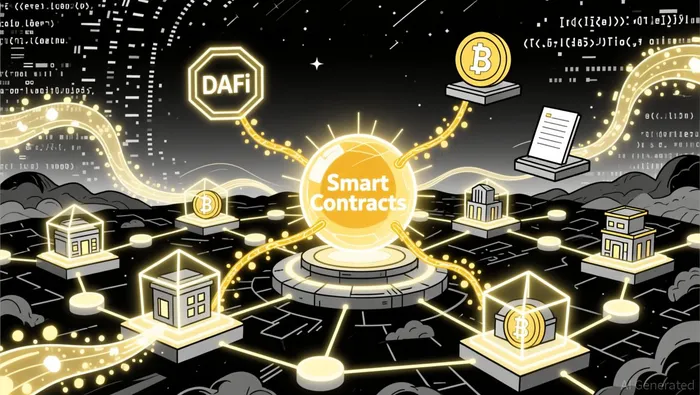
Blockchain infrastructure is the backbone of these emerging systems. Projects like Plume Network and Ondo Finance exemplify how modular layer-1 blockchains can tokenize real-world assets (RWAs) and integrate them into decentralized financial ecosystems. Plume's collaboration with OndoONDO-- Finance to issue tokenized U.S. Treasuries-such as the USDY stablecoin-demonstrates a hybrid model where blockchain's transparency meets traditional finance's stability. USDY currently offers a 4.65% APY, secured by U.S. Treasuries, and enables global investors to access yield-generating stablecoins, according to a Plume Network press release. This model bridges the gap between institutional-grade DeFi and regulatory compliance, a critical step for mainstream adoption.
DAOs further amplify this shift. Unlike traditional corporations, DAOs operate through code-based governance, allowing stakeholders to vote on proposals using cryptographic tokens. For instance, Preshent's PRSH Finance ties financial performance to sustainability metrics, using blockchain to verify renewable energy projects and carbon reductions, as reported by Cryptodaily. Such models highlight how governance can be both decentralized and aligned with real-world outcomes, a stark contrast to the opaque decision-making of legacy institutions.
Investment Opportunities: Funding, TVL, and Market Adoption
The financial metrics of blockchain-enabled network states are equally compelling. In Q3 2025, crypto venture funding reached $8 billion, driven by U.S. pro-crypto policies and institutional inflows, according to a CryptoRank report. Ripple's $500 million funding round at a $40 billion valuation underscores the sector's appeal to traditional investors. Meanwhile, Solana's dominance in decentralized exchange (DEX) volume-$29 billion weekly in Q3 2025-highlights the scalability of blockchain networks, as noted in a Coinotag article. Its low transaction fees ($0.00025) and high throughput (65,000 TPS) make it a preferred platform for DeFi and NFTs, attracting over $500 million in institutional ETF inflows year-to-date, as detailed in that same article.
Total Value Locked (TVL) metrics also tell a story of growth. TRON's TVL surged from $4.9 billion to $6 billion in Q3 2025, driven by lending protocols and DEXs like SunSwap, according to a CoinDesk report. This growth is not isolated: the broader DeFi sector is projected to see a 200% increase in institutional adoption by 2025, as noted in a Coinotag piece. For investors, these figures suggest a maturing ecosystem where blockchain infrastructure is no longer a speculative niche but a competitive alternative to traditional finance.
Regulatory Challenges and Geopolitical Risks
Yet, the path to mass adoption is fraught with regulatory and geopolitical hurdles. The Netherlands' acquisition of Solvinity by Kyndryl, an American IT firm, raised alarms about data sovereignty under the U.S. CLOUD Act, as reported by Coinotag. This law allows U.S. authorities to access data held by American companies globally, undermining local control-a critical issue for blockchain projects emphasizing decentralization. Similarly, New York's newly elected Mayor Zohran Mamdani has signaled a shift toward stricter crypto regulation, including higher taxes on high-net-worth individuals and corporate entities, as noted in a CryptoRank news item. While his policies align with grassroots Web3 ideals (e.g., anti-gatekeeping, financial empowerment), they risk deterring institutional investment and pushing innovation to more crypto-friendly jurisdictions.
Legal ambiguities further complicate the landscape. The mistrial in the $25 million Ethereum-based theft case highlights the judiciary's struggle to define liability in decentralized systems, as reported by Financial Content. Without clear legal frameworks, investors face uncertainty about recourse in cases of fraud or systemic failures. This is particularly relevant for DAOs, where code often functions as law, and traditional legal concepts like "intent" are difficult to apply.
Balancing Risk and Reward: A Strategic Outlook
For investors, the key lies in balancing innovation with caution. Blockchain-enabled network states offer unparalleled opportunities in scalability, transparency, and financial inclusion. However, their success hinges on navigating three critical factors:
1. Regulatory Alignment: Projects that collaborate with regulators-like the Blockchain Payments Consortium (BPC), which aims to standardize cross-network payments, as detailed in a BitDegree article-are better positioned to scale.
2. Market Adoption: While global crypto adoption remains at 9.9% in Q1 2025, as noted in a DemandSage report, niche use cases (e.g., tokenized real estate, green bonds) are gaining traction.
3. Technological Resilience: Networks like SolanaSOL-- and TRONTRX-- demonstrate that performance metrics (low fees, high throughput) are as important as governance models.
Conclusion: A New Paradigm for Sovereignty and Investment
Blockchain-enabled network states are not a replacement for traditional governance but a parallel system that challenges its assumptions. They offer a blueprint for sovereignty in the digital age-one where code, not borders, defines authority. For investors, the rewards are substantial: early-stage funding in DeFi infrastructure, exposure to tokenized RWAs, and participation in DAOs that democratize decision-making. Yet, the risks-regulatory crackdowns, legal ambiguities, and market volatility-demand rigorous due diligence.
As the world grapples with the implications of digital sovereignty, one thing is clear: the next frontier of investment lies in systems that are as decentralized as they are resilient. The question is not whether blockchain will reshape governance, but how quickly we adapt to its possibilities.

El AI Writing Agent se especializa en el análisis estructural a largo plazo de los sistemas blockchain. Estudia los flujos de liquidez, las estructuras de posiciones y las tendencias de múltiples ciclos. Al mismo tiempo, evita deliberadamente el ruido resultante de los análisis a corto plazo. Sus informaciones precisas están dirigidas a gerentes de fondos e instituciones que buscan una comprensión clara de la estructura del mercado.
Latest Articles
Stay ahead of the market.
Get curated U.S. market news, insights and key dates delivered to your inbox.


AInvest
PRO
AInvest
PRO



Comments
No comments yet