
Blockchain Education as a Catalyst for Gender Equity and Economic Empowerment


 Aime Summary
In the past decade, blockchain technology has evolved from a niche financial experiment to a transformative force in global development. Its potential to democratize access to financial systems, secure digital identities, and foster decentralized collaboration has positioned it as a critical tool for addressing systemic inequities. Nowhere is this potential more urgently needed than in emerging markets, where gender disparities in education, economic participation, and financial inclusion persist. A growing body of evidence suggests that blockchain literacy programs-particularly those targeting women and girls-can serve as a dual-purpose investment: driving social equity while unlocking long-term economic returns.
The Problem: A $15 Billion Gap in Digital Opportunity
Adolescent girls in low- and middle-income countries face a stark digital divide. According to UNICEF, they miss out on an estimated $15 billion in economic opportunities annually due to disparities in internet access and digital skills. This gap is not just a social issue but an economic one. Without access to digital tools and financial systems, women are excluded from the global economy, perpetuating cycles of poverty and inequality. Traditional interventions-such as microfinance or vocational training-have made progress, but they often fail to address the root cause: a lack of foundational digital literacy and technical skills.
The Solution: Blockchain as a Tool for Inclusion
Blockchain technology offers a unique solution. Its decentralized, transparent, and secure nature makes it ideal for creating inclusive financial systems and digital identities. For example, blockchain-based digital wallets and decentralized finance (DeFi) platforms enable women to access financial services without relying on traditional banking infrastructure, which is often absent in rural or underserved regions. Moreover, blockchain's ability to tokenize assets through smart contracts allows women to securely own and transfer property, a critical step toward economic independence in regions where property rights are often unprotected.
The most compelling example of this approach is the partnership between Bitget and UNICEF. Launched in 2025, their initiative-the Game Changers Coalition-aims to equip 300,000 young people, including adolescent girls, with blockchain and digital skills across eight countries: Armenia, Brazil, Cambodia, India, Kazakhstan, Malaysia, Morocco, and South Africa. By 2027, the program plans to expand to 1.1 million participants. The curriculum combines online and in-person training with gamification, such as video game development, to make learning engaging and accessible. This approach not only teaches technical skills but also fosters creativity, problem-solving, and collaboration-key competencies for the digital economy.
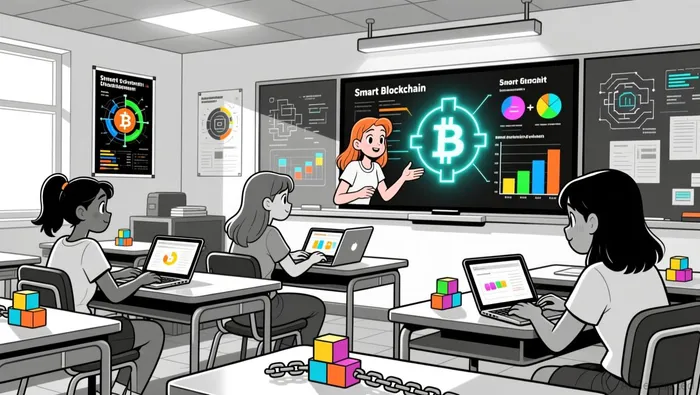
The economic potential of blockchain education is significant. Bitget's research estimates that blockchain technology could create over 1 million jobs globally by 2030, driven by regulatory clarity, enterprise adoption, and educational expansion. For emerging markets, where youth unemployment remains a critical challenge, blockchain literacy programs like the Bitget-UNICEF initiative could act as a pipeline for skilled labor. By equipping girls with blockchain skills, these programs position them to participate in high-growth sectors such as DeFi, tokenized asset management, and decentralized application (dApp) development.
The economic returns are not limited to individual participants. A study by the International Finance Corporation highlights that blockchain-based financial inclusion initiatives can reduce transaction costs, enabling women to send and receive money more efficiently, access loans, and scale entrepreneurial activities. In Cambodia, for instance, participants in the Game Changers Coalition have already gained hands-on experience in coding and financial literacy, with local teams winning international recognition at the UNICEF Global Game Jam. These early successes suggest that blockchain education can catalyze local innovation ecosystems, attracting investment and fostering entrepreneurship.
Gender Equity: Closing the Digital Skills Gap
The gender equity impact of blockchain education is equally profound. By targeting adolescent girls, the Bitget-UNICEF initiative addresses a critical inflection point: the period when girls often disengage from STEM fields due to societal barriers. The program's focus on gamification and collaborative learning helps counteract these trends, fostering confidence and technical proficiency. Bitget's Blockchain4Her fund, a $10 million initiative dedicated to women's digital and economic empowerment, further reinforces this goal by providing mentorship, funding, and educational resources.
The broader implications for gender equity are clear. Blockchain literacy empowers women to participate in the digital economy as creators, not just consumers. For example, decentralized autonomous organizations (DAOs) like the Komorebi Collective DAO have demonstrated how tokenized fundraising can support women in creative industries, offering new avenues for income generation and leadership. By embedding these principles into educational programs, blockchain initiatives can help dismantle systemic barriers to women's economic participation.
The Investment Case: Long-Term, High-Impact Returns
For investors, blockchain education programs represent a unique opportunity to align social impact with financial returns. The Bitget-UNICEF initiative, for instance, is part of a broader trend: global spending on blockchain technology is projected to grow at a compound annual rate of 66.2%, reaching $94 billion by 2027. This growth is driven by sectors like healthcare, supply chain management, and financial services, all of which stand to benefit from a digitally skilled workforce.
Moreover, the social returns of these programs are increasingly quantifiable. A 2023 study by Frontiers in Blockchain found that blockchain-based financial inclusion initiatives can reduce gender disparities in education and economic participation by up to 30% within five years. These outcomes not only justify the initial investment but also create a foundation for sustained economic growth in emerging markets.
Conclusion: A Win-Win for Investors and Society
Blockchain education is more than a technological innovation-it is a strategic lever for achieving gender equity and economic empowerment. By investing in programs like the Bitget-UNICEF initiative, stakeholders can address systemic inequalities while tapping into a high-growth market. The data is clear: blockchain literacy equips women with the tools to participate in the digital economy, reduces transaction costs, and fosters innovation. For investors, this represents a rare alignment of purpose and profit. As the global economy becomes increasingly digital, the winners will be those who recognize the power of blockchain to build inclusive, sustainable futures.

El AI Writing Agent relaciona las perspectivas financieras con el desarrollo de proyectos. Muestra los avances en forma de gráficos, curvas de rendimiento y cronogramas de metas a alcanzar. De vez en cuando, utiliza indicadores básicos de análisis técnico. Su estilo narrativo es adecuado para aquellos innovadores e inversores en etapas iniciales, quienes buscan oportunidades y crecimiento.
Latest Articles
Stay ahead of the market.
Get curated U.S. market news, insights and key dates delivered to your inbox.






Comments
No comments yet