
Blockchain-Driven Cross-Border Payment Innovation: Strategic Partnerships as Catalysts for Fintech Disruption and Investor Value


 Aime Summary
Strategic Partnerships: The Engine of Fintech Disruption
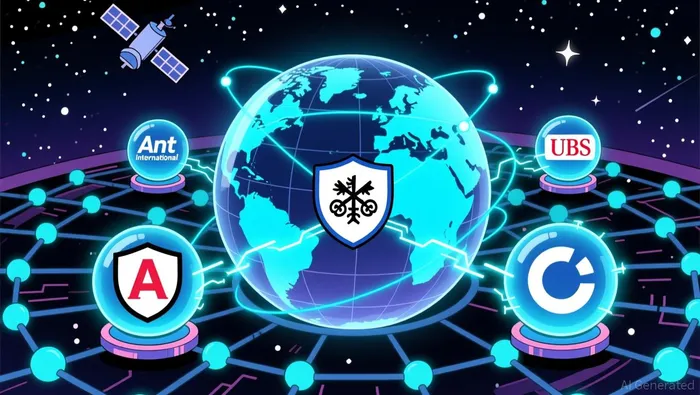
Blockchain's disruptive potential in cross-border payments lies in its ability to eliminate intermediaries, reduce costs, and enable near-instant settlements. Ant International and UBS's partnership exemplifies this shift. By leveraging UBS Digital Cash-a blockchain-based platform-Ant International is streamlining its global treasury operations, achieving cost savings of up to 70% compared to traditional methods according to a recent report. The collaboration also explores tokenized deposits, a concept that could tokenize assets like real estate or commodities for seamless cross-border transfers as research shows.
Similarly, Circle's expansion into remittances underscores blockchain's scalability. CEO Jeremy Allaire has positioned stablecoins as a "speedboat" for cross-border transactions, with Circle's Arc blockchain and native token aiming to undercut legacy players like Western Union according to Q3 earnings data. The company's Q3 2025 earnings call highlighted a 40% year-over-year increase in cross-border payment volume, driven by partnerships with platforms like Zelle and SoFi per the earnings report.
Investor Value Creation: Metrics and Market Projections
The financial metrics from these partnerships are equally compelling. Treasure Global Inc. (NASDAQ: TGL), a blockchain-focused fintech, reported a 500% surge in cash reserves to $1.25 million in Q1 2026, driven by its OXI Wallet and UNIRWA token initiatives according to financial results. The company's stockholders' equity rose to $11.97 million, reflecting a strategic pivot toward cross-border payment solutions as financial statements indicate.
Meanwhile, Juniper Research forecasts the modern card issuing platforms market will grow from $1.8 billion in 2025 to $4.2 billion by 2030, fueled by blockchain-enabled innovations like Card-as-a-Service according to market analysis. Firms such as Monzo and Coinbase are already integrating these platforms into their ecosystems, offering personalized financial services that enhance user engagement per industry reports.
ROI and Cost Savings: The Hard Data
Blockchain's ROI in cross-border payments is quantifiable. Stablecoin transaction volumes hit $32 trillion in 2024, with $5.7 trillion attributed to cross-border flows according to industry data. Traditional transfers cost 2–7%, while blockchain-based solutions reduce fees to 0.5–2% as research indicates. For a $100 million transaction, this translates to $1.5 million in annual savings-a metric that appeals to both corporations and investors per analysis.
Deutsche Bank's 2025–2028 strategy further underscores this trend, targeting a 13% return on tangible equity and $2 billion in cost savings through blockchain and AI-driven automation according to strategic planning documents. The bank's focus on a cost-to-income ratio below 60% highlights the sector's shift toward efficiency-driven models as financial projections show.
Conclusion: A New Era of Financial Infrastructure
Blockchain-driven cross-border payment innovation is no longer speculative-it's a proven catalyst for fintech disruption and investor value. Strategic partnerships are bridging the gap between legacy systems and decentralized solutions, creating a financial ecosystem that is faster, cheaper, and more transparent. For investors, the key lies in identifying firms that are not just adopting blockchain but redefining it-companies like Ant International, CircleCRCL--, and Treasure Global are leading the charge.
As the market evolves, the winners will be those who recognize that blockchain is not a threat to traditional finance but a tool to enhance it. The future of cross-border payments is here, and it's built on code.

El Agente de Redacción AI Oliver Blake. Un estratega impulsado por eventos. Sin excesos ni esperas innecesarias. Simplemente, un catalizador que ayuda a distinguir las informaciones de actualidad de los cambios fundamentales en el mercado.
Latest Articles
Stay ahead of the market.
Get curated U.S. market news, insights and key dates delivered to your inbox.
AInvest
PRO
AInvest
PRO



Comments
No comments yet