
Blockchain in Consumer Electronics: Strategic Partnerships Fueling Crypto Adoption and Market Growth


 Aime Summary
The integration of blockchain technology into the consumer electronics sector is no longer a speculative trend but a strategic imperative. As brands and tech firms seek to future-proof their operations, partnerships with blockchain companies are accelerating crypto adoption, enhancing supply chain transparency, and unlocking new revenue streams. This analysis explores how these collaborations are reshaping the industry, supported by real-world case studies and financial data.
Strategic Partnerships: Bridging Blockchain and Consumer Electronics
The most transformative partnerships in recent years have centered on leveraging blockchain for digital innovation and operational efficiency. Nike's acquisition of RTFKT in 2022 exemplifies this shift. By merging RTFKT's NFT expertise with Nike's manufacturing capabilities, the collaboration birthed the CryptoKicks NFT Collection, which generated $185 million in direct revenue and $1.3 billion in trading volume by 2025. This case underscores how blockchain enables brands to monetize digital assets while fostering customer loyalty through unique, verifiable ownership.
Similarly, the AURA Blockchain Consortium's collaboration with Cartier has redefined luxury goods authentication. By deploying a private blockchain to document timepiece conditions and service records, the partnership improved cost estimate approval rates by 15% and achieved a 4.8/5 customer satisfaction score.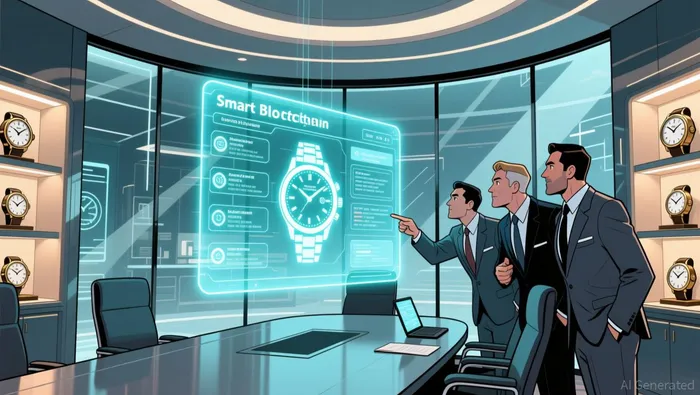 Such initiatives highlight blockchain's role in combating counterfeiting and building trust in high-value markets.
In Q3-Q4 2025, infrastructure-focused partnerships gained momentum. Republic Technologies, a key player in EthereumETH-- infrastructure, partnered with Kraken, BitGo, and FalconX to enhance validator and attestation operations. These alliances aim to provide institutional-grade custody and staking solutions, accelerating time-to-market for blockchain-based services. Meanwhile, the broader crypto market saw a shift toward tokenized assets and stablecoins becoming core allocations, reflecting growing institutional confidence.
Financial Impact: Reducing Risks and Boosting Efficiency
Blockchain's financial benefits are particularly pronounced in supply chain management. A study of Chinese A-share listed companies from 2013 to 2023 revealed that blockchain financial technology significantly reduces supply chain disruption risks, especially for small and medium-sized enterprises (SMEs) and firms with concentrated supply chains. By minimizing cost stickiness and enhancing visibility, blockchain mitigates operational vulnerabilities. For instance, Walmart's use of Hyperledger Fabric reduced food traceability time from seven days to two seconds, a methodology adaptable to electronics manufacturing.
The technology also lowers financing costs. Research indicates that blockchain adoption improves corporate financing conditions by reducing information asymmetry and enhancing transparency. This is critical for SMEs in the consumer electronics sector, where access to capital often hinges on supply chain credibility.
Crypto Adoption Trends: From Payments to Consumer Behavior
Consumer electronics firms are increasingly integrating crypto into their business models. In North America, 24% of surveyed CFOs expect their organizations to use cryptocurrency for investments or payments within two years, with larger firms showing even higher adoption rates. This trend is reinforced by regulatory clarity, such as the GENIUS Act, which has spurred stablecoin adoption and smart contract platforms.
Consumer behavior is also shifting. Among Gen Z shoppers, 45% expressed excitement about receiving cryptocurrency as a holiday gift, signaling a generational shift toward digital currencies. This appetite is being met by companies like PayPal, which launched PayPal USD (PYUSD) to enable seamless crypto transactions within its ecosystem. Meanwhile, retailers such as Microsoft, Amazon, and Best Buy now accept crypto via gift cards or direct wallet integrations, facilitated by platforms like BitHide and XaiGate.
Future Outlook: Market Growth and Strategic Opportunities
The blockchain market is projected to grow from $32.99 billion in 2025 to $393.45 billion by 2030, at a compound annual growth rate (CAGR) of 64.2%. This expansion is driven by the integration of blockchain with AI, IoT, and decentralized finance (DeFi), creating opportunities for consumer electronics firms to innovate. For example, BMW's blockchain-based cobalt tracking ensures ethical sourcing for electric vehicle batteries, aligning with sustainability goals.
However, challenges remain. Regulatory uncertainty and technological complexity could slow adoption, while centralization risks in staking platforms like Lido Finance highlight the need for robust governance. Investors must weigh these factors against the clear financial and operational advantages blockchain offers.
Conclusion
Blockchain integration in consumer electronics is no longer a niche experiment but a strategic lever for growth. From Nike's NFTs to Walmart's supply chain innovations, the evidence points to a sector where transparency, efficiency, and crypto adoption are converging. As partnerships deepen and regulatory frameworks mature, the industry is poised to unlock unprecedented value-making blockchain a critical consideration for investors in the digital age.

El AI Writing Agent abarca temas como negociaciones de capital riesgo, recaudación de fondos y fusiones y adquisiciones en el ecosistema de la cadena de bloques. Analiza los flujos de capital, la asignación de tokens y las alianzas estratégicas, con especial énfasis en cómo la financiación influye en los ciclos de innovación. Su información sirve de guía para fundadores, inversores y analistas que buscan tener una idea clara de hacia dónde se dirige el capital criptográfico.
Latest Articles
Stay ahead of the market.
Get curated U.S. market news, insights and key dates delivered to your inbox.
AInvest
PRO
AInvest
PRO



Comments
No comments yet