
Blockchain Bridges Web2 and Web3 as Carbon Tokens Reshape Green Finance


 Aime Summary
Carbon tokenization is emerging as a transformative force in the real-world asset (RWA) sector, with companies and markets increasingly leveraging blockchain technology to digitize environmental assets. As global demand for decarbonization accelerates, firms are exploring innovative ways to tokenize carbon credits, equity stakes, and other tangible assets, creating new investment opportunities and liquidity channels. This trend is being driven by a combination of corporate sustainability goals, regulatory shifts, and the growing appeal of Web3 infrastructure.
A notable example is Faraday Future Intelligent Electric Inc. (FFAI) and its majority-owned subsidiary AIxCryptoAIXC-- (AIXC), which recently announced plans to tokenize up to $5 million of FFAI's Class A common stock as part of its RWA strategy. The initiative, outlined in a November 2025 press release, aims to integrate on-chain verification of electric vehicle (EV) assets with blockchain-based digital models. By bridging Web2 and Web3 ecosystems, FFAIFFAI-- and AIxCrypto seek to unlock new value for stakeholders while advancing the EAI + Crypto framework. The project underscores how traditional industries are adapting to tokenization to enhance transparency and interoperability.
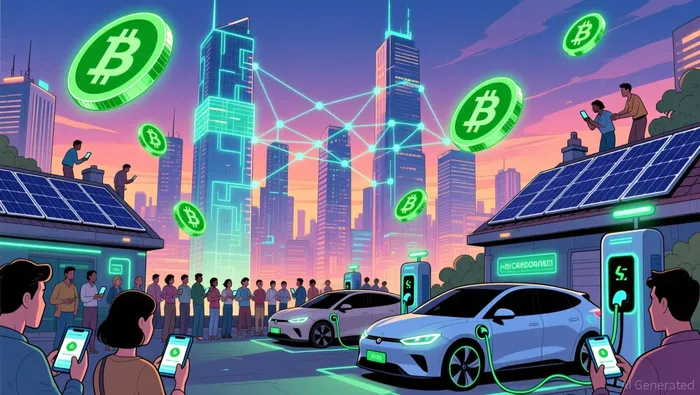 Meanwhile, the broader RWA market is gaining momentum through deflationary tokenomics strategies. World Liberty Financial's community-approved buyback-and-burn plan, which allocates 100% of liquidity fees to reduce circulating supply, highlights how tokenized assets are being designed to align user incentives with long-term value creation. With WLFI trading near $0.20 and a market cap of $5.4 billion, the initiative reflects a growing preference for scarcity-driven models in the RWA space. Such strategies are particularly relevant for carbon-related tokens, where supply constraints can drive demand in line with corporate net-zero commitments.
The renewable energy carbon credit market is a prime example of this dynamic. A 2025 industry report projects that the sector will grow at a compound annual growth rate (CAGR) of 16.2% through 2033, fueled by corporate decarbonization targets and the increasing use of carbon offsets. Companies like South Pole, Climate Impact Partners, and Atmosfair are already digitizing carbon credits to improve traceability and accessibility. Innovators such as CarbonClear and The Carbon Collective are further advancing the space by building transparent, blockchain-integrated platforms. These developments position carbon tokenization as a critical component of global climate finance.
As firms like FFAI and AIxCrypto demonstrate, the convergence of traditional assets and blockchain infrastructure is reshaping how value is created and exchanged. With regulatory clarity and technological advancements, the RWA market is poised to expand, offering investors new tools to participate in the transition to a sustainable economy.

Stay ahead of the market.
Get curated U.S. market news, insights and key dates delivered to your inbox.
AInvest
PRO
AInvest
PRO



Comments
No comments yet