
Blockchain's $6.8B Gamble: Can Innovation Outrun Its Security Flaws?


 Aime Summary
The collapse of Terminal Finance has sent shockwaves through the blockchain and fintech sectors, underscoring the vulnerabilities exposed by delayed technological adoption and security lapses. The firm's abrupt shutdown, attributed to a critical failure in its decentralized lending protocols, highlights broader challenges as major players like Naver and Upbit pour $6.8 billion into AI and blockchain infrastructure. This merger, one of South Korea's largest fintech consolidations, aimed to create a next-generation financial framework but now faces scrutiny amid a $36 million Solana hot wallet breach at Upbit just days after the deal.
The incident at Upbit, South Korea's largest crypto exchange, mirrors a 2019 breach linked to North Korean hackers and raises questions about the readiness of large-scale blockchain integrations. Despite Naver's CEO emphasizing opportunities at the "critical juncture" of blockchain and agentic AI according to reports, the breach has forced Dunamu to apologize publicly and commit to covering user losses as research indicates. This follows stalled legislative efforts for stablecoin regulation in South Korea, where rivals like Kakao are racing to develop won-pegged stablecoins but face regulatory hurdles according to data.
The Balancer protocol's $116 million hack in November 2025 exposed systemic risks in decentralized finance (DeFi). A community-driven proposal to distribute $8 million in recovered funds to affected liquidity pools has sparked debate over the efficacy of audits and the need for in-kind reimbursements as per the report. Despite 11 security audits, the attack exploited a rounding function flaw in Stable Pools, illustrating how sophisticated exploits can bypass even rigorous reviews according to analysis.
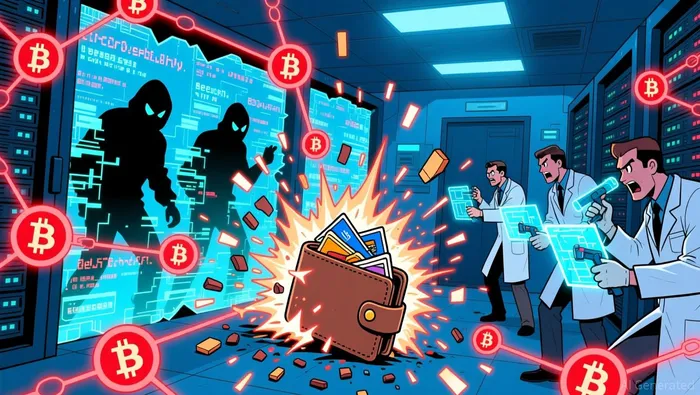
The Terminal Finance collapse also reflects broader market instability. Binance, already under scrutiny for its role in Hamas-related transactions, now faces lawsuits from October 7 attack victims, compounding regulatory pressures. Similarly, BNB's price struggles below $900, with onchain activity slumping, signal investor skepticism toward blockchain's current trajectory.
Forward-looking initiatives, however, hint at resilience. Mutuum Finance's dual-lending architecture and Halborn security audit progress aim to address liquidity risks, while Telegram's Cocoon decentralized AI network seeks to counter centralized threats as industry reports show. Yet, as CarTrade Tech's abandoned merger with Girnar Software demonstrates, strategic realignments in fintech remain fraught with uncertainty according to market analysis.
The interplay of innovation, regulation, and security remains pivotal. While Naver and Upbit's AI-blockchain vision could redefine financial infrastructure, the Terminal Finance saga underscores the urgency of addressing technical vulnerabilities and regulatory gaps before the sector can achieve sustainable growth.

Stay ahead of the market.
Get curated U.S. market news, insights and key dates delivered to your inbox.






Comments
No comments yet