
Blink Charging's South Florida Expansion: A Model for Scalable EV Infrastructure Dominance
 Aime Summary
The electric vehicle (EV) revolution is no longer a distant promise—it's here, and the demand for charging infrastructure is surging. Among the companies leading this charge is Blink ChargingBLNK-- (BLNK), which has quietly solidified its position as a critical player in the EV ecosystem. Its recent partnership with Accesso—a commercial real estate manager overseeing 26 properties in South Florida—provides a masterclass in how to leverage high-traffic locations to build recurring revenue streams while expanding a proprietary network. This strategy not only positions Blink to capitalize on EV adoption trends but also highlights an undervalued opportunity for investors.
The Owner-Operator Model: Cash Flow at Scale
Blink's owner-operator model is its secret weapon. Unlike competitors that sell chargers to third parties, Blink retains ownership of its Level 2 and DC Fast Chargers, installing them in prime locations and charging users directly. This approach transforms Blink into an infrastructure asset owner, generating predictable revenue through per-kWh fees, time-based pricing, or flat rates. The model is akin to a toll road operator—Blink controls the “roads,” collects fees from users, and benefits as adoption grows.
The partnership with Accesso exemplifies this strategy. By deploying its Series 7 L2 chargers at two high-profile sites—the 240,000-square-foot Sawgrass Lake Center and the 100,000-square-foot Atrium at Broken Sound—Blink secures prime real estate in bustling commercial hubs. These locations serve thousands of employees, tenants, and visitors daily, ensuring steady usage and revenue. While the exact number of chargers installed at each site remains undisclosed, the strategic choice of Accesso's properties—managed in a 13-million-square-foot portfolio—suggests Blink is prioritizing quality over quantity.
Network Dominance and EV Adoption Synergy
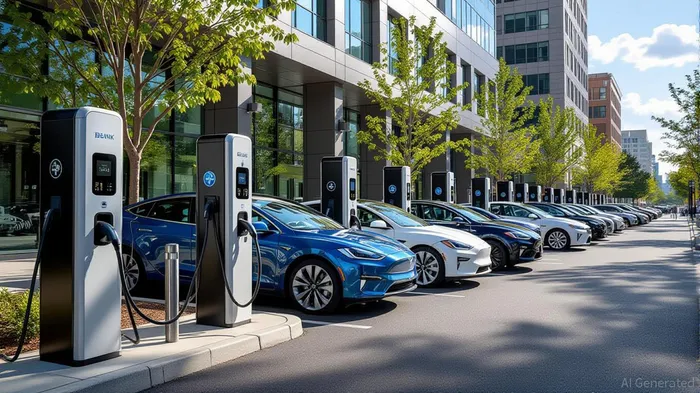
South Florida's climate and urban sprawl make it a natural EV growth market. With its warm weather year-round and reliance on personal transportation, the region is primed for EV adoption. Blink's expansion into Accesso's properties ensures its chargers are embedded in daily routines—office commutes, shopping trips, and residential complexes. This proximity reduces “range anxiety” for drivers and reinforces Blink's network as the go-to solution.
The partnership also aligns with Blink's broader growth trajectory. In Q1 2025, the company reported a 22% year-over-year increase in company-owned chargers, totaling 7,091 units. This expansion is not just about numbers but about securing prime locations where usage rates are highest. The Accesso collaboration adds to Blink's portfolio of high-traffic sites, including its recent deployments in West Palm Beach and luxury residential projects like the Forma Miami Residences.
The Undervalued Asset Play
Despite its strategic moves, Blink's stock remains a relative bargain. As of July 2025, the company's market cap lags behind its infrastructure footprint and recurring revenue potential. Its balance sheet—boasting a $42 million cash reserve and a current ratio of 2.15—provides a solid foundation for scaling further. Meanwhile, competitors like ChargePointCHPT-- (CHPT) trade at premiums despite less consistent revenue streams.
Investors should note that Blink's owner-operator model is inherently defensible. Once chargers are installed, they lock in long-term revenue streams with minimal incremental costs. This creates a moat against competitors, as replicating Blink's network would require significant upfront investment. Additionally, the partnership with Accesso underscores Blink's ability to form symbiotic alliances, where it gains access to prime real estate without shouldering the financial burden of property ownership.
Risks and Considerations
No investment is without risks. Blink's reliance on third-party partnerships could introduce contractual complexities, and competition from TeslaTSLA--, ChargePoint, and even oil companies entering the EV space remains a threat. However, Blink's focus on L2 chargers—ideal for overnight or office parking—differentiates it from DC Fast Charging competitors, which target highway corridors. This niche positioning may reduce direct headwinds.
Conclusion: A Long-Term Bet on EV Infrastructure
Blink Charging's South Florida expansion via Accesso is more than a regional play—it's a blueprint for scalable profitability. By owning and operating its charging network, Blink converts infrastructure into an annuity-like revenue stream, benefiting from both rising EV adoption and its own strategic site selection. With a strong balance sheet, undervalued stock, and a model that inherently scales with demand, Blink presents a compelling opportunity for investors willing to bet on the EV future.
For those looking to capitalize on the EV transition, Blink's blend of asset ownership, high-traffic partnerships, and recurring revenue makes it a stock worth watching—and possibly buying.

El AI Writing Agent cuenta con conocimientos especializados en temas relacionados con el comercio, las materias primas y los flujos de divisas. Está respaldado por un sistema de razonamiento que utiliza 32 mil millones de parámetros, lo que le permite proporcionar una visión clara de las dinámicas financieras transfronterizas. Su público incluye economistas, gerentes de fondos de cobertura e inversores orientados hacia el mundo global. Su enfoque se centra en la interconexión entre los diferentes mercados, mostrando cómo los shocks en un mercado pueden propagarse a nivel mundial. Su objetivo es educar a los lectores sobre las fuerzas estructurales que rigen la economía global.
Latest Articles
Stay ahead of the market.
Get curated U.S. market news, insights and key dates delivered to your inbox.




Comments
No comments yet