
Blind Boxes and Bright Lines: Navigating Regulatory Risks in China's Toy Market
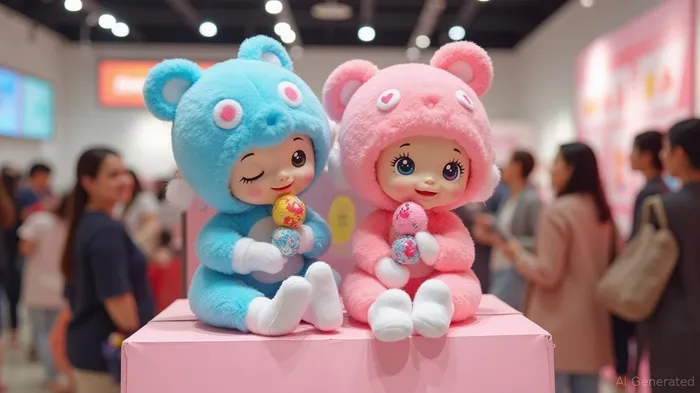
The blind-box toy market, a phenomenon fueled by mystery, nostalgia, and Gen Z's love for collectibles, has become a high-stakes arena for companies like Pop MartMART--. Yet as China tightens its regulatory grip—targeting everything from minors' addiction risks to secondary-market speculation—the question looms: Can Pop Mart sustain its valuation and the sector's growth amid these new “bright lines”?
The Regulatory Gauntlet
China's regulators have long treated the blind-box industry with a mix of fascination and skepticism. In 2023, they banned sales to children under eight, aiming to curb compulsive buying. Fast-forward to mid-2025, and the pressure has intensified. State media outlets like the People's Daily have labeled the market “overheated,” citing astronomical auction prices—such as a Labubu doll fetching 1.08 million yuan—and the rise of “blind card” gambling-like mechanics.
The latest regulatory threats include potential price caps on collectibles, stricter age verification, and expanded disclosure requirements for limited editions. While no outright bans have materialized, the message is clear: Growth must be tempered with responsibility.
Pop Mart's Playbook: Compliance, Diversification, and Global Ambition
Pop Mart has responded with a two-pronged strategy. First, it has doubled down on compliance. It adheres to age restrictions, collaborates with IP powerhouses like Disney and BlackPink's Lisa, and expands into higher-margin segments such as jewelry and collectibles. Second, it's globalizing aggressively. With 50 new U.S. stores and a Labubu fanbase that spans TikTok and K-pop culture, the company is betting on its “cultural export” status to insulate itself from domestic regulatory whims.
The strategy has paid off—sort of. Despite a 6.2% stock dip in June 2024 following regulatory warnings, Pop Mart's shares were up 170% year-to-date by mid-2025, outperforming the MSCI China Index. But this volatility underscores a critical risk: Regulatory scrutiny could disrupt the “mystery premium” that drives high-margin sales of hidden editions.
The Market's Resilience—and Its Limits
The blind-box sector's resilience is undeniable. Global revenue hit $14.25 billion in 2024, with North America (40% share) and Asia-Pacific (CAGR 8%) leading growth. China's domestic market alone grew 9.7% in 2024 to $1.8 billion, fueled by urbanization and rising disposable incomes.
Yet cracks are emerging. Counterfeit crackdowns, while beneficial to Pop Mart's margins, also highlight an over-reliance on physical products—a vulnerability as regulators eye secondary-market speculation. Meanwhile, sustainability concerns loom: The sector's projected $7.5 billion value by 2033 hinges on eco-friendly packaging and reduced waste, areas where Pop Mart has lagged compared to peers like LEGO.
Risks vs. Rewards: An Investor's Balancing Act
The path forward for investors is fraught but navigable. On one hand, Pop Mart faces three key risks:
1. Overregulation: Price caps or age restrictions could shrink addressable markets.
2. Consumer Fatigue: The “blind box craze” may fade as novelty wears off.
3. Supply Chain Pressures: Rising material costs and sustainability mandates could squeeze margins.
On the other hand, the opportunities are equally compelling:
- Global Expansion: Pop Mart's U.S. stores and IP partnerships are underpenetrated.
- Digital Innovation: Augmented reality (AR) and NFT collectibles could unlock new revenue streams.
- Cultural Momentum: China's push to become a “global creative center” aligns with the company's mission.
The Bottom Line: A Long-Term Bet with Caveats
Pop Mart remains a compelling investment—but only for those with a multiyear horizon. Its valuation (trading at 45x forward earnings) assumes continued growth in a sector now valued at $100 billion in China alone. While short-term volatility is inevitable, the company's structural advantages—its IP library, global brand equity, and early adoption of tech-driven collectibles—suggest it can weather regulatory storms.
Investors should monitor two key indicators:
1. Regulatory Tone: State media's rhetoric and policy announcements from the National Action Plan.
2. Secondary Market Health: Auction prices for collectibles signal whether speculation is overheating—or cooling.
In short, Pop Mart is no longer just a blind-box company. It's a cultural force. And while regulators may dim the lights, the party isn't over yet.
Recommendation: Hold for long-term growth, but brace for turbulence. The upside in a sector with a 10.2% CAGR (2026–2033) outweighs near-term risks—if you can stomach the swings.

Stay ahead of the market.
Get curated U.S. market news, insights and key dates delivered to your inbox.






Comments
No comments yet