
The Blind-Box Revolution: How Limited-Edition Collectibles Are Reshaping China's Retail Landscape
 Aime Summary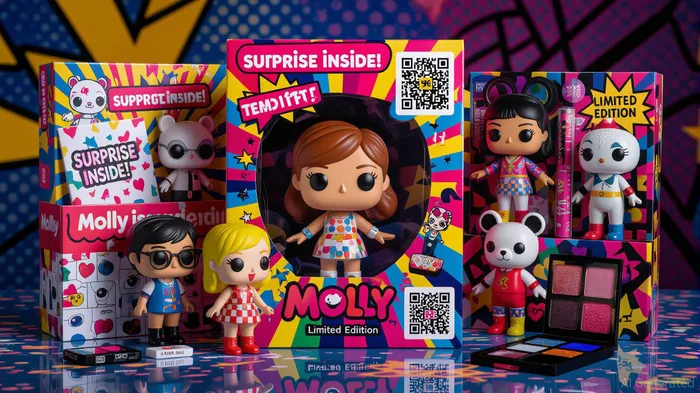
China's retail sector is undergoing a quiet but profound transformation, driven by a fusion of nostalgia, digital engagement, and the psychology of scarcity. At the heart of this shift lies the blind-box phenomenon—a $12 billion market by 2026—that has redefined how consumers interact with brands. For investors, the interplay between emotional consumer sentiment and the commodification of limited-edition collectibles offers a compelling lens to analyze the future of retail in Asia's largest economy.
The Psychology of Scarcity and Social Validation
Blind boxes thrive on the "surprise factor," a concept rooted in behavioral economics. By embedding randomness into product design, brands tap into the dopamine-driven thrill of unboxing, a ritual amplified by platforms like Xiaohongshu and Douyin. Gen Z and young professionals, who constitute 75% of buyers, are not merely purchasing toys—they are curating digital identities. A single rare "Labubu" figurine from Pop Mart can command resale prices 10x its retail value, illustrating how collectibles have become status symbols in a hyperconnected society.
This dynamic is further fueled by the "FOMO" (fear of missing out) effect. Limited-edition drops, often tied to pop culture or historical collaborations (e.g., the Palace Museum), create urgency. For instance, Pop Mart's 2024 collaboration with Luckin Coffee sold out within hours, blending coffee culture with toy collectibles. Such cross-industry partnerships are not just marketing stunts—they are strategic moves to anchor blind-box culture into daily life.
Diversification Beyond Plastic: The Rise of "Blind Box+"
While traditional toy-based blind boxes still dominate 45% of sales, the market is evolving. The "blind box+" model—incorporating stationery, cosmetics, and even food—is growing at a 20% CAGR. This diversification reflects a broader consumer shift toward functional novelty. A ¥150 blind box containing a mix of skincare samples and stationery, for example, appeals to both practicality and indulgence.
This trend is particularly lucrative in lower-tier cities, where e-commerce penetration has democratized access to premium products. The ¥300–500 price segment, once niche, now accounts for 18% of total sales, driven by aspirational buyers seeking to "treat themselves" without splurging on luxury goods. For investors, this signals a scalable model: brands that can balance exclusivity with affordability will capture a growing middle-class demographic.
Regulatory Challenges and Ethical Adaptation
The industry's meteoric rise has not gone unnoticed by regulators. In 2024, China mandated probability disclosures for rare items and imposed age restrictions on sales to children under eight. While these measures initially caused short-term volatility, they have since spurred innovation. Brands like 52TOYS now emphasize "responsible collecting," offering eco-friendly packaging and lifetime warranties to mitigate compulsive consumption.
The stock of Pop Mart, the market leader, has surged 42% year-to-date, reflecting investor confidence in its ability to navigate regulatory headwinds. Its global expansion into Southeast Asia—where 2023 overseas revenue grew 134.9%—further underscores the sector's resilience.
Investment Implications: Where to Allocate Capital
For investors, the blind-box sector presents two key opportunities:
1. IP-Driven Brands: Companies with strong intellectual property (e.g., Pop Mart's Molly, Rolife's Pudumelon) are best positioned to sustain margins. These IPs act as moats, enabling cross-selling into apparel, digital NFTs, and even theme parks.
2. E-Commerce Enablers: The logistics and fulfillment infrastructure supporting blind-box distribution—particularly in lower-tier cities—remains underserved. Startups leveraging AI-driven inventory management could capture a slice of the $8 billion market.
However, risks persist. Over-reliance on Gen Z demographics and the potential for market saturation in the "blind box+" category require careful monitoring. Diversified portfolios should also consider sustainability-focused players, as eco-conscious consumers increasingly demand transparency.
Conclusion: A New Era of Retail
The blind-box revolution is more than a fad—it is a symptom of a deeper shift in consumer behavior. By blending emotional engagement with limited-time offers, brands are redefining what it means to "shop." For investors, the key lies in identifying companies that can balance innovation with ethical practices, ensuring long-term growth in a maturing market. As China's retail landscape continues to evolve, the blind box remains a powerful metaphor: what lies inside is not just a toy, but a glimpse into the future of consumerism.

Delivering real-time insights and analysis on emerging financial trends and market movements.
Latest Articles
Stay ahead of the market.
Get curated U.S. market news, insights and key dates delivered to your inbox.


AInvest
PRO
AInvest
PRO



Comments
No comments yet