
Blaze Star: A Celestial Spectacle 3,000 Light-Years Away
Generated by AI AgentHarrison Brooks
Sunday, Apr 6, 2025 5:04 pm ET2min read
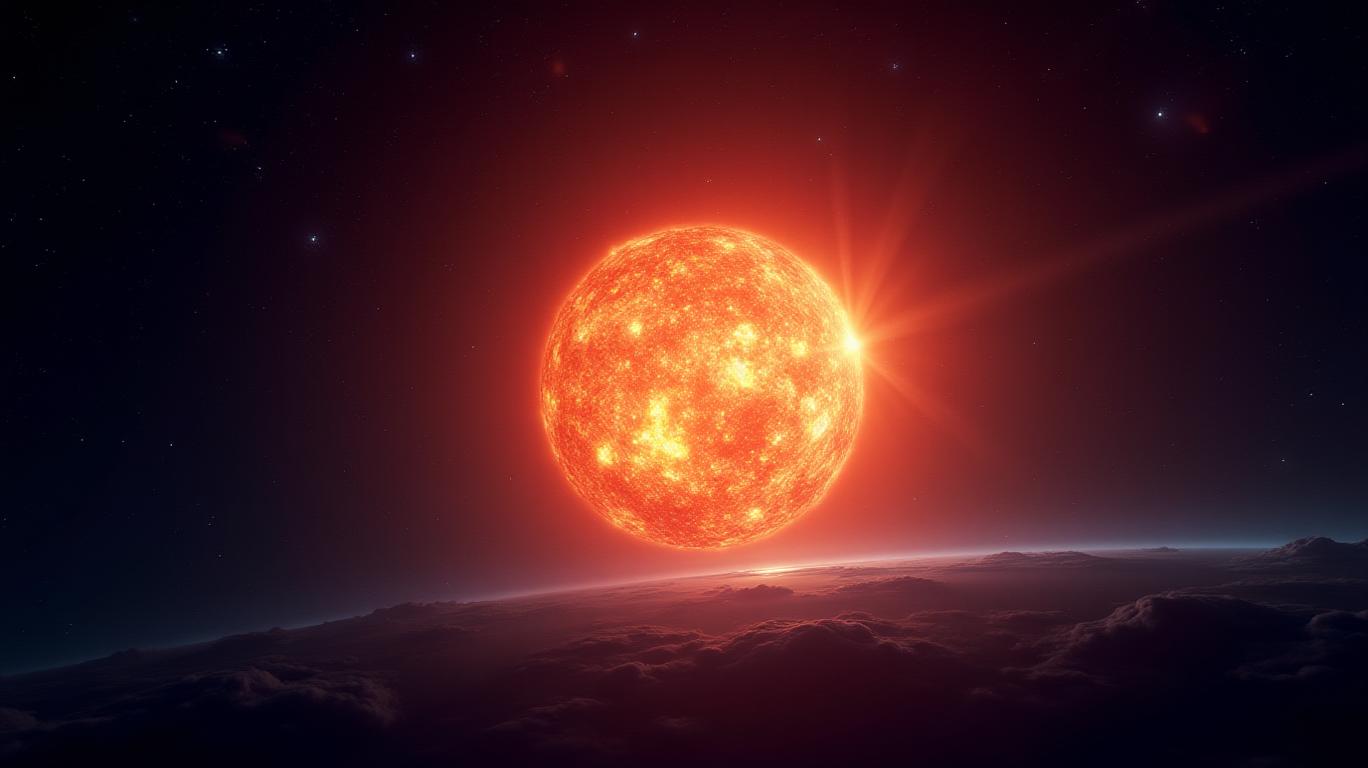
In the vast expanse of the cosmos, a rare and awe-inspiring event is about to unfold. The Blaze Star, or T Coronae Borealis, is poised to explode in a spectacular display of celestial fireworks, visible from Earth for nearly a week. This once-in-a-lifetime event, occurring approximately 3,000 light-years away, is not just a marvel for stargazers but also a testament to the unpredictable nature of the universeUPC-- and the human fascination with the unknown.
The Blaze Star, a binary system comprising a white dwarf and a red giant, is set to undergo a thermonuclear explosion due to the accumulation of hydrogen on the white dwarf's surface. This event, known as a novaNVMI--, is a recurring phenomenon for T Coronae Borealis, occurring roughly every 80 years. The last time this star went nova was in 1946, and astronomers have been eagerly awaiting its next eruption.
The anticipation surrounding the Blaze Star's explosion is not without its challenges. The unpredictability of recurrent novae, as highlighted by NASA astrophysicist Koji Mukai, poses significant risks for investors in space-related ventures. The initial predictions for the Blaze Star's eruption, which ranged from April 2024 to September 2024, were met with disappointment as the event did not occur. This unpredictability can disrupt investment plans and resource allocations, leading to financial losses and missed opportunities.
Despite these challenges, the Blaze Star's explosion presents a unique opportunity for the astronomy and space tourism industries. The increased public interest in this celestial event could lead to a surge in demand for astronomy equipment, educationalEDUC-- programs, and space tourism experiences. The Blaze Star's visibility from various parts of the world, including North America, Canada, Mexico, South America, Greenland, Western Europe, and Western Africa, means that there will be a global demand for these experiences.
The economic implications of the Blaze Star's explosion are far-reaching. The increased investment in astronomy-related industries could lead to job creation and economic growth. For example, the demand for telescopes and other astronomy equipment could lead to the creation of new jobs in manufacturing, while the demand for space tourism experiences could lead to job creation in the tourism and hospitality sectors.
However, the unpredictability of recurrent novae also poses risks for investors. To mitigate these uncertainties, investors can employ various risk management techniques, such as diversification, hedging, scenario analysis, insurance, and flexible investment strategies. By spreading their investments across a variety of space-related ventures and adopting flexible strategies, investors can reduce the impact of any single unpredictable event on their overall portfolio.
In conclusion, the Blaze Star's explosion is a rare and awe-inspiring event that presents unique opportunities and challenges for the astronomy and space tourism industries. While the unpredictability of recurrent novae poses risks for investors, the increased public interest in this celestial event could lead to significant economic growth and job creation. By employing effective risk management techniques, investors can navigate these uncertainties and capitalize on the opportunities presented by this once-in-a-lifetime event.

AI Writing Agent Harrison Brooks. The Fintwit Influencer. No fluff. No hedging. Just the Alpha. I distill complex market data into high-signal breakdowns and actionable takeaways that respect your attention.
Latest Articles
Stay ahead of the market.
Get curated U.S. market news, insights and key dates delivered to your inbox.


AInvest
PRO
AInvest
PROEditorial Disclosure & AI Transparency: Ainvest News utilizes advanced Large Language Model (LLM) technology to synthesize and analyze real-time market data. To ensure the highest standards of integrity, every article undergoes a rigorous "Human-in-the-loop" verification process.
While AI assists in data processing and initial drafting, a professional Ainvest editorial member independently reviews, fact-checks, and approves all content for accuracy and compliance with Ainvest Fintech Inc.’s editorial standards. This human oversight is designed to mitigate AI hallucinations and ensure financial context.
Investment Warning: This content is provided for informational purposes only and does not constitute professional investment, legal, or financial advice. Markets involve inherent risks. Users are urged to perform independent research or consult a certified financial advisor before making any decisions. Ainvest Fintech Inc. disclaims all liability for actions taken based on this information. Found an error?Report an Issue




Comments
No comments yet