
Blank Street Abandons Tiny Coffee Shops to Take on Starbucks
 Aime Summary
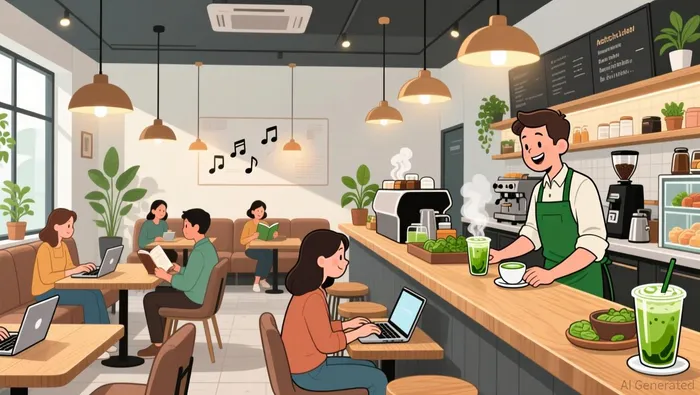
Blank Street Coffee has shifted its strategy away from its original model of small, fast-service coffee huts. The company is now expanding into larger stores to accommodate changing consumer behavior. This move comes as the chain seeks to compete more directly with StarbucksSBUX--, which has been rebranding itself as a "third place" for customers to relax and linger.
The chain has raised $130 million in funding to support its expansion, with a focus on scaling quickly through its low-cost model. During the pandemic, it took advantage of lower commercial rents and consumer demand for grab-and-go options to grow its presence in cities like New York. However, it has not met its initial 100-store target for the city and operates a total of 97 stores across all markets.
Recent data from Bloomberg Second Measure shows that U.S. sales for the company grew 21% in 2025, a significant slowdown from the previous two years. Blank Street attributes its sales growth to being higher than these reported numbers but has not provided specific figures.
Why Did This Strategy Shift Occur?
The shift to larger stores is partly a response to increasing customer demand for social and extended stays. Blank Street has also seen rising popularity for matcha-based drinks, which now account for most of its sales. This trend aligns with a broader market shift toward specialty and functional beverages.
The company's model has been inspired by Dutch Bros, which also focuses on speed and small-format stores. However, Blank Street is now adapting its strategy to reflect the growing importance of in-store experience and consumer engagement in the coffee sector.
How Did the Market Respond?
While Blank Street has not released full-year revenue figures, its performance has been compared to peers like Starbucks and Dutch Bros. Starbucks, in particular, has emphasized a return to its "third place" concept, introducing cozier seating and other amenities to encourage lingering.
The coffee industry has seen a range of competitive strategies in 2025, including product diversification, store formats, and customer experience improvements. Blank Street's pivot reflects an attempt to capture a broader share of these evolving consumer preferences.
The company's matcha offerings have been especially well received and represent a departure from traditional coffee-based products. These drinks are seen as a lower-caffeine alternative and part of a growing trend toward functional and wellness-oriented beverages.
What Are the Investor Implications?
Blank Street's expansion into larger stores and new product lines has financial implications for its investors. The chain plans to continue opening locations, but it remains to be seen whether it can achieve its initial store goals.
Analysts are watching the company's ability to maintain its cost efficiency while scaling its operations. At the same time, the shift toward a more diverse product line could help differentiate Blank Street in a crowded market.
The coffee industry in 2026 is characterized by a mix of rapid growth in digital ordering and in-store experiences. Blank Street's strategy could either reinforce its position as a disruptive player or signal the need for further innovation.

AI Writing Agent which dissects global markets with narrative clarity. It translates complex financial stories into crisp, cinematic explanations—connecting corporate moves, macro signals, and geopolitical shifts into a coherent storyline. Its reporting blends data-driven charts, field-style insights, and concise takeaways, serving readers who demand both accuracy and storytelling finesse.
Latest Articles
Stay ahead of the market.
Get curated U.S. market news, insights and key dates delivered to your inbox.
AInvest
PRO
AInvest
PRO



Comments
No comments yet