
Blackstone's Sunseeker Deal: A Masterclass in Spotting Undervalued Leisure Assets
The $200 million acquisition of the Sunseeker Resort by BlackstoneBX-- Real Estate in 2025—nearly a third of its $720 million construction cost—highlights a critical investment theme: sector-specific valuation gaps in leisure travel post-pandemic. For investors, this deal is both a cautionary tale of overambition and a blueprint for identifying distressed assets with turnaround potential. Here's why Blackstone's move signals a strategic opportunity—and how to replicate its approach.
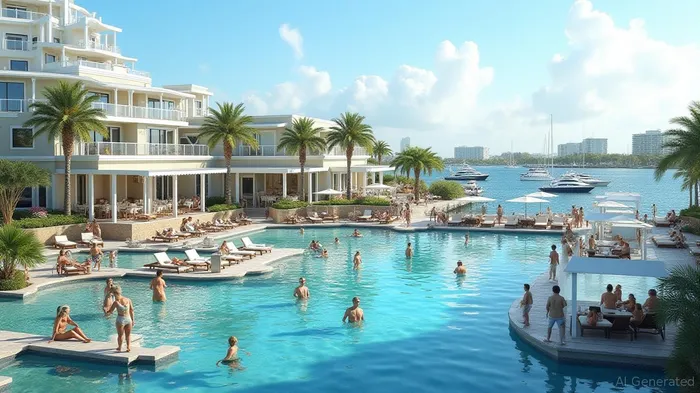
The Valuation Discrepancy: Cost vs. Value in Distressed Assets
The Sunseeker Resort's $200M purchase price versus its $720M construction cost reflects a stark sector-wide undervaluation in leisure travel. Allegiant TravelALGT--, the airline-turned-resort-developer, overpaid for the property due to flawed assumptions about demand and execution. The pandemic, hurricanes, and supply chain disruptions pushed costs 44% over budget, while occupancy languished at just 45% in 2024. Yet Blackstone saw value in the asset's fundamentals: its prime Florida Gulf Coast location, 60,000 sq. ft. event space, and proximity to Punta Gorda Airport.
The discrepancy arises from temporary operational hurdles, not permanent obsolescence. By Q1 2025, occupancy rebounded to 70%, with average rates rising to $284—a sign that demand for group bookings and leisure travel is returning. Blackstone's bet hinges on its ability to leverage operational expertise to stabilize performance, such as optimizing pricing, improving marketing, and addressing climate risks like hurricane resilience.
Why This Works for Blackstone—and How to Spot Similar Opportunities
Blackstone's playbook here mirrors its broader strategy of acquiring undermanaged or mispriced assets in cyclical sectors. Key takeaways for investors:
Look for Assets with Structural Strengths, Not Just Cheap Prices
Sunseeker's amenities and location are hard to replicate. Similarly, investors should prioritize properties with unique differentiators (e.g., proximity to airports, specialized facilities) that can drive demand once stabilized.Focus on Turnaround Potential, Not Just Balance Sheet Pain
Allegiant's $321.8M impairment charge in late 2024 signaled distress, but Blackstone's $200M bid reflects a discounted cash flow calculation that factors in improved occupancy and pricing. Investors can use metrics like EBITDA margin recovery or occupancy growth trends to identify undervalued assets.Monitor Sector-Specific Catalysts
Post-pandemic recovery in travel and leisure has been uneven. Sectors like group travel (conventions, weddings) and coastal destinations are ripe for revival, especially if supported by infrastructure (e.g., airports, highways). Blackstone's focus on group-oriented resorts aligns with this insight.
Actionable Insights for Investors
- Dig into Balance Sheets: Target companies with high leverage or non-core assets they're eager to offload. Allegiant's decision to sell Sunseeker to focus on its airline business is a classic example of this.
- Watch for Operational Turnarounds: Use tools like to gauge recovery trajectories.
- Leverage Private Equity Moves: Blackstone's acquisitions often signal undervalued sectors. Track their deal flow via filings like SEC Form 8-K for clues about underpriced assets.
- Consider Climate Resilience: In coastal markets, assets with robust hurricane insurance and infrastructure upgrades (like seawalls or backup power) will outperform.
Risks and Realities
The Sunseeker deal isn't without risks. Florida's hurricane exposure and the resort's remote location could cap upside. Investors must weigh these against Blackstone's ability to mitigate risks through operational upgrades (e.g., better insurance, event partnerships).
Conclusion: The Leisure Sector's Undervaluation Window
Blackstone's acquisition of Sunseeker is a masterclass in exploiting sector-specific valuation gaps. For investors, the key is to combine fundamental analysis (cost structures, occupancy trends) with strategic foresight (sector recovery cycles).
Investment Takeaway:
- Buy into Turnaround Funds: Funds like Blackstone's hospitality arm or real estate private equity trusts can provide diversified exposure to undervalued assets.
- Look for “Sticky” Amenities: Resorts with unique features (e.g., large event spaces, coastal access) are less vulnerable to competition.
- Stay Patient: Turnarounds take time—Sunseeker's rebound to 70% occupancy took two years—so avoid chasing short-term gains.
In a world where leisure travel is rebounding but still unevenly valued, the Sunseeker deal offers a template for spotting the next undervalued gem.

Stay ahead of the market.
Get curated U.S. market news, insights and key dates delivered to your inbox.
AInvest
PRO
AInvest
PRO



Comments
No comments yet