
Blackstone's $53B Real Estate Fund Chief Killed in Manhattan Mass Shooting
 Aime Summary
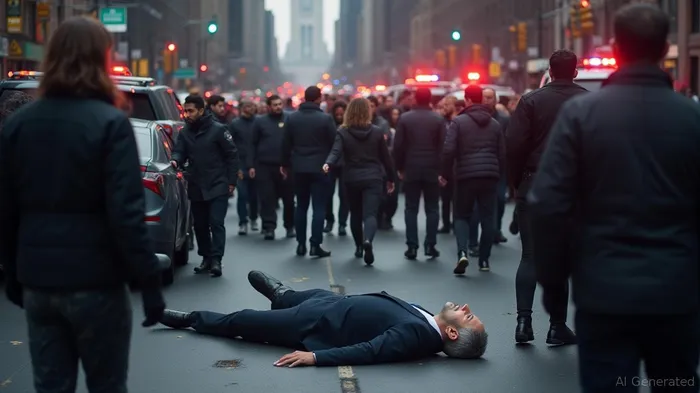
Wesley LePatner, a 44-year-old BlackstoneBX-- executive who oversaw the firm’s $53 billion real-estate investment fund, was among four people killed in a mass shooting at 345 Park Avenue in Manhattan on Monday. The attack, carried out by 27-year-old Shane Tamura of Las Vegas, occurred in an office building housing the National Football League (NFL) and other businesses. Tamura, who acted alone, was identified by police and had a history of mental-health issues. A recovered note cited his anger toward the NFL and unverified claims of suffering from chronic traumatic encephalopathy (CTE), a neurodegenerative condition linked to contact sports. Authorities found no evidence Tamura played professionally or was diagnosed with CTE [1].
LePatner held dual roles as Blackstone’s global head of core+ real estate and chief executive officer of the firm’s Blackstone Real Estate Income Trust (BREIT). The fund, with a $53 billion net asset value and $275 billion market capitalization, is central to Blackstone’s real-estate division, which has grown significantly under her leadership. LePatner joined Blackstone in 2014 after over a decade at Goldman SachsGS-- and was credited with expanding the firm’s real-estate portfolio. Colleagues described her as a “beloved” and “deeply respected” leader, with the firm stating in a statement, “Words cannot express the devastation we feel” [1].
The tragedy has drawn attention to the intersection of corporate leadership and public safety, particularly in urban commercial hubs. LePatner’s death underscores the vulnerability of high-profile individuals in professional settings, even as Blackstone’s real-estate division remains a cornerstone of its $185 billion asset-under-management portfolio. Her role in managing a fund that spans residential, commercial, and industrial properties highlights the broader implications for institutional investors navigating market volatility and geopolitical risks. The firm’s statement emphasized her contributions to philanthropy and education, including board memberships at institutions like the Metropolitan Museum of Art and Yale University Library Council [1].
LePatner’s personal life, marked by a decades-long marriage to her Yale classmate and two children, adds a human dimension to the professional loss. Her career trajectory—from Goldman Sachs to Blackstone—mirrored the firm’s expansion into real-estate innovation, including REITs and private equity strategies. Analysts note that her leadership was pivotal in scaling BREIT’s market capitalization, which now ranks among the largest in the sector. The firm’s ability to maintain operational stability amid this crisis will be critical, though no immediate disruptions to investment strategies have been reported [1].
The incident also raises questions about the security measures for high-traffic office buildings in New York City. 345 Park Avenue, a 46-story skyscraper, houses multiple organizations, including the NFL and KPMG. Tamura’s access to the building remains under investigation, with authorities emphasizing the lack of prior criminal history linking him to the victims. The shooter’s grievances, while personal, have sparked broader discussions about mental health and access to lethal means in the U.S.
Blackstone’s response to the tragedy, characterized by both emotional and strategic statements, reflects the firm’s dual role as a corporate entity and a community stakeholder. The firm’s emphasis on LePatner’s “passion” and “generosity” aligns with its public image as a leader in alternative investments and social responsibility. As the investigation into the shooting continues, the real-estate sector may face renewed scrutiny on risk management and the human capital driving its largest funds.
Source: [1] Wesley LePatner, a 44-year-old Blackstone executive who oversaw its $53 billion real-estate investment fund, was killed in Manhattan’s mass shooting (url: https://fortune.com/2025/07/29/wesley-lepatner-blackstone-breit-real-estate-investment-fund-killed-mass-shooting/)

Stay ahead of the market.
Get curated U.S. market news, insights and key dates delivered to your inbox.
AInvest
PRO
AInvest
PRO



Comments
No comments yet