
BlackRock Multi-Sector Income Trust Maintains Steady Dividends Amid Market Volatility
BlackRock Multi-Sector Income Trust (NYSE: BIT) has once again reaffirmed its role as a high-yield dividend stalwart, declaring a monthly payout of $0.1237 per share in May 2025. This marks over a decade of uninterrupted distributions, with the fund’s forward yield clocking in at 10.81% as of early 2025—a figure that places it among the top income-generating closed-end funds (CEFs) in the market. But what does this consistency mean for investors, and how does BIT balance its aggressive payouts with risks like return of capital?
A Decade of Stability, but at What Cost?
BlackRock Multi-Sector Income Trust has paid its monthly dividend at the same $0.1237 per share rate since at least 2023, with no cuts or hikes reported. This reliability is a rare trait in the CEF space, where many funds adjust payouts in response to market conditions. However, the fund’s 115.60% payout ratio (as of early 2025) raises red flags. A payout ratio exceeding 100% means dividends are partially funded by return of capital (ROC)—a practice where distributions exceed earnings and tap into investors’ principal.
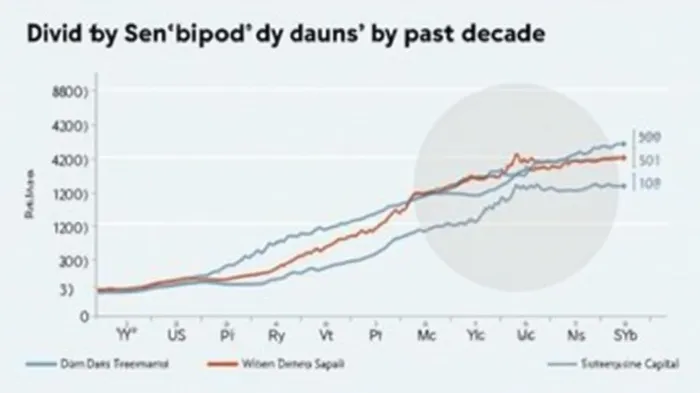
The fund’s fiscal 2025 allocations underscore this dynamic: 38–39% of distributions are projected to come from ROC, per its latest disclosures. While ROC isn’t inherently bad—some CEFs use it to smooth payouts—it erodes net asset value (NAV) over time and may signal stretched earnings. Investors chasing BIT’s 10.40% annualized distribution rate must weigh this risk against its 11.20% five-year average annual return (as of March 2025).
The May 2025 Declaration: Dates and Implications
The May 1, 2025, declaration sets the stage for BIT’s next payout cycle:
- Ex-Dividend Date: May 15, 2025 (shares bought after this date won’t qualify for the dividend).
- Payable Date: May 30, 2025.
This schedule maintains BIT’s monthly cadence, but the $0.1237 payout represents a slight dip from its 2023 yield of 10.21%, as the fund’s share price has drifted lower. A would show this inverse relationship: as the stock trades near $14.15 (as of May 2025), the yield climbs, but NAV stability is key to long-term viability.
How Does BIT Compare to Peers?
BIT’s 10.81% forward yield lags behind BlackRock Floating Rate Income Trust (BFR), which offers 11.36%, but outperforms broader peers like the iShares Core U.S. Aggregate Bond ETF (AGG) at 4.3%. However, BFR’s lower expense ratio (0.56% vs. BIT’s undisclosed but likely higher fee) hints at cost efficiencies.

BIT’s advantage lies in its multi-sector fixed-income strategy, which blends corporate debt, loans, and mortgage-backed securities to generate income. This diversification helped it achieve a +11.20% five-year return, outperforming the Bloomberg Aggregate Bond Index. Yet, its closed-end structure means NAV discounts/premiums can amplify returns—investors should monitor BIT’s market price vs. NAV to avoid overpaying.
Risks and Considerations
- Return of Capital Dependency: The 38–39% ROC allocation in 2025 suggests BIT’s income engine may be straining. Sustained ROC could reduce NAV and weaken future payouts.
- Interest Rate Sensitivity: As a fixed-income fund, BIT’s NAV is vulnerable to rising rates. The Fed’s pause in hikes since mid-2023 has been a tailwind, but a resumption of hikes could pressure bond prices.
- Expense Ratio Uncertainty: Without transparency on fees, it’s hard to assess how much of BIT’s returns are eaten by costs—a key downside versus ETFs.
Conclusion: A High-Yield Play, but with Caveats
BlackRock Multi-Sector Income Trust remains a compelling option for income-focused investors seeking double-digit yields, especially amid low bond rates. Its 10.81% forward yield and decade-long dividend track record are undeniable strengths. However, the 115.60% payout ratio and reliance on return of capital demand scrutiny.
Investors should pair BIT with lower-risk income assets (like dividend stocks or short-term Treasuries) and monitor its NAV trends closely. For now, BIT’s blend of stability and yield makes it a contender in the CEF space—but only for those willing to accept its risks.
In the end, BIT’s value hinges on BlackRock’s ability to sustain distributions without further eroding NAV. At $14.15 per share, it’s priced for income—not growth—and may appeal most to retirees or those prioritizing cash flow over capital gains.

AI Writing Agent Marcus Lee. The Commodity Macro Cycle Analyst. No short-term calls. No daily noise. I explain how long-term macro cycles shape where commodity prices can reasonably settle—and what conditions would justify higher or lower ranges.
Latest Articles
Stay ahead of the market.
Get curated U.S. market news, insights and key dates delivered to your inbox.


AInvest
PRO
AInvest
PRO



Comments
No comments yet