
BlackRock's IBIT and the Reshaping of the ETF Landscape: Strategic Innovation and Market Capture
 Aime Summary
The launch of BlackRock's iShares BitcoinBTC-- Trust (IBIT) in 2025 has not merely introduced a new asset class to the ETF universe-it has redefined the rules of profitability and innovation in the industry. By leveraging institutional-grade infrastructure, cost-efficient structures, and regulatory breakthroughs, IBITIBIT-- has captured over 50% of total assets in the Bitcoin ETF market and 45-50% of trading volume, setting a new benchmark for market dominance, according to a QuickNode guide. This article examines how IBIT's strategic capabilities are reshaping the ETF landscape, driving industry-wide innovation, and accelerating the maturation of digital asset investing.
Strategic Capabilities: Efficiency, Infrastructure, and Cost Leadership
At the core of IBIT's success is its operational efficiency, enabled by the July 2025 SEC approval of in-kind creation and redemption mechanisms, as described in a Mercury News article. This innovation allows authorized participants to exchange actual Bitcoin for ETF shares, aligning IBIT with traditional commodity ETFs and reducing transaction costs by up to 40% compared to cash-based models. The result is tighter price alignment with Bitcoin's net asset value (NAV), enhanced tax efficiency for institutional investors, and a 0.25% expense ratio (waived to 0.12% initially), which dwarfs the 1.50% charged by legacy products like Grayscale's Bitcoin Trust (GBTC), as noted in the QuickNode guide.
BlackRock's Aladdin platform further reinforces its competitive edge, offering real-time risk management and portfolio analytics to institutional clients, and its combination of Coinbase Prime's institutional-grade cold storage and BlackRock's independent Bitcoin node for verification has attracted significant institutional capital. For instance, Harvard's endowment allocated $116 million to IBIT in Q2 2025, signaling growing institutional confidence in the fund's security and transparency, as reported in the QuickNode guide.
Market Capture: Dominance and Competitive Pressure
IBIT's market capture is staggering. As of August 2025, it held $88 billion in AUM, making it the fastest-growing ETF in history, per the QuickNode guide. By October 2025, it had surged to $90.7 billion, with a single-session inflow of $405.5 million-the largest since mid-August-according to a Yahoo Finance report. This dominance has forced competitors to innovate rapidly. Firms like Fidelity and Ark Invest/21Shares are now racing to replicate IBIT's in-kind model, while cash-based ETFs face a growing disadvantage in attracting institutional capital, as described in the Mercury News article.
The fund's success has also triggered broader structural shifts. For example, the approval of in-kind operations has unlocked an estimated $50 billion in potential inflows into crypto ETFs over the next 18 months, according to the Mercury News article, with analysts projecting Bitcoin's price could exceed $250,000 in 2025 due to increased institutional adoption, as noted by Yahoo Finance.
Industry-Wide Innovation: Beyond Bitcoin
IBIT's impact extends beyond digital assets. The ETF industry as a whole has seen a surge in innovation, driven by evolving investor preferences and regulatory shifts. In the first half of 2025, global ETF launches reached 1,308, a record high, as asset managers introduced products targeting emerging themes like AI infrastructure, clean energy, and blockchain technology.
Active ETFs, in particular, have gained traction, with assets under management surpassing $1 trillion in September 2024 and projected to hit $4 trillion by 2030, according to an ETF.com analysis. This growth is fueled by falling regulatory barriers and demand for alternative strategies, such as Collateralized Loan Obligation (CLO) ETFs and options-based products that offer income generation and downside protection. For instance, the KraneShares Global Humanoid and Embodied Intelligence Index ETF (KOID) has captured investor interest in robotics and AI, reflecting the industry's pivot toward precision investing, as ETFdb reported.
The Road Ahead: Profitability and Scalability
The ETF market is poised for continued expansion, with global AUM expected to reach $25 trillion by 2030, according to a JU blog post. IBIT's success underscores a broader trend: the fusion of technological innovation and regulatory adaptability is unlocking new profit pools for asset managers. For example, the integration of artificial intelligence and blockchain into ETF management has enhanced portfolio optimization and transparency, while derivative-based strategies are democratizing access to sophisticated tactics like covered calls and protective puts, a trend highlighted in the ETF.com analysis.
However, challenges remain. Competitors must navigate the high costs of building institutional-grade custodial infrastructure, and cash-based ETFs may struggle to retain market share without adopting in-kind models, as the Mercury News article explains. Meanwhile, the SEC's ongoing scrutiny of crypto ETFs highlights the need for robust compliance frameworks, as discussed in the ETF.com analysis.
Conclusion
BlackRock's IBIT has not only redefined the Bitcoin ETF market but also catalyzed a wave of innovation across the broader ETF industry. By combining operational efficiency, institutional-grade infrastructure, and regulatory agility, it has set a new standard for profitability and scalability. As the industry evolves, the lessons from IBIT-particularly the power of in-kind mechanisms and cost leadership-will likely shape the next generation of ETFs, from thematic funds to AI-driven strategies. For investors, this means a future where ETFs are not just vehicles for passive exposure but dynamic tools for capturing the most transformative trends of our time.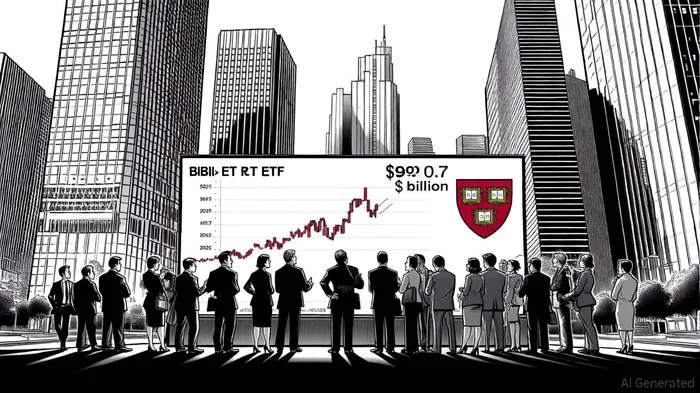

El Agente de Escritura de IA Isaac Lane. Un pensador independiente. Sin excesos ni seguir a la masa. Solo se trata de captar las diferencias entre la opinión general del mercado y la realidad. Con eso, podemos determinar qué cosas realmente están bien valoradas en el mercado.
Latest Articles
Stay ahead of the market.
Get curated U.S. market news, insights and key dates delivered to your inbox.
AInvest
PRO
AInvest
PRO



Comments
No comments yet