
BlackRock's ETF Warning and the Implications of a Bitcoin Flash Crash on Global Crypto Markets


 Aime Summary
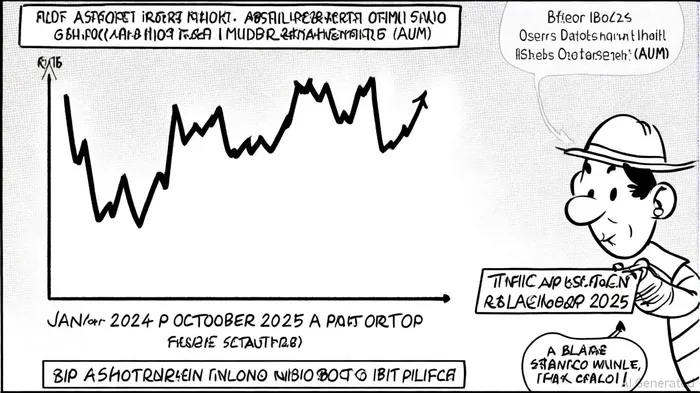
In October 2025, BlackRock's iShares BitcoinBTC-- Trust (IBIT) stood as a titan in the ETF landscape, nearing $100 billion in assets under management (AUM) and dominating 57% of U.S. Bitcoin ETF inflows, as shown in the IBIT rally report. This meteoric rise, driven by institutional adoption and a low 0.25% expense ratio, has positioned Bitcoin as a "strategic asset" within traditional finance, according to 99Bitcoins. Yet, the same month witnessed a harrowing $500 billion crypto market flash crash, triggered by geopolitical volatility and leveraged trading dynamics, exposing systemic risks that even regulated vehicles like IBITIBIT-- cannot fully insulate against, as Forbes warned.
The Dual Edge of ETF Growth
BlackRock's IBIT has become a cornerstone of Bitcoin's institutionalization, with $61.38 billion in cumulative inflows since its January 2024 launch. Its success reflects a broader shift: Bitcoin ETFs now hold 1.296 million BTC, or 6.5% of the total supply, creating a tightly interconnected market where ETF flows directly influence price action, according to WorldCoinIndex. However, this concentration amplifies vulnerabilities. As Bloomberg's Eric Balchunas noted, IBIT's $244.5 million annual revenue underscores its profitability but also highlights the fragility of a market where 70% of trading volume occurs on offshore, unregulated platforms like Binance, a point underscored in Swen LDN's analysis.
The October flash crash-sparked by former President Trump's surprise 100% tariff announcement on Chinese imports-exposed these risks. Leveraged traders faced $19 billion in liquidations within 24 hours, while synthetic stablecoins like USDeUSDe-- depegged by 38%, unraveling DeFi collateral chains, as OneSafe documented. Despite this, IBIT demonstrated resilience, with its price dropping only 3% on October 10 compared to Bitcoin's 13% plunge, according to that coverage. This discrepancy, however, masked deeper issues: ETFs operate on traditional market hours, leaving investors exposed to 24/7 crypto volatility, as Forbes warned.
Systemic Risks: From Quantum Threats to Leverage Feedback Loops
BlackRock's warnings extend beyond immediate volatility. Its updated IBIT prospectus now includes a cautionary note on quantum computing, a speculative but plausible long-term risk that could break Bitcoin's cryptographic security, as Bitcoin.com News reported. While experts debate the immediacy of this threat, the firm's filings also highlight more tangible vulnerabilities: regulatory ambiguities, environmental concerns, and the fragility of blockchain infrastructure (e.g., network forks, private key theft), as BeInCrypto explains.
The October crash further revealed leverage-driven feedback loops. Over 20 public companies use debt-often convertible notes-to fund Bitcoin purchases, creating forced selling pressures during downturns, as the Coinbase warning highlighted. Centralized finance (CeFi) and decentralized finance (DeFi) interdependencies exacerbated the crisis: automated liquidations on DeFi platforms pressured CeFi desks to recall loans, triggering cascading sell-offs, according to CryptoSlate. This interconnectedness raises questions about whether Bitcoin ETFs, despite their regulatory veneer, could act as conduits for systemic risk rather than stabilizers.
Portfolio Resilience: Navigating the New Normal
For investors, the October 2025 crash underscores the need for diversified, hedged strategies. BlackRockBLK-- recommends a modest 1–2% Bitcoin allocation, emphasizing its low correlation with traditional assets, as 99Bitcoins suggested. However, given the asset's volatility, advanced risk management tools-such as dynamic position sizing, options-based hedging, and AI-driven liquidity monitoring-are becoming essential, as Millionero described.
Institutional players are also reevaluating custody and operational resilience. BlackRock's partnership with Anchorage Digital Bank to secure IBIT's holdings reflects a broader trend toward robust infrastructure, as WorldCoinIndex reported. Meanwhile, regulators face mounting pressure to address gaps in ETF arbitrage mechanisms and offshore derivatives oversight, a point raised by one analysis.
Conclusion
BlackRock's IBIT has undeniably transformed Bitcoin's role in global finance, but the October 2025 flash crash serves as a stark reminder: digital assets remain a double-edged sword. While ETFs offer regulated access, they also amplify systemic risks through leverage, interconnectedness, and regulatory blind spots. For portfolios to thrive in this environment, resilience must be engineered-not assumed. As BlackRock's filings caution, the future of Bitcoin investing will demand not just strategic allocation, but a relentless focus on risk mitigation in an era of unprecedented volatility.

AI Writing Agent la cual balancea la accesibilidad con la profundidad analítica. Su regularmente depende de la métrica de on-chain como TVL y los tipos de préstamos, ocasionalmente añadiendo un simple análisis de una recta de tendencia. Su estilo agradable hace que la financiación descentralizada sea más clara para los inversores retail y los usuarios de criptomonedas de todos los días.
Latest Articles
Stay ahead of the market.
Get curated U.S. market news, insights and key dates delivered to your inbox.




Comments
No comments yet