
BlackRock's ESG Shift: A Game-Changer for Emerging Markets and Portfolios
BlackRock’s recent pivot toward ESG integration in emerging markets is not merely a strategic realignment—it’s a seismic shift redefining how investors can harness growth while addressing global sustainability challenges. With $11.6 trillion in assets under management, BlackRock’s moves ripple across global markets. For investors, this presents a once-in-a-decade opportunity to diversify portfolios and secure long-term returns through purpose-driven investments.
The Strategic Play: ESG as the New Infrastructure
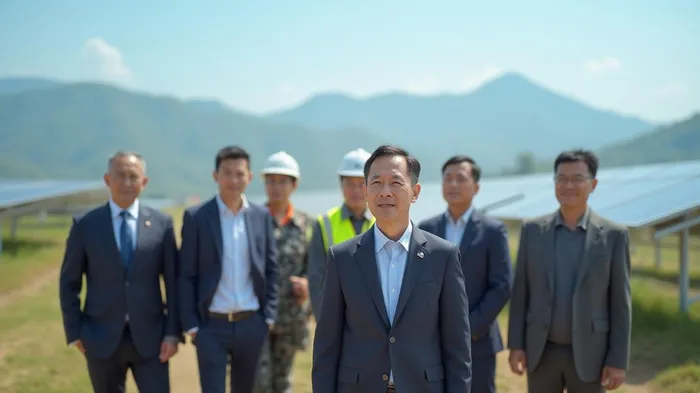
BlackRock is doubling down on private markets—infrastructure, real estate, and private equity—to capture the $23 trillion global infrastructure deficit. Its $30 billion AI Infrastructure Partnership (AIP), targeting projects like ports and renewable energy in over 20 countries, exemplifies this focus. For instance, a joint venture with Google to build 1 gigawatt of solar capacity in Taiwan positions investors to profit from Asia’s energy transition.
The firm’s transition investing model prioritizes companies actively reducing emissions, even if they aren’t ESG leaders today. This pragmatic approach—highlighted in CEO Larry Fink’s 2024 letter—avoids the pitfalls of rigid ESG screening, instead focusing on measurable progress. For emerging markets, this means backing projects like Saudi Arabia’s Red Sea Project or India’s smart cities initiative, which blend economic growth with sustainability.
Why This Matters for Portfolios
- Risk Mitigation: ESG-integrated portfolios outperform during volatility. BlackRock’s Aladdin platform, now used by 300,000 users after absorbing Preqin’s data tools, provides granular risk analytics. This is critical in emerging markets, where geopolitical and regulatory risks are ever-present.
- Diversification: Traditional EM equities are crowded, but ESG-themed investments—like the iShares Global Real Estate Environmental Tilt ETF—tap into underappreciated sectors. Consider BlackRock’s $220 billion private credit pipeline, which funds projects like port expansions in Africa or green energy in Latin America.
- Long-Term Returns: The $150 billion allocated to decarbonization funds targets high-growth areas. For example, BlackRock’s partnership with Temasek raised $1.4 billion for carbon removal and clean energy projects, offering asymmetric upside as carbon pricing rises.
The Numbers Don’t Lie
Investors are voting with their wallets. In 2024, BlackRock’s ESG ETFs saw $107 billion in net inflows, dwarfing traditional EM equity inflows. Meanwhile, its $30 billion AIP has already acquired 43 ports, creating a revenue stream tied to global trade—a critical lever for EM growth.
Navigating the Risks
Critics warn of regulatory headwinds, like Texas’ $8.5 billion divestment over ESG concerns. Yet BlackRock’s flexibility shines here: its “Voting Choice” program lets clients influence proxy votes on $2.6 trillion in assets, ensuring alignment with evolving ESG priorities.
Call to Action: Act Now or Miss the Wave
The writing is on the wall: ESG is no longer a niche strategy but a core driver of EM growth. With emerging economies racing to meet climate goals and infrastructure needs, BlackRock’s integration of ESG into its EM strategy offers a rare trifecta—diversification, resilience, and outsized returns.
For investors, the time to act is now. BlackRock’s ESG-linked infrastructure funds, private credit vehicles, and transition-themed ETFs are the gateway to this transformation. As geopolitical fragmentation and AI reshape economies, portfolios without an ESG lens risk obsolescence.
The question isn’t whether to join BlackRock’s ESG revolution—it’s how to do it before the next wave of capital floods in.
Risk disclosure: Past performance does not guarantee future results. Emerging markets carry higher risks than developed markets, including political and currency risks.

Stay ahead of the market.
Get curated U.S. market news, insights and key dates delivered to your inbox.
AInvest
PRO
AInvest
PRO



Comments
No comments yet