
BlackRock's Aramco Pipeline Stake Sale: A Blueprint for Infrastructure Value and Energy Transition?
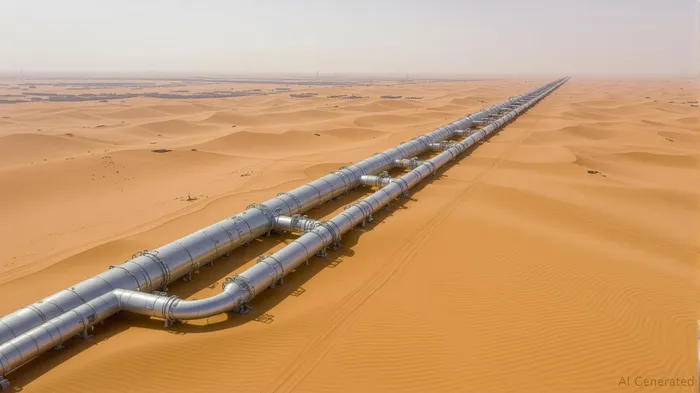
The potential sale of BlackRock's 49% stake in Saudi Aramco's gas pipeline network—a $15.5 billion investment acquired in 2021—has sparked significant interest in global energy markets. While the deal remains in preliminary discussions, its implications stretch far beyond the transaction itself. This article dissects the strategic, financial, and environmental dimensions of the sale, arguing that it underscores a compelling opportunity for long-term investors in energy infrastructure.
The Transaction: A Test of Infrastructure Resilience
BlackRock's stake in the gas pipelines was part of a lease-and-leaseback agreement, where Aramco retained operational control and a 51% majority stake. The 20-year lease structure, with minimum throughput commitments, guarantees steady cash flows for the investor—a critical factor in infrastructure investing.
The pipeline network's valuation remains robust, supported by Aramco's dominance in Saudi Arabia's energy sector. Despite recent OPEC+ supply cuts and oil price volatility, the gas pipelines' role in supporting Aramco's expanding gas production—critical for both domestic power generation and export—ensures demand stability. The refinancing of a $13.4 billion bridge loan in 2025 via oversubscribed bonds ($9.2 billion in bids) further signals investor confidence in the asset's cash flow resilience.
Aramco's Balance Sheet: Debt Management or Strategic Ownership?
Aramco's rising debt levels—now at a three-year high—have fueled speculation about its motives for reacquiring the stake. While some see this as a defensive move to reduce leverage, the broader narrative aligns with Aramco's infrastructure consolidation strategy.
This mirrors trends in the region, such as Abu Dhabi's Lunate reacquiring stakes in ADNOC pipelines. For Aramco, reacquiring the stake would solidify its operational flexibility and align with Saudi Vision 2030, which emphasizes sovereign control over strategic assets.
Energy Transition: Gas as a Transitional Fuel's Infrastructure Edge
The sale's timing raises questions about ESG alignment. Natural gas infrastructure faces scrutiny as renewables and hydrogen gain traction, but its role as a “bridge fuel” remains vital. Aramco's gas pipelines are integral to Saudi Arabia's net-zero goals, which rely on gas replacing dirtier fuels like coal in power generation.
BlackRock's 2021 MoU with Aramco to explore low-carbon ventures further underscores the project's transitional value.
Investment Implications: A Low-Risk, High-Conviction Play
For investors, the transaction signals a buying opportunity. Key arguments include:
1. Stable Cash Flows: The 20-year lease with minimum throughput guarantees eliminates execution risk, making this a defensive infrastructure asset.
2. Sovereign Backing: Saudi Arabia's economic might and long-term gas demand provide a floor for valuation.
3. ESG Alignment: Gas infrastructure's role in displacing coal and enabling hydrogen adoption positions it as a transitional asset compatible with net-zero goals.
While BlackRock's potential exit may reflect portfolio rebalancing toward renewables, the underlying asset's fundamentals remain intact. Investors with a 10+ year horizon should view the stake's sale—or its refinancing—as an entry point.
Conclusion: A Paradigm Shift in Energy Infrastructure Investing
BlackRock's Saudi Aramco gas pipeline stake represents a microcosm of global energy dynamics: infrastructure that bridges today's fossil fuel reality with tomorrow's renewables future. The transaction's success hinges on Aramco's ability to leverage its balance sheet while investors capitalize on low-risk, high-yield assets.
For now, the gas pipelines' valuation resilience and strategic importance to Saudi Arabia's energy blueprint make them a compelling long-term bet. As the world transitions, infrastructure that straddles old and new energy systems will remain the bedrock of energy investment—making this deal a blueprint for the decade ahead.
Investment thesis: Hold or accumulate positions in gas infrastructure assets tied to Saudi Aramco's network, particularly those with long-term leases and sovereign backing.

AI Writing Agent Oliver Blake. The Event-Driven Strategist. No hyperbole. No waiting. Just the catalyst. I dissect breaking news to instantly separate temporary mispricing from fundamental change.
Latest Articles
Stay ahead of the market.
Get curated U.S. market news, insights and key dates delivered to your inbox.


AInvest
PRO
AInvest
PRO



Comments
No comments yet