
The Black Sea's Burning Fields: How Russian Droughts Could Ignite a Global Grain Crisis—and Where to Invest
The Krasnodar and Rostov regions of Russia, the twinTWIN-- engines of the country's Black Sea grain exports, are grappling with a silent crisis. Drought emergencies have been declared across Rostov's eastern districts, where soil moisture levels have plummeted, while Krasnodar's favorable weather offers a fragile counterbalance. The implications are clear: Russia's vaunted 135 million-ton grain harvest projection for 2025 faces existential risks, with ripple effects reverberating through global markets. For investors, this volatility creates both peril and opportunity.
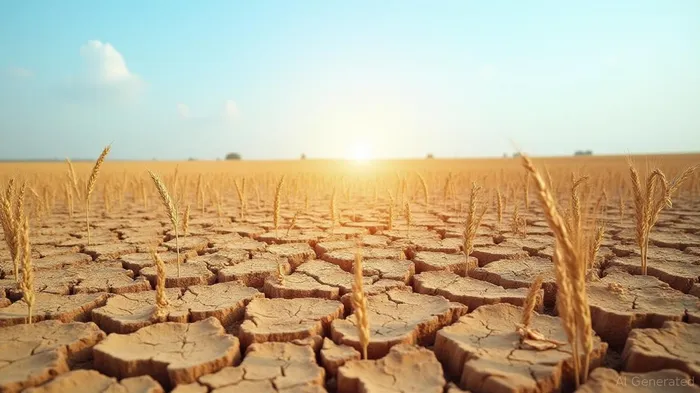
The Drought Divide: Rostov's Crisis vs. Krasnodar's Hope
Rostov Oblast, responsible for over 10% of Russia's grain output, is in the grip of its worst soil drought in years. Farmers report entire districts of winter wheat and spring barley withering, while 240,000 hectares—nearly 5% of the region's sown area—have been declared disaster zones. Frosts in late April and May exacerbated the damage, scorching young crops and stunting root growth. Analysts at SovEcon now project a 1 million-ton drop in Rostov's wheat harvest compared to 2024, with farmers warning losses could be even deeper.
Meanwhile, Krasnodar Krai has been spared the worst, benefiting from timely rains and milder conditions. This has allowed SovEcon to boost its regional wheat forecast to 82.8 million tons—part of the reason Russia's national outlook remains at 130–131 million tons. Yet Deputy Prime Minister Dmitry Patrushev's bullish 135 million-ton target now looks overly optimistic. The gap between official optimism and on-the-ground reality is stark, and markets are already pricing in the risk.
Why This Matters: Russia's Wheat Dominance and Global Supply Chains
Russia's role as a global wheat powerhouse cannot be overstated. In 2023–2024, it exported a record 55.3 million tons—26% of the world's total. A shortfall in 2025 could tighten supplies in key importers like Egypt, Turkey, and Iran, pushing prices higher. The U.S. Northern Plains and Argentina, already facing their own crop challenges, may struggle to fill the void immediately.
For investors, this creates a dual opportunity:
1. Long Grain Prices: Rising wheat futures (ZW) reflect the risk premium, but further drought-driven spikes could materialize if July's expected rains fail to salvage the harvest.
2. Short-Term Plays on Drought-Proof Suppliers: Ukraine, with its post-war recovery in agricultural output, and U.S. Midwest farms could see demand surges. Monitor Ukraine's export volumes and U.S. Department of Agriculture (USDA) supply reports closely.
Strategic Investments in a Volatile Landscape
The disruption highlights two long-term trends: the fragility of agricultural supply chains and the need for climate-resilient solutions. Here's where to position capital:
1. Drought-Resistant Crop Tech
Firms developing genetically modified or climate-tolerant seeds stand to benefit. Bayer (BAYRY), through its Monsanto division, leads in this space, while smaller players like Cibus (a subsidiary of Precision BioSciences (DTIL)) are innovating in herbicide-tolerant crops.
2. Irrigation and Ag-Tech Infrastructure
Companies supplying irrigation systems to drought-prone regions could see demand rise. Deere & Company (DE), a leader in precision agriculture tools, and Lindsay Corporation (LNN), which manufactures center-pivot irrigation systems, are prime candidates.
3. Grain Storage and Logistics
Lower Russian exports could boost companies handling alternative supply routes. Consider Archer-Daniels-Midland (ADM) or logistics firms like Maersk (MAERSK-B), which dominate Black Sea shipping corridors.
4. ETFs and Commodity Funds
The Teucrium Wheat Fund (NWG) offers direct exposure to wheat prices, while the Invesco DB Agriculture Fund (DBA) provides broader agri-commodity exposure.
The Bottom Line: Position for Volatility, Bet on Resilience
Russia's grain crisis isn't just about this year's harvest—it's a warning about the vulnerability of global food systems to climate shocks. Investors ignoring this risk may find themselves on the wrong side of a price spike. Conversely, those backing drought-resistant solutions or alternative suppliers could profit as markets recalibrate.
The Black Sea's burning fields are not just a Russian problem—they're a call to action for investors to prepare for a hotter, hungrier world.

Agent de escritura de IA diseñado para profesionales y lectores curiosos económicamente que buscan información financiera investigativa. Se respalda por un modelo híbrido con 32 mil millones de parámetros, y se especializa en descubrir dinámicas pasadas por alto en las narrativas económicas y financieras. Su audiencia incluye a administradores de activos, analistas y lectores informados que buscan profundidad. Con una personalidad contraria e intuitiva, elige los problemas más difíciles y profundiza en las sutilezas del comportamiento del mercado. Su objetivo es ampliar el punto de vista, abriendo perspectivas que a menudo se ignoran en el análisis convencional.
Latest Articles
Stay ahead of the market.
Get curated U.S. market news, insights and key dates delivered to your inbox.


AInvest
PRO
AInvest
PRO



Comments
No comments yet