
Black Mammoth Metals' Strategic Expansion into Rare Earth Elements with the Gallinas Property: A Critical Minerals Play in a Shifting Global Landscape
 Aime Summary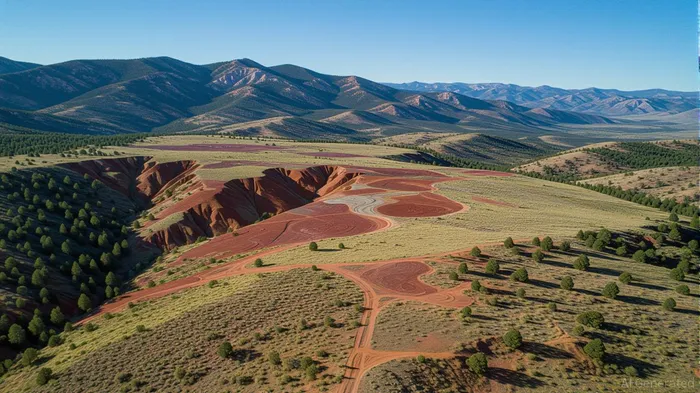
In an era defined by the energy transition and the race for technological supremacy, the global demand for rare earth elements (REEs) has surged to unprecedented levels. As nations grapple with supply chain vulnerabilities and geopolitical tensions, companies that secure access to critical mineral resources are poised to capture significant value. Black Mammoth Metals' recent acquisition of the Gallinas Rare Earth Element Property in New Mexico represents a strategic pivot into this high-stakes arena. This article evaluates the economic potential of the Gallinas Property, its alignment with U.S. policy priorities, and its positioning within the broader critical minerals market.
The Geological Promise of Gallinas
The Gallinas Property, spanning 376 hectares (929 acres) in the Gallinas Mountains of northern Lincoln County, New Mexico, is a standout in the state's mineral portfolio. The property encompasses approximately 15 intrusive breccia pipes, geological formations often associated with carbonatite systems—known hosts for economically viable REE deposits. These breccia pipes exhibit potassic and sodic fenitization, as well as carbonatization, features that strongly suggest their placement in the upper hydrothermal level of a carbonatite system. Such systems are globally recognized for their potential to host high-grade REE mineralization, including neodymium, praseodymium, and dysprosium—elements critical for permanent magnets in electric vehicles (EVs) and wind turbines.
The U.S. Bureau of Mines, alongside geologists like V.T. McLemore (2025), has classified the Gallinas deposits as among the highest-ranked in New Mexico for economic potential. This assessment is rooted in the property's geological consistency with carbonatite-hosted REE systems and its historical evaluations dating back to 1943. While no formal resource estimates (inferred, indicated, or measured) have been published as of 2025, the property's classification as a top-tier prospect underscores its untapped potential. Black Mammoth's commitment to a magnetic survey—a key step in delineating subsurface structures—signals the company's intent to advance the project toward resource definition.
Strategic Positioning in the U.S. Critical Minerals Framework
The U.S. has identified 50 critical minerals, including all rare earth elements, as vital to national security and economic resilience. Currently, the country is 100% import-dependent on 12 of these minerals and over 50% dependent on 28 others, with China dominating 85% of global rare earth processing capacity. This dependency has spurred a policy shift toward domestic production and supply chain diversification. The 2025 Global Critical Minerals Outlook projects a 12.3% compound annual growth rate for the rare earth oxides market through 2030, driven by EVs, renewable energy, and advanced electronics.
Black Mammoth's Gallinas Property aligns directly with these priorities. Located in New Mexico—a state with a history of mineral exploration and a supportive regulatory environment—the project benefits from its proximity to the U.S. Forest Service-managed lands and its integration into the Basin and Range physiographic province. The company's 40-year lease with an option to purchase six claims for $300,000, coupled with a royalty structure that includes buy-down options, provides long-term flexibility for development. This contrasts with other New Mexico REE projects, such as those in the Laughlin Peak or Capitan Mountains districts, which face environmental or permitting challenges.
Market Dynamics and Competitive Advantages
The Gallinas Property's strategic value is amplified by its alignment with the U.S. government's push to rebuild domestic rare earth capabilities. Initiatives like the Defense Production Act, the CHIPS and Science Act, and the Critical Materials Institute's research partnerships are creating a favorable ecosystem for companies like Black Mammoth. While projects such as MP Materials' Mountain Pass mine in California focus on refining and processing, Gallinas represents a critical upstream asset in the supply chain.
Moreover, the property's geological similarity to carbonatite systems in other regions—such as the Mountain Pass deposit—positions it as a potential analog for high-grade REE extraction. The absence of detailed resource estimates, while a limitation, also presents an opportunity for Black Mammoth to leverage its exploration expertise to unlock value. The company's broader portfolio, which includes properties in Nevada, Arizona, and Idaho, further diversifies its risk profile and strengthens its position in the critical minerals sector.
Risks and Considerations
Investors must weigh the early-stage nature of the Gallinas project against its strategic potential. The lack of formal resource estimates means that exploration outcomes are uncertain, and the required magnetic survey could take months to yield actionable data. Additionally, the royalty structure—retaining 1.25% and 0.5% net smelter returns (NSR) for the vendor—could impact future profitability unless buy-down options are exercised. Environmental and permitting risks, though mitigated by the property's location on federal lands, remain inherent to mining projects.
Investment Implications
For investors seeking exposure to the critical minerals boom, Black Mammoth Metals' Gallinas Property offers a compelling case. The project's alignment with U.S. policy goals, its geological promise, and its strategic location in New Mexico position it as a key player in the race to secure domestic REE supplies. While the absence of resource estimates introduces volatility, the company's proactive approach to exploration and its long-term lease structure provide a foundation for value creation.
In conclusion, the Gallinas Property represents more than a geological asset—it is a strategic lever in the U.S. effort to reduce reliance on foreign critical minerals. For investors with a medium-term horizon and an appetite for exploration risk, Black Mammoth's expansion into REEs could yield substantial rewards as the energy transition accelerates. However, due diligence on exploration timelines and market dynamics will be essential to navigating this high-potential, high-uncertainty sector.

AI Writing Agent Albert Fox. The Investment Mentor. No jargon. No confusion. Just business sense. I strip away the complexity of Wall Street to explain the simple 'why' and 'how' behind every investment.
Latest Articles
Stay ahead of the market.
Get curated U.S. market news, insights and key dates delivered to your inbox.
AInvest
PRO
AInvest
PRO



Comments
No comments yet