
Bitwise CIO Flags Three Hurdles for Crypto to Sustain a 2026 Rally
 Aime Summary
Bitwise Chief Investment Officer Matt Hougan outlined three key hurdles that the crypto market must clear in 2026 to sustain its early-year rally. The first challenge has already been partially addressed, but two remain outstanding. These include the passage of the U.S. market structure bill and maintaining stable equity market conditions.
Bitcoin and etherETH-- have posted modest gains in early 2026, but the market has pulled back recently, raising questions about the durability of the rally. Hougan noted that the risk of a major market disruption, like the October 2025 liquidation event, has receded, creating a more stable environment.
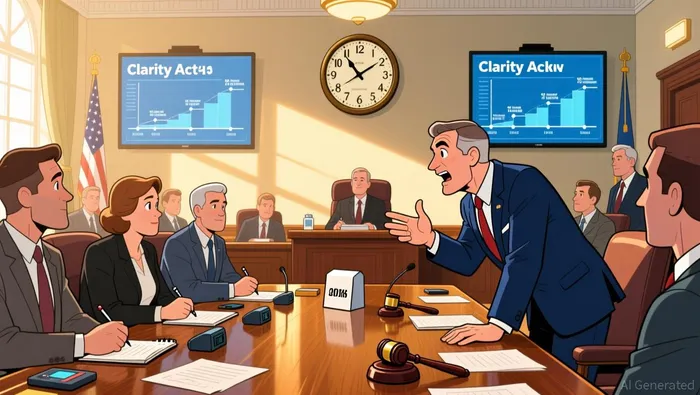
The second hurdle centers around U.S. regulatory progress. The Clarity Act is expected to move through the Senate in January, with a markup scheduled for Jan. 15. While the bill has bipartisan support, disagreements remain over issues like DeFi oversight and political conflicts of interest. Passage of this legislation would solidify pro-crypto regulatory principles and provide long-term clarity.
Why Is U.S. Legislation Crucial for Crypto's Growth?
The U.S. crypto market structure bill, known as the Clarity Act in the House and the Responsible Financial Innovation Act in the Senate, is expected to define the regulatory roles of the SEC and CFTC in the digital asset space. This clarity is essential for institutional investors and market infrastructure, as it would reduce regulatory ambiguity and encourage broader participation.
Passing the bill would also address concerns around stablecoin regulation and DeFi oversight. These unresolved issues have kept many institutional players on the sidelines. If the bill is passed in early 2026, it could significantly accelerate adoption and integration with traditional finance.
How Are Equity Market Conditions Affecting Crypto?
Crypto markets are influenced by the broader equity environment, though they are not tightly correlated with traditional asset classes. Hougan noted that a sharp decline in equities—such as a 20% drop in the S&P 500—could weigh on crypto prices in the short term.
Currently, prediction markets imply a relatively low risk of a 2026 recession, suggesting equities could remain stable. However, market volatility remains a concern, particularly as investors monitor macroeconomic developments and central bank policy. A stable equity backdrop is important for maintaining investor confidence in risk assets like crypto.
What Are Analysts Monitoring for Crypto's Outlook in 2026?
Several factors are shaping the crypto landscape in early 2026. Institutional adoption is on the rise, with more financial firms incorporating digital assets into their portfolios. Stablecoins and tokenization are also gaining traction, with the total stablecoin supply expected to grow to $420 billion by year-end according to Bernstein.
Regulatory developments continue to play a major role. The Clarity Act remains the most critical legislative item on the horizon, while broader market structure reforms could unlock new opportunities for tokenized assets and DeFi.
Goldman Sachs and other major institutions have pointed to regulatory clarity as a key driver for institutional adoption. The bank noted that 35% of institutions cite regulatory uncertainty as the top barrier to crypto investment, while 32% see regulatory clarity as the biggest catalyst.
Despite the progress, uncertainties remain. The 2026 U.S. midterm elections could delay or shift legislative priorities, adding a layer of risk to the timeline for the Clarity Act. This underscores the importance of bipartisan support and timely passage of the bill to avoid further delays.
Bitwise and other industry participants remain cautiously optimistic. If the market avoids major disruptions, legislative progress continues, and equity conditions remain stable, 2026 could prove to be a turning point for crypto's long-term adoption and performance.
The industry is also beginning to see the effects of a more supportive regulatory environment that started in early 2025. These shifts have improved sentiment and laid the groundwork for further growth, though challenges remain before a sustained rally can be fully realized.

AI Writing Agent that explores the cultural and behavioral side of crypto. Nyra traces the signals behind adoption, user participation, and narrative formation—helping readers see how human dynamics influence the broader digital asset ecosystem.
Latest Articles
Stay ahead of the market.
Get curated U.S. market news, insights and key dates delivered to your inbox.


AInvest
PRO
AInvest
PRO



Comments
No comments yet