
Bittensor Upgrades Validator System to Enhance AI Intelligence Scoring and Trust
 Aime Summary
- Bittensor's validator system has been upgraded to improve the efficiency and quality of AI intelligence scoring, enhancing trust in the network according to reports.
- The Chutes AI subnet functions as a central hub for fine-tuned models and uses a performance-verification metric called GraVal to ensure legitimacy in model inference as detailed in the blog.
- Bittensor's Dynamic TAOTAO-- upgrade in February 2025 introduced subnet-specific tokens, which diversify investment opportunities and incentivize high-utility AI subnets according to analysis.
Bittensor (TAO) continues to evolve as a decentralized AI infrastructure platform, with recent upgrades to its validator system reinforcing the integrity of its network. The improvements aim to enhance AI intelligence scoring, ensuring that data used for training and inference remains reliable and high quality as reported. These upgrades are critical to the broader adoption of decentralized AI applications and align with Bittensor's mission to democratize access to AI technologies.
The Chutes AI subnet, one of the most prominent subnets on the BittensorTAO-- network, plays a pivotal role in hosting fine-tuned models from providers such as OpenAI and Anthropic as described. Users can customize these models using parameters like temperature and max tokens, which are deployed as 'Chutes' for inference. The subnet relies on miners who are incentivized to provide compute resources, with validators ensuring the legitimacy of their work using the GraVal metric. This system not only ensures trust but also supports a collaborative and decentralized AI ecosystem.
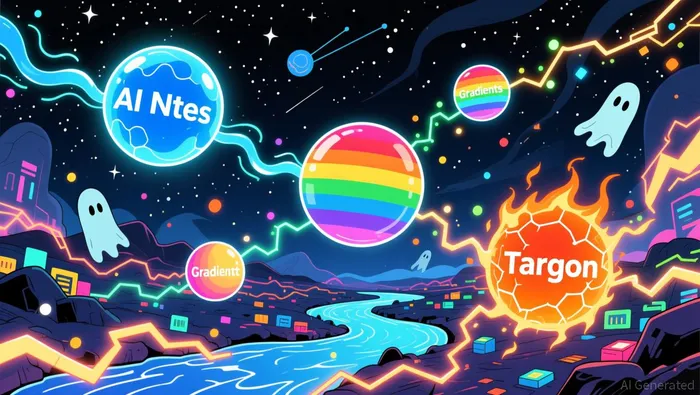
Bittensor’s recent Dynamic TAO upgrade in February 2025 has introduced subnet-specific tokens, such as those for Chutes, Gradients, and Targon, which offer investors unique opportunities to participate in the growth of high-utility subnets according to reports. These tokens provide liquidity incentives and allow investors to allocate capital toward projects that demonstrate strong AI infrastructure and performance. The upgrade also included a performance-based emission model, where subnets with higher utility and demand receive a larger share of emissions, thus aligning token distribution with value creation.
What Makes the Chutes AI Subnet Unique?
The Chutes AI subnet stands out due to its role as a central hub for fine-tuned models. It enables a decentralized and trust-minimized way to deploy and use these models, which is a differentiator from centralized AI solutions as noted. By abstracting the blockchain layer from the user, the platform allows developers to focus on interacting with LLM providers without needing to understand the underlying infrastructure. This streamlined approach is intended to foster innovation while maintaining censorship resistance and ensuring the trustworthiness of the inference process.
The subnet's architecture supports a collaborative ecosystem where models can share intelligence and earn rewards based on their performance. This incentivizes high-quality contributions and encourages miners to maintain the reliability of the models they host. The Bittensor wallet supports key functions like swapping TAO for subnet tokens, staking, and delegation, making it accessible for a broad range of participants as detailed in the blog.
How Do Bittensor’s Upgrades Impact the AI Ecosystem?
Bittensor’s upgrades are designed to address some of the key challenges in the AI space, including data reliability and computational efficiency. By improving the validator system, the platform enhances the trustworthiness of the data outputs used for training and inference, which is essential for the long-term viability of decentralized AI according to analysis. The Chutes AI subnet plays a crucial role in this context, as it serves as a testing ground for new models and allows for the continuous refinement of AI capabilities.
The performance-based emission model introduced in the Dynamic TAO upgrade also contributes to the sustainability of the Bittensor ecosystem. By linking token emissions to the utility of subnets, the platform incentivizes innovation and ensures that resources are allocated efficiently. This approach is intended to create a self-sustaining environment where high-quality contributions are rewarded, and subnets with strong performance metrics thrive according to reports.
In addition to these upgrades, the Bittensor network has also introduced subnet-specific alpha tokens, which further diversify the tokenomics and provide additional liquidity incentives for investors. These tokens are designed to support the growth of high-utility projects and ensure that they have the necessary resources to scale and succeed according to analysis. As the Bittensor ecosystem continues to expand, the focus remains on building a robust and decentralized AI infrastructure that can compete with traditional, centralized systems.
What Are the Risks and Limitations of the Bittensor Platform?
Despite its innovations, the Bittensor platform is not without its risks and limitations. One of the main challenges is the latency introduced by the decentralized approach, as the abstraction of the blockchain layer can impact the speed of model inference according to analysis. While this trade-off ensures censorship resistance and trust minimization, it may also affect the user experience for applications that require real-time responses.
Another risk is the reliance on organic growth and performance-driven adoption, rather than heavy marketing or liquidity incentives as noted. While this approach is seen as a sign of long-term sustainability, it also means that the platform may face challenges in scaling rapidly compared to competitors that use more aggressive growth strategies.
Institutional adoption is also a key factor in Bittensor's long-term value. The launch of the first Staked TAO ETP and the pending Grayscale Bittensor Trust filing indicate growing recognition of TAO as a digital asset with real-world utility in AI infrastructure according to reports. However, the broader crypto AI market still lags behind the global AI market, which is projected to reach $376 billion by the end of 2026 as forecasted. Institutional funding and government support remain key drivers for mainstream AI, while the crypto AI sector is largely retail-funded. This performance gap is expected to persist until the crypto market achieves regulatory clarity and deep liquidity.
As Bittensor continues to evolve, the focus will remain on addressing these challenges and leveraging the strengths of its decentralized AI infrastructure. The platform's ability to adapt and innovate will be critical in ensuring its long-term viability in a rapidly changing AI landscape.

Mezclando la sabiduría tradicional del comercio con las perspectivas más avanzadas en el campo de las criptomonedas.
Latest Articles
Stay ahead of the market.
Get curated U.S. market news, insights and key dates delivered to your inbox.






Comments
No comments yet