
Biting into Innovation: How McDonald's Menu Strategy Fuels Sustainable Growth
McDonald's, the global fast-food giant, has long thrived by adapting to shifting consumer preferences. In 2025, its strategic menu expansion—highlighted by new sandwiches, reinvigorated breakfast items, and seasonal offerings—is proving pivotal in driving repeat visits, strengthening brand loyalty, and countering economic headwinds. This article explores how these initiatives position McDonald'sMCD-- as a resilient leader, supported by data on sales trends, customer demographics, and global scalability, while addressing risks that investors must monitor.
The Power of Product Innovation
McDonald's recent menu additions are designed to cater to diverse tastes and price points, ensuring broad appeal. Key launches include:
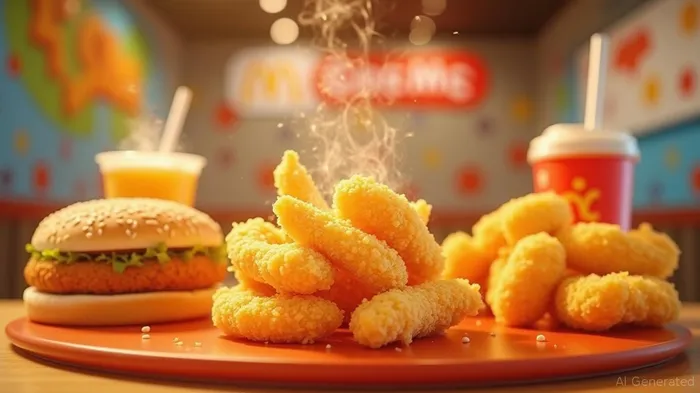
- McCrispy Strips: A permanent item since early 2025, now in 70+ markets, with plans to expand globally. These crispy chicken strips target the growing demand for chicken-centric meals, directly competing with rivals like Chick-fil-A.
- McValue Platform: A low-cost menu (e.g., $5 Meal Deals) aimed at low- and middle-income consumers, addressing inflation-driven spending constraints. This strategy has helped stabilize traffic among budget-conscious groups, which saw double-digit declines in Q1 2025.
- Seasonal Offerings: Limited-time items like the Chicken Big Mac and collaborations (e.g., Minecraft movie tie-ins) create urgency and excitement, spurring repeat visits. Analysts note that such promotions boosted March–April 2025 sales, hinting at a Q2 recovery.
Data shows a Q1 2025 dip (-3.6%) followed by a Q2 rebound, driven by value initiatives and seasonal campaigns.
Customer Engagement: Beyond the Meal
McDonald's success hinges on its ability to engage key demographics:
1. Low-Income Consumers: The McValue platform has been critical in retaining this segment. By offering everyday affordability, McDonald's mitigates the threat of competitors like Popeyes or Wendy'sWEN--, which have gained traction with lower prices.
2. Families and Young Adults: Limited-time items and tech-driven convenience (e.g., mobile ordering) attract these groups. The MyMcDonald's Rewards program, with 175 million users, incentivizes repeat visits through rewards, contributing to 30% year-over-year growth in loyalty-linked sales.
3. Global Markets: McDonald's localizes menus to cater to regional tastes. For instance, the McAloo Tikki in India and Teriyaki Burger in Japan ensure relevance in emerging markets, driving 2% annual sales growth from international expansion.
Scalability and Margin Management
The strategy's global scalability is evident in McDonald's plans to open 2,200 new restaurants in 2025, with a focus on high-growth regions like China and Europe. However, margins face headwinds from rising input costs (e.g., wages up 5–6%, food costs climbing). To mitigate this:
- Cost Discipline: McDonald's is streamlining operations, such as simplifying beverage menus to reduce customization complexity.
- Bundling: Pairing beverages with food items maintains average check sizes while leveraging economies of scale.
Margins have held steady at ~26% despite inflation, aided by pricing power and cost controls.
Risks on the Horizon
While McDonald's strategy is robust, challenges remain:
1. Ingredient Volatility: Commodity prices for chicken and beef could pressure margins if sustained.
2. Competitive Threats: Rivals like Chick-fil-A and Wendy's are outpacing McDonald's in U.S. same-store sales growth (e.g., Wendy's 4.1% annual average).
3. Debt Burden: A debt-to-equity ratio of -13.5x (2024) reflects aggressive buybacks and dividends, raising questions about financial flexibility during downturns.
Investment Thesis: A Long-Term Play
Despite short-term risks, McDonald's remains a defensive investment for several reasons:
- Brand Resilience: Its global footprint and iconic status ensure steady demand even during economic uncertainty.
- Data-Driven Adaptation: Real-time sales analytics and loyalty program insights enable rapid menu adjustments to consumer trends.
- Dividend Stability: A 0.8% dividend yield, backed by $7.7B in annual free cash flow, offers downside protection.
Shares have outperformed the broader market since 2023, reflecting investor confidence in its strategy.
Conclusion
McDonald's 2025 menu expansion is more than a tactical move—it's a blueprint for sustained growth. By balancing affordability, innovation, and localization, the company is solidifying its position as the go-to fast-food option across demographics and geographies. While risks like input costs and competition linger, McDonald's scalability, cash flow, and brand strength justify a long-term buy for investors seeking steady returns in the consumer sector.
Investors should monitor Q2 2025 sales data for further validation of this strategy's efficacy.

Delivering real-time insights and analysis on emerging financial trends and market movements.
Latest Articles
Stay ahead of the market.
Get curated U.S. market news, insights and key dates delivered to your inbox.




Comments
No comments yet