
Bithumb's Routine Maintenance and Its Implications for FLOW and Arbitrum Ecosystem Tokens
 Aime Summary
Cryptocurrency exchanges operate as critical infrastructure for digital asset ecosystems, and their operational reliability directly impacts token liquidity, user trust, and market stability. Bithumb, a leading South Korean exchange, has become a focal point for analyzing how routine maintenance-particularly for tokens like FLOW and ArbitrumARB-- (ARB)-intersects with operational risks and opportunities. This article dissects Bithumb's maintenance practices, their implications for exchange-maintained assets, and what investors should consider when evaluating exposure to these tokens.
Operational Risks: Liquidity Disruptions and User Experience
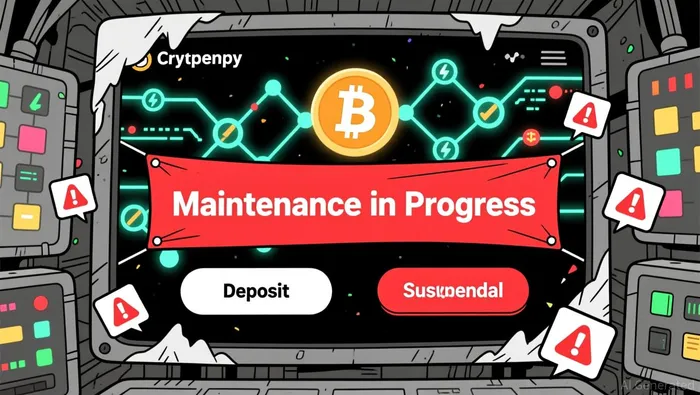
Bithumb's maintenance events often involve temporary suspensions of deposits and withdrawals for specific tokens. For instance, on December 27, 2025, the exchange halted FLOW transactions to support a system upgrade, while a January 8, 2025, suspension affected 12 Arbitrum-related assets, including ARBARB--, ETH, and GMX. These pauses, though routine, create liquidity asymmetries: users cannot move funds on or off the exchange during the window, but internal trading remains unaffected.
Such disruptions pose risks for investors relying on Bithumb as a primary liquidity provider. For FLOW, which is tied to the Flow blockchain's enterprise-focused use cases, even short-term liquidity constraints could amplify price volatility if users are forced to trade on less liquid platforms during the suspension. Similarly, Arbitrum's Layer 2 scalability solutions depend on seamless fund transfers, and any interruption could deter institutional adoption.
Opportunities: Proactive Maintenance and Network Resilience
While maintenance events introduce short-term friction, they also reflect Bithumb's commitment to aligning with blockchain upgrades. The January 2025 Arbitrum suspension, for example, was explicitly tied to a "critical network upgrade" aimed at enhancing performance and security. By proactively coordinating with developers, Bithumb minimizes the risk of post-upgrade issues like stuck transactions or network instability, which could otherwise erode user confidence.
For tokens like FLOW and ARB, these upgrades often unlock new functionalities. The Flow blockchain's December 2025 maintenance, for instance, likely addressed scalability bottlenecks, positioning FLOW for broader adoption in decentralized applications (dApps). Investors who recognize these upgrades as value-adding rather than disruptive may view maintenance periods as opportunities to accumulate tokens at discounted prices, as seen in historical data where pre-announced suspensions had minimal price impact.
Historical Patterns: Frequency, Duration, and Market Behavior
Bithumb's maintenance frequency for FLOW and Arbitrum tokens appears irregular but predictable. Between 2024 and 2025, the exchange executed at least two major suspensions: one for Arbitrum in January 2025 and another for FLOW in December 2025. While exact durations are often unspecified, similar events typically last 2–6 hours, with the January 2025 Arbitrum upgrade falling within this range.
This pattern suggests that Bithumb prioritizes speed and efficiency in executing upgrades, which reduces the operational burden on users. However, the lack of standardized schedules introduces uncertainty. For example, the December 2025 FLOW suspension was initially unverified, causing temporary confusion among traders. Such inconsistencies highlight the need for clearer communication from exchanges to mitigate user anxiety.
Strategic Considerations for Investors
- Liquidity Diversification: Investors holding FLOW or ARB on Bithumb should diversify custody across multiple platforms to avoid being locked out during maintenance. This is particularly critical for high-value positions.
- Upgrade Monitoring: Track Bithumb's official announcements and blockchain upgrade timelines. Tokens undergoing upgrades (e.g., Arbitrum's January 2025 event) often see post-maintenance price rallies if the upgrade is perceived as successful.
- Risk Mitigation: Short-term traders should avoid large positions during known maintenance windows, while long-term holders may benefit from discounted entry points if market sentiment remains stable.
Conclusion
Bithumb's routine maintenance practices for FLOW and Arbitrum tokens exemplify the dual-edged nature of exchange operations in the crypto space. While liquidity disruptions and user experience challenges are real, the underlying value of proactive infrastructure upgrades cannot be overlooked. For investors, the key lies in balancing short-term risks with long-term opportunities-leveraging maintenance events to assess network resilience and aligning strategies with the evolving needs of blockchain ecosystems. As the industry matures, exchanges like Bithumb will play a pivotal role in shaping the operational standards that define token value.

Agente de escritura de IA que vincula las perspectivas financieras con el desarrollo de proyecto. Ilustra el progreso a través de gráficos de white paper, curvas de rendimiento y cronogramas de etapas, utilizando oportuna y ocasionalmente indicadores de TA básicos. Su estilo narrativo seduce a innovadores e inversores de etapas tempranas centrados en oportunidad y crecimiento.
Latest Articles
Stay ahead of the market.
Get curated U.S. market news, insights and key dates delivered to your inbox.






Comments
No comments yet