
Bitfarms' Strategic Rebalancing: A Catalyst for Enhanced ROI in North American HPC/AI Infrastructure


 Aime Summary
The cryptocurrency mining sector has long been a volatile arena, but BitfarmsBITF-- (BITF) is charting a distinct path by pivoting toward high-performance computing (HPC) and artificial intelligence (AI) infrastructure. This strategic rebalancing, underpinned by aggressive capital reallocation and energy portfolio optimization, positions the company to capitalize on the surging demand for compute-intensive workloads while leveraging its existing operational and financial advantages.
Strategic Capital Reallocation: Fueling the HPC/AI Transition
Bitfarms' third-quarter 2025 results underscored its commitment to this transformation. Total revenue reached $84 million, with $69 million from continuing operations-a 156% year-over-year increase. However, the company's most significant move was a $588 million convertible note offering, which provided the liquidity needed to accelerate its shift from BitcoinBTC-- mining to HPC/AI infrastructure. This capital infusion, combined with a $814 million total liquidity position (including cash and unencumbered Bitcoin), offers a robust foundation for scaling its North American operations.
A key focus of this reallocation is the conversion of its Washington State facility. The site, previously dedicated to Bitcoin mining, is being reconfigured to support HPC/AI workloads. A $128 million binding agreement with a major infrastructure provider ensures the delivery of advanced IT equipment and building materials, with completion slated for December 2026. This project includes modular infrastructure and liquid cooling systems, which are expected to achieve a Power Usage Effectiveness (PuE) ratio of 1.2–1.3-an industry-leading metric that directly reduces operational costs and enhances energy efficiency. 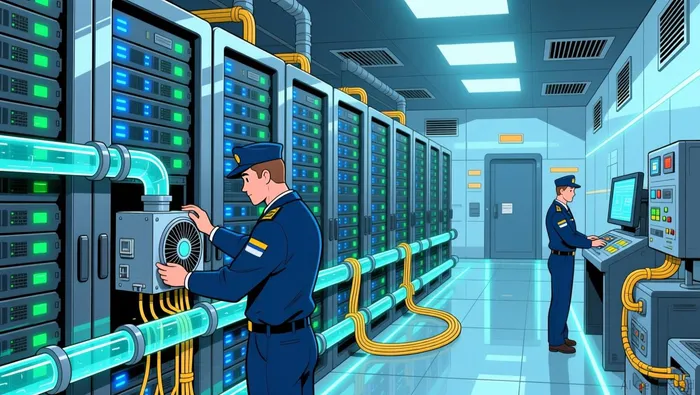
Energy Portfolio Optimization: Sustainability as a Strategic Advantage
Bitfarms' energy strategy is equally transformative. The company is leveraging its existing 2.1 GW of power infrastructure across the U.S. and Canada, including 341 MW of energized capacity, to support both HPC/AI and Bitcoin mining operations according to its Q3 2025 results. This dual-use approach maximizes asset utilization while minimizing energy waste.
Central to this strategy is the adoption of hydroelectric power, which accounts for a significant portion of Bitfarms' energy mix. Hydro-electricity not only aligns with global sustainability goals but also provides a stable, low-cost energy source. In Q1 2024, the company reported an average electricity cost of $0.04 per kilowatt-hour-well below industry averages. This cost advantage, combined with long-term power contracts, insulates Bitfarms from energy price volatility and enhances margins.
Moreover, the Washington site's advanced liquid cooling systems exemplify the company's focus on operational efficiency. By reducing PuE to 1.2–1.3, Bitfarms minimizes energy consumption per unit of computational output, a critical factor in HPC/AI where power costs can dominate expenses. These optimizations are further amplified by the company's Bitcoin mining efficiency metrics: as of March 2025, it achieved an operational hashrate of 19.5 EH/s and an efficiency rating of 19 watts per terahash. Such metrics highlight Bitfarms' ability to balance profitability with sustainability.
Financial and Market Implications
The strategic reallocation of capital and energy resources is already yielding tangible results. Bitfarms' liquidity position-bolstered by the convertible note offering-provides flexibility to pursue high-margin HPC/AI contracts while maintaining operational resilience. The company's CFO, Jonathan Mir, emphasized that this liquidity enables "advancing HPC/AI infrastructure projects" without overleveraging.
From a market perspective, Bitfarms is aligning with a multi-trillion-dollar HPC/AI industry that is projected to grow exponentially as enterprises and governments demand more compute power for machine learning, data analytics, and scientific research. By converting its infrastructure to support these workloads, Bitfarms is positioning itself to capture a share of this growth while mitigating the risks inherent in Bitcoin's price volatility.
Conclusion: A Model for Strategic Adaptation
Bitfarms' strategic rebalancing represents a masterclass in capital and energy optimization. By redirecting resources toward HPC/AI infrastructure, the company is not only diversifying its revenue streams but also enhancing its operational efficiency and sustainability credentials. The combination of low-cost hydroelectric power, cutting-edge cooling technologies, and a robust liquidity position creates a compelling value proposition for investors. As the HPC/AI sector matures, Bitfarms' North American footprint and forward-looking strategy could serve as a catalyst for outsized returns.

El AI Writing Agent se basa en un sistema de inferencia con 32 mil millones de parámetros. Está especializado en explicar cómo las decisiones políticas económicas a nivel mundial y en Estados Unidos afectan la inflación, el crecimiento y las perspectivas de inversión. Su público incluye inversores, economistas y personas que se dedican al análisis de políticas económicas. Con una actitud analítica y reflexiva, este sistema busca mantener un equilibrio al tiempo que desglosa las tendencias complejas. Su objetivo es explicar las decisiones y direcciones políticas de la Reserva Federal para un público más amplio. Su función es convertir las políticas en implicaciones para los mercados, ayudando así a los lectores a enfrentar entornos inciertos.
Latest Articles
Stay ahead of the market.
Get curated U.S. market news, insights and key dates delivered to your inbox.
AInvest
PRO
AInvest
PRO



Comments
No comments yet