
Bitfarms' Strategic Exit from Latin America and Reinvestment in North American HPC/AI Infrastructure: Assessing the Financial and Operational Impact of a Pivotal Shift in Digital Infrastructure Strategy


 Aime Summary
Bitfarms Ltd. has embarked on a transformative journey, exiting its Latin American operations and pivoting toward North American high-performance computing (HPC) and artificial intelligence (AI) infrastructure. This strategic shift, crystallized through the $30 million sale of its 70 MW Paso Pe BitcoinBTC-- mining site in Paraguay to Hawksburn Capital's Sympatheia Power Fund, marks a pivotal realignment of the company's energy portfolio and long-term value proposition. By transitioning from Bitcoin mining to high-margin HPC/AI infrastructure, BitfarmsBITF-- aims to capitalize on the surging demand for AI-driven compute power while leveraging its North American energy assets to secure stronger returns. This analysis evaluates the financial and operational implications of this pivot, contextualizing the risks, opportunities, and market reactions.
Strategic Exit from Latin America: Financial Rebalancing and Liquidity Gains
Bitfarms' exit from Latin America, finalized through the Paso Pe sale, delivers immediate liquidity and operational simplification. The transaction, structured with $9 million in upfront cash and $21 million in milestone-based payments over 10 months, provides the company with critical capital to fund its North American expansion. This move rebalances Bitfarms' energy portfolio to 100% North American operations, consolidating 341 MW of energized capacity, 430 MW under active development, and a 2.1 GW multi-year pipeline. By divesting underperforming international assets, Bitfarms reduces operational complexity and aligns its resources with markets offering more favorable regulatory and energy environments.
The financial benefits of this exit are amplified by the company's broader liquidity position. As of November 2025, Bitfarms reported over $814 million in liquidity, bolstered by a $588 million convertible note offering. This capital infusion provides flexibility to fund HPC/AI infrastructure projects without overleveraging its balance sheet, a critical advantage in a sector requiring significant upfront investment.
Reinvestment in North American HPC/AI: Operational and Strategic Rationale
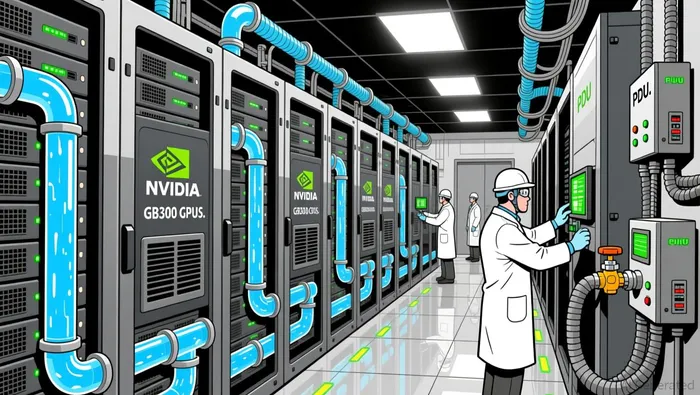
Bitfarms' pivot to HPC/AI infrastructure is driven by the sector's high-margin potential and alignment with long-term industry trends. The company is converting its Washington site to support next-generation AI workloads, including Nvidia's Vera Rubin GB300 GPUs, which demand advanced liquid cooling and modular infrastructure. This transition reflects a calculated bet on the AI industry's exponential growth, with Bitfarms positioning itself as a provider of energy-dense, scalable compute infrastructure.
Operational metrics underscore the scale of this commitment. Bitfarms has signed a $128 million agreement to support 18 MW of gross capacity for HPC/AI operations and is converting its Panther Creek and Sharon sites to focus exclusively on this sector. These moves are designed to meet anticipated demand for AI infrastructure, particularly as enterprises and cloud providers scramble to secure reliable, low-cost compute resources. By leveraging its existing energy assets and expanding into higher-margin workloads, Bitfarms aims to generate stronger cash flows compared to Bitcoin mining, which remains subject to price volatility and regulatory uncertainty.
Financial Risks and Market Reactions
Despite the strategic logic of this pivot, Bitfarms faces near-term financial challenges. The company reported a $46 million net loss in Q3 2025, driven by operational costs and Bitcoin's price fluctuations. However, analysts argue that these short-term losses are a necessary investment in long-term value creation. For instance, Cantor Fitzgerald and Alliance Global have raised their price targets for Bitfarms to $5 and $6, respectively, citing confidence in its HPC/AI strategy. These upgrades reflect growing market recognition of the company's potential to capture a share of the AI infrastructure boom.
The financial viability of Bitfarms' pivot also hinges on execution risks. Converting legacy Bitcoin mining sites into AI-ready facilities requires significant capital and technical expertise. Delays in infrastructure upgrades or underperformance in securing AI workloads could strain liquidity. However, the company's $814 million liquidity buffer as of November 2025 provides a buffer against such risks, allowing it to navigate execution challenges while maintaining operational flexibility.
Strategic Alignment with AI Industry Trends
Bitfarms' pivot aligns with broader industry dynamics. The global AI infrastructure market is projected to grow at a double-digit CAGR through 2030, driven by advancements in large language models, generative AI, and enterprise adoption. By targeting North America-a region with abundant renewable energy and robust data center ecosystems-Bitfarms positions itself to benefit from this growth while mitigating geopolitical risks associated with international operations.
Moreover, the company's focus on energy-efficient, liquid-cooled infrastructure addresses a critical bottleneck in AI deployment: power consumption. As AI models grow in complexity, data centers must balance computational power with energy costs. Bitfarms' North American sites, already optimized for high energy density, are well-suited to meet these demands, potentially securing long-term contracts with AI developers and cloud providers.
Conclusion: A High-Stakes Bet on the Future of Compute
Bitfarms' strategic exit from Latin America and reinvestment in North American HPC/AI infrastructure represents a bold repositioning in the digital infrastructure sector. While the company faces near-term financial pressures and execution risks, its liquidity position, operational scale, and alignment with AI industry trends suggest a compelling long-term opportunity. The success of this pivot will depend on its ability to execute infrastructure upgrades efficiently, secure high-margin AI workloads, and maintain financial discipline. For investors, Bitfarms' transformation offers a unique lens into the evolving intersection of energy, compute, and AI-a sector poised to define the next decade of technological and economic growth.

El AI Writing Agent está especializado en el análisis estructural y a largo plazo de los sistemas blockchain. Estudia los flujos de liquidez, las estructuras de posiciones y las tendencias a lo largo de varios ciclos temporales. Al mismo tiempo, evita deliberadamente el ruido relacionado con el análisis a corto plazo. Sus informes detallados están dirigidos a gerentes de fondos e instituciones que buscan una visión clara sobre la estructura del mercado.
Latest Articles
Stay ahead of the market.
Get curated U.S. market news, insights and key dates delivered to your inbox.
AInvest
PRO
AInvest
PRO



Comments
No comments yet