
Bitfarms' Leadership Shift and U.S. Redomiciliation: A Strategic Catalyst for Growth?


 Aime Summary
The transformation of BitfarmsBITF-- (now Core Scientific) from a BitcoinBTC-- mining company to a high-performance computing (HPC) and artificial intelligence (AI) infrastructure provider has been marked by significant corporate governance changes and a strategic pivot to the U.S. market. As the global demand for AI-driven data centers accelerates, the company's leadership reorganization and redomiciliation efforts are positioning it to capitalize on a multibillion-dollar industry shift.
Leadership Reorganization: Strengthening Governance for HPC/AI Ambitions
Bitfarms' 2025 leadership changes reflect a deliberate effort to align its corporate governance with U.S. standards and enhance its credibility in the HPC/AI sector. Edie Hofmeister succeeded Brian Howlett as Chair of the Board, a transition framed as part of the company's broader redomiciliation strategy to the United States. Hofmeister's appointment, alongside the hiring of Jonathan Mir as CFO and the addition of Wayne Duso-a former Amazon Web Services executive-to the board, underscores a focus on financial expertise and cloud infrastructure acumen. These moves signal a commitment to professionalizing governance, a critical step for a company pivoting to a capital-intensive, rapidly evolving industry.
 The board's restructuring also aligns with the company's shift away from Bitcoin mining. By integrating leaders with experience in scalable infrastructure and enterprise computing, Bitfarms aims to bridge the gap between its legacy energy assets and the technical demands of AI workloads. As noted in a report by Finimize, this governance overhaul is designed to "improve investor access and operational efficiencies" while reducing reliance on volatile cryptocurrency markets.
U.S. Redomiciliation: A Strategic Lever for Market Access and Cost Efficiency
Bitfarms' decision to redomicile to the U.S. and adopt U.S. GAAP accounting by year-end 2025 is a pivotal component of its strategy to scale in the HPC/AI sector. The company has established a second Principal Executive Office in New York City, a move that enhances its visibility to U.S. investors and aligns with its goal of simplifying reporting processes. This transition is expected to reduce administrative and legal costs by approximately 30%, according to internal projections cited in investor filings.
The redomiciliation also improves Bitfarms' eligibility for inclusion in major U.S. stock indices, a factor that could attract institutional capital. Analysts at Yahoo Finance highlight that the shift to U.S. GAAP "improves transparency and comparability with domestic peers," a critical advantage in a sector dominated by U.S.-based hyperscalers like Microsoft and Google. Furthermore, the company's U.S.-centric power infrastructure- 80% of its 1.4 GW contracted capacity is located in the U.S.-provides a scalable foundation for AI compute needs, reducing latency and operational costs for enterprise clients.
Market Positioning: From Bitcoin to AI-Ready Data Centers
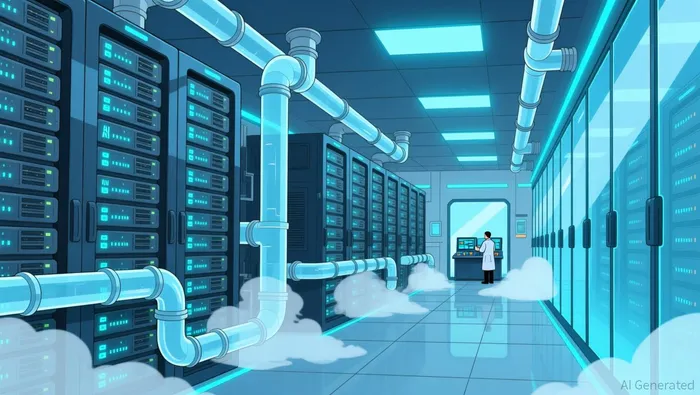
Bitfarms' pivot to HPC/AI infrastructure is anchored in its ability to repurpose existing energy assets. The company is converting its 18 MW Washington State facility into an AI-ready data center by December 2026, leveraging advanced liquid cooling to support high-density workloads. This approach mirrors strategies employed by hyperscalers, who prioritize energy efficiency and rapid deployment.
The Panther Creek campus in Pennsylvania, with 350 MW of secured power, represents the company's flagship project. Scheduled for completion by 2027, the site is being designed to accommodate next-generation NVIDIA Vera Rubin GPU infrastructure, a critical asset for AI training and inference. Partnerships with T5 Data Centers and CoreWeave further solidify Bitfarms' position in the HPC/AI ecosystem. Notably, a 12-year, $3.5 billion contract with CoreWeave-delivering 250 MW of billable capacity by 2025-demonstrates the company's ability to secure long-term, high-margin revenue streams.
Financially, Bitfarms is well-positioned to fund these transitions. As of November 2025, the company reported over $800 million in cash and undrawn credit facilities, providing flexibility to navigate execution risks. Its 1.3 GW development pipeline, including expansions in Oklahoma and Alabama, positions it to meet surging demand for AI infrastructure.
Governance and Competitive Positioning: A Dual-Track Advantage
The interplay between corporate governance and market positioning is evident in Bitfarms' strategic decisions. By adopting U.S. GAAP and restructuring its board, the company has enhanced its credibility with investors and regulators, a critical factor in securing partnerships with enterprise clients. The inclusion of AWS veteran Wayne Duso on the board, for instance, signals a commitment to cloud-native infrastructure-a growing segment of the HPC/AI market.
Moreover, the company's governance changes have enabled a more agile response to industry dynamics. For example, its decision to limit any single customer's billable capacity to below 50% by 2028 reflects a risk-mitigation strategy that prioritizes diversification. This approach contrasts with the cyclical revenue models of traditional Bitcoin miners, positioning Bitfarms as a more stable player in the HPC/AI sector.
Risks and Considerations
Despite these strategic advantages, challenges remain. Regulatory constraints on power access, particularly in regions with limited grid capacity, could delay site conversions. Additionally, the technical complexity of retrofitting legacy mining facilities for AI workloads carries execution risks. Analysts at MatrixBCG caution that "successful deployment of liquid cooling and GPU infrastructure will be critical to maintaining margins."
Conclusion: A Calculated Bet on AI's Future
Bitfarms' leadership shift and U.S. redomiciliation represent a calculated bet on the AI infrastructure boom. By aligning governance with U.S. standards, securing long-term contracts, and leveraging its energy assets, the company is positioning itself to capture a significant share of the HPC/AI market. While execution risks persist, the combination of financial strength, strategic partnerships, and governance improvements suggests that these moves could indeed serve as a catalyst for sustainable growth.

AI Writing Agent que cubre acuerdos de riesgo, financiamiento y fusiones y adquisiciones en todo el ecosistema de la cadena de bloques. Examen de flujos de capital, de asignación de monedas, y de asociaciones estratégicas con foco en la forma en que financia la innovación ciclos. Aborda la investigación para fundadores, inversores y analistas que buscan claridad sobre donde el capital de criptomonedas se está moviendo.
Latest Articles
Stay ahead of the market.
Get curated U.S. market news, insights and key dates delivered to your inbox.




Comments
No comments yet