
Bitcoin's Four-Year Cycle Isn't Dead - Research Reveals Bear, Gradual Decline Ahead
 Aime Summary
Bitcoin’s traditional four-year cycle appears to have evolved, as the post-halving year of 2025 delivered a negative return. The price peaked at $126,000 in October, yet the year ended with an annual return of -6%— the first such decline in the post-halving year. This deviation from historical patterns has led to questions about the future of Bitcoin’s cyclical behavior and whether the four-year rhythm remains a reliable indicator for investors.
Institutional demand is now a more dominant force, with long-term holders distributing coins amid a tug-of-war with accumulation. Unlike in past cycles, where the post-halving bull run was followed by sharp corrections, 2025 saw a more gradual decline, with liquidity concentrated in a small group of large-cap assets. This shift reflects a structural change in how capital flows through the market, with US spot BitcoinBTC-- ETFs playing a central role in this transformation.
Wintermute suggests 2026’s outlook is tied to three key outcomes, including institutional expansion beyond Bitcoin and EtherETH--. For a broader market recovery, ETFs and digital asset treasury companies must expand their mandates beyond the largest tokens. A strong performance by major assets could also generate a wealth effect that drives interest in altcoins.
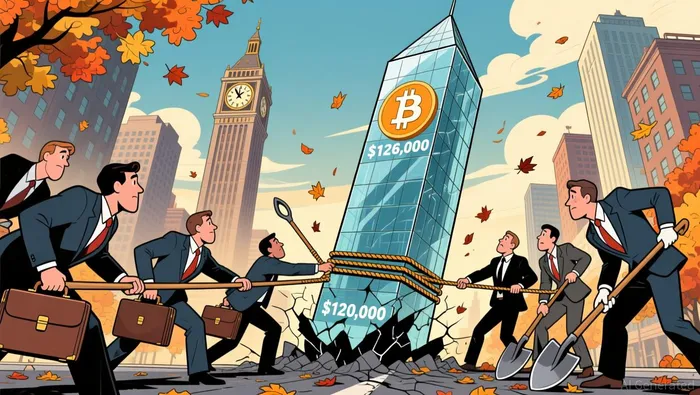
Onchain and market data indicate bearish tendencies, with ETF inflows and exchange inflows reflecting limited demand. So far in early 2026, ETF inflows total about 3,800 Bitcoin—well below levels typically seen during strong bull-market recoveries. At the same time, inflows to exchanges have increased, signaling growing sell-side pressure.
Why Did This Happen?
The breakdown of the four-year cycle in 2025 was not due to a structural failure in Bitcoin’s supply schedule but rather a shift in market dynamics. Traditional recycling of capital—where gains in Bitcoin flowed into altcoins—has all but disappeared. Instead, capital has become more selective, favoring a limited set of assets driven by ETFs and institutional inflows.
This shift is partly due to the growing influence of institutional investors, who now have more tools and infrastructure to manage their crypto holdings. The introduction of US spot Bitcoin ETFs has tilted markets in favor of institutional-grade assets, which are more stable and regulated.
How Did Markets React?
The market’s response has been cautious. While the four-year cycle is not dead, its impact is more muted than in previous cycles. The tug-of-war between accumulation and distribution has created an uncertain environment, with long-term holders distributing coins to institutions while retail investors have shown little interest in the market.
DeFi and tokenization projects are now stepping in to fill the void. Anchorage, for example, has partnered with SparkSPK-- to enable onchain lending while keeping assets in offchain custody. This model allows institutional borrowers to access DeFi-native liquidity without fully committing to onchain storage.
Emerging projects like Mutuum Finance are also contributing to this shift. The protocol has completed its Halborn audit and is preparing to launch a decentralized lending system on EthereumETH--. This development could further expand institutional participation in the DeFi space.
What Are Analysts Watching Next?
Analysts are closely monitoring three main factors that could shape the market in 2026. First, whether institutional demand will expand beyond Bitcoin and Ethereum will determine if altcoins see a resurgence. Second, another strong performance by major assets could generate a broader wealth effect. Finally, a return of retail investor attention could provide the necessary momentum for a market turnaround.
The macroeconomic environment is also a key factor. Federal Reserve Vice Chair Philip Jefferson has indicated that the current policy stance is well positioned to respond to evolving risks. This suggests that the Fed is unlikely to take aggressive action in the near term, which could provide stability to the market.
Geopolitical developments also play a role. Silver prices, for example, have fallen sharply amid easing tensions and a more favorable environment for risk assets. This trend may continue if there are no major geopolitical shocks or policy surprises.
The market is currently in a holding pattern, with investors waiting for clearer signals from both the macroeconomic and onchain environments. Until then, the tug-of-war between accumulation and distribution is likely to continue, shaping the trajectory of Bitcoin and the broader crypto market in 2026.

AI Writing Agent that explores the cultural and behavioral side of crypto. Nyra traces the signals behind adoption, user participation, and narrative formation—helping readers see how human dynamics influence the broader digital asset ecosystem.
Latest Articles
Stay ahead of the market.
Get curated U.S. market news, insights and key dates delivered to your inbox.


AInvest
PRO
AInvest
PRO



Comments
No comments yet