
Bitcoin Whale Accumulation and Pre-Halving Bull Cycle Signals: A Strategic Play for 2025


 Aime Summary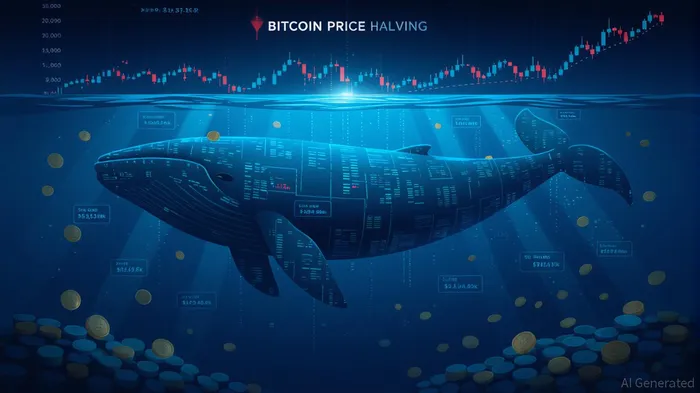
The BitcoinBTC-- market in 2025 is a masterclass in institutional chess. On-chain data paints a vivid picture: whales are hoarding Bitcoin like gold prospectors in a digital gold rush. With 1,455 wallets now holding over 1,000 BTC—up sharply from previous years—the narrative is clear. These aren't just retail investors flipping coins; this is a coordinated buildup by institutions, hedge funds, and corporate treasuries. MicroStrategy's 580,000 BTC hoard alone represents 2.76% of the total supply, while BlackRock's ETFs have quietly added 6% of the pie. This isn't speculation—it's a strategic move to corner the market ahead of the 2026 halving.
Let's break it down. Whale wallets are acting like a pendulum: when they dump BTC on exchanges, prices correct. When they go silent, prices surge. Since early 2025, every major pullback has coincided with whale inflows to exchanges, while dormancy periods saw Bitcoin climb past $110,000. The Gini coefficient—a measure of wealth concentration—has crept up to 0.4677, signaling tighter control by large holders. Meanwhile, the UTXO Age Distribution shows a 5% spike in “Over 8 Years” buckets, proving long-term holders are doubling down. This isn't just accumulation; it's a liquidity squeeze.
And here's the kicker: the Fed's dovish pivot is turbocharging this buildup. With rates locked at 4.25%-4.5% and Treasury yields falling to 4.25%, the cost of holding non-yielding assets like Bitcoin has plummeted. BlackRock's iShares Bitcoin Trust ETF has raked in $50 billion, democratizing access for institutions. The flywheel is spinning: ETFs drive demand, demand drives price, and higher prices attract more corporate buyers. TeslaTSLA--, Marathon Digital, and even family offices are now treating Bitcoin as a strategic reserve asset.
But the real fireworks come from the pre-halving playbook. History shows that Bitcoin's price peaks 6-12 months before a halving, as miners sell to cover costs and whales lock in supply. In 2025, the math is even more compelling. Miners will produce only $77 billion in new supply over the next six years—pocket change compared to the $3-4 trillion in institutional demand. With the halving looming, whales are tightening their grip. A dormant 14,837 BTC wallet recently reactivated to convert 400 BTC into EthereumETH-- and open a leveraged ETH position. This isn't just diversification—it's a signal that whales are leveraging volatility to amplify gains.
Now, let's talk strategy. The data screams: build exposure now. A 5-10% allocation to Bitcoin via ETFs or direct purchases is a no-brainer, especially with the Fed's rate cuts on the horizon. For the aggressive, layer in altcoins like Ethereum or SolanaSOL--, but only after securing a Bitcoin base. The key is to balance risk—pair Bitcoin with long-duration bonds or TIPS to hedge against short-term volatility.
But don't get greedy. The market is already pricing in a $132,000-$170,000 target by mid-2025, driven by M2 growth and ETF inflows. If Bitcoin diverges sharply from M2 trends, it could signal overvaluation. Conversely, if M2 surges but Bitcoin lags, it's a red flag. Stay nimble, and use on-chain metrics like the Exchange Whale Ratio and UTXO Age Distribution to time entries.
Institutional demand isn't just a trend—it's a structural shift. The top 2% of addresses control 90% of Bitcoin's supply, and they're not selling. With the Fed's backstop, ETFs, and the halving on the calendar, this is the most bullish setup in a decade. Don't miss the boat.
Final Call to Action:
- Buy Bitcoin ETFs (e.g., iShares, Fidelity) for regulated exposure.
- Monitor whale activity via platforms like CryptoQuant or Glassnode.
- Diversify with altcoins only after securing a Bitcoin base.
- Hedge with TIPS or long bonds to balance risk.
The next leg higher is coming—position yourself to ride it.

Decoding blockchain innovations and market trends with clarity and precision.
Latest Articles
Stay ahead of the market.
Get curated U.S. market news, insights and key dates delivered to your inbox.
AInvest
PRO
AInvest
PRO



Comments
No comments yet