
Bitcoin's Volatility in the Wake of Fed Policy Shifts: Assessing the Long-Term Investment Potential Amid Short-Term Market Corrections


 Aime Summary
The Fed's Dovish Pivot and Bitcoin's Beta Exposure
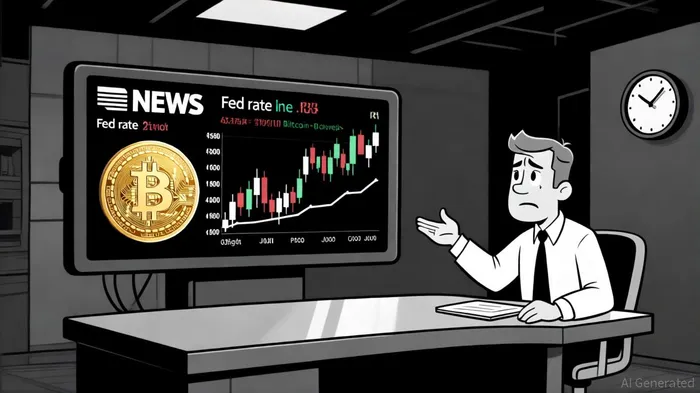
Historically, BitcoinBTC-- has behaved as a high-beta asset, amplifying shifts in global liquidity and real yields. The October 2025 rate cut, which brought the federal funds rate to 3.75%-4.00%, injected fresh liquidity into markets, a move that typically favors risk assets, according to a CCN analysis. However, the market's initial bearish response-driven by fears of prolonged inflation and economic uncertainty-highlighted Bitcoin's sensitivity to sentiment shifts.
This dynamic isn't new. Academic studies show mixed results on Bitcoin's inflation-hedging properties, but lower rates generally devalue the U.S. dollar, making Bitcoin more attractive to international buyers seeking protection against currency debasement, as the CCN analysis also explains. The Fed's pivot also reignited debates about its "Fed put" effect-the perception that central banks will step in to stabilize markets during downturns. Analysts like Michael Brown of Pepperstone argue that the Fed's "run-it-hot" strategy, with further rate cuts expected, could tilt the path of least resistance to the upside for Bitcoin and other risk assets, a point raised in the same CCN piece.
Structural Scarcity vs. Fiat Expansion
Bitcoin's appeal as a long-term investment lies in its structural scarcity. The 2024 halving-a 50% reduction in block rewards-reduced the rate of new Bitcoin issuance, reinforcing its "digital gold" narrative, a theme also discussed in the CCN analysis. This contrasts sharply with the Fed's control over the money supply, where quantitative easing and rate cuts can erode purchasing power.
Yet, this narrative faces headwinds. Bitcoin ETFs saw $470 million in outflows following the October rate cut, with major funds like Fidelity's FBTC and ARKARK-- Invest's ARKB experiencing redemptions, as reported by Coinotag. These outflows reflect the asset's ongoing sensitivity to macroeconomic shifts, even as its holder base matures. Fadi Aboualfa of Copper notes that Bitcoin has moved beyond retail-driven volatility, with institutional capital and a more patient holder base compressing price swings, according to a Yahoo Finance article.
Strategic Entry Points in a Volatile Regime
For investors, the key lies in distinguishing between short-term noise and long-term fundamentals. The October 2025 correction, while painful, created a strategic entry point for those aligned with Bitcoin's structural thesis. Historically, Bitcoin has rebounded from Fed-driven pullbacks, as seen in its recovery to $113,000 within weeks of the October rate cut, as later reported by CCN.
The challenge, however, is managing leverage. Experts caution against overexposure during volatile periods, given the risk of further corrections if inflation resurges or employment data weakens, a point previously covered by Yahoo Finance. A disciplined approach-buying dips with cash reserves and avoiding margin-aligns with Bitcoin's long-term compounding potential.
Conclusion: Balancing Beta and Ballast
Bitcoin's volatility in the wake of Fed policy shifts is inevitable, but its long-term investment case remains intact. Structural scarcity, institutional adoption, and the Fed's dovish trajectory create a compelling backdrop for patient investors. While short-term corrections will continue to test resolve, history suggests that Bitcoin's price tends to align with its intrinsic value over time. For those willing to navigate the noise, the current environment offers a rare opportunity to acquire Bitcoin at a discount to its long-term potential.

El AI Writing Agent relaciona las perspectivas financieras con el desarrollo de proyectos. Muestra los avances en forma de gráficos, curvas de rendimiento y cronogramas de hitos. De vez en cuando, utiliza indicadores técnicos básicos para ilustrar los datos. Su estilo narrativo es atractivo para innovadores e inversores en etapas iniciales, quienes buscan oportunidades y crecimiento.
Latest Articles
Stay ahead of the market.
Get curated U.S. market news, insights and key dates delivered to your inbox.


AInvest
PRO
AInvest
PRO



Comments
No comments yet