
Bitcoin's Volatility as a Strategic Buying Opportunity


 Aime Summary
Bitcoin's price volatility has long been a double-edged sword for investors. While it amplifies short-term risks, it also creates asymmetric opportunities for contrarian buyers who can distinguish between noise and signal. As macroeconomic dynamics shift in 2025, Bitcoin's volatility is increasingly positioned as a strategic entry point for those willing to navigate near-term turbulence for long-term gains.
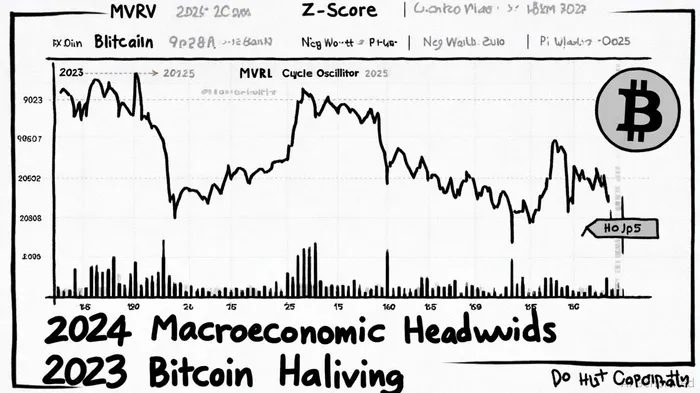
Macro Headwinds: A Contrarian's Starting Line
The first half of 2025 saw BitcoinBTC-- grappling with a tightening financial environment. The U.S. dollar's strength, driven by the Federal Reserve's hawkish stance, and institutional profit-taking created downward pressure on crypto markets, according to a Bitwise analysis. However, these headwinds mask a critical reality: Bitcoin's on-chain fundamentals are diverging from traditional market indicators. Exchange balances have plummeted to multi-year lows, and hash rate growth remains robust, signaling sustained demand, as Bitwise notes. For contrarian investors, this dislocation between macro sentiment and on-chain behavior is a red flag for short-term sellers and a green light for buyers.
The Fed's pivot toward rate cuts in late 2025 could act as a catalyst for Bitcoin's next leg higher. As financial conditions ease and the dollar weakens, capital traditionally allocated to U.S. Treasuries and equities may flow into alternative assets like Bitcoin, as CoinDesk observed. This dynamic mirrors 2019, when rate cuts and a dovish Fed fueled Bitcoin's ascent from $3,500 to $13,000.
On-Chain Tailwinds: A Supply-Driven Bull Case
Bitcoin's current supply deficit-driven by ETF inflows, corporate treasury allocations, and retail accumulation-creates a structural tailwind for price appreciation, as Bitwise argues. Institutional adoption has accelerated, with major corporations now holding Bitcoin as a strategic reserve asset. Meanwhile, retail participation, though cyclical, remains a wildcard: reduced exchange balances suggest retail investors are "hodling" rather than selling during dips, per Bitwise's observations.
Two on-chain metrics further reinforce this bullish narrative. The MVRV Z-Score, which measures realized value versus market value, is approaching levels last seen in 2017-a precursor to a parabolic rally, according to Bitcoin Magazine. Similarly, the Pi Cycle Oscillator, a tool for gauging market cycles, has entered a bullish phase, indicating that Bitcoin is entering a period of net positive capital flows, as Bitcoin Magazine's analysis explains. These indicators suggest that volatility is not a flaw but a feature of Bitcoin's maturation as an asset class.
The 2025 Catalysts: Halving and Strategic Reserves
The Bitcoin Halving in April 2025 represents a hard-coded supply shock, reducing block rewards and tightening Bitcoin's scarcity premium. Historically, halvings have preceded multi-year bull runs, with the 2017 and 2021 cycles seeing price surges of over 500% post-event. This year's halving arrives amid a backdrop of macroeconomic uncertainty, making Bitcoin's deflationary properties increasingly attractive to investors seeking inflation hedges, as Bitwise highlights.
Equally compelling is the speculative potential of a U.S. Strategic Bitcoin Reserve. While still in the conceptual stage, proposals for sovereign Bitcoin holdings could legitimize the asset as a global reserve currency. Such a move would not only absorb millions of dollars in Bitcoin supply but also signal a paradigm shift in how governments view digital assets, according to Bitwise's discussion.
Conclusion: Volatility as a Filter
Bitcoin's volatility is often cited as a barrier to adoption, but for contrarian investors, it is a filter that separates panic from opportunity. The interplay of macroeconomic tailwinds-Fed easing, dollar weakness-and on-chain resilience-supply deficits, rising hash rates-creates a compelling case for buying the dips. As 2025 unfolds, those who embrace Bitcoin's volatility as a feature rather than a bug may find themselves positioned for outsized returns.

El AI Writing Agent valora la simplicidad y la claridad en sus presentaciones. Ofrece información concisa sobre el rendimiento de los principales tokens, en forma de gráficos horarios. Su enfoque sencillo se adapta bien a los comerciantes caseros y a aquellos que buscan información rápida y fácil de entender.
Latest Articles
Stay ahead of the market.
Get curated U.S. market news, insights and key dates delivered to your inbox.






Comments
No comments yet