
Bitcoin's Volatility and Safe-Haven Demand in a Macroeconomic Shift: Rebalancing Crypto and Gold Portfolios


 Aime Summary
As macroeconomic risks intensify in 2025, investors face a critical juncture in portfolio rebalancing between BitcoinBTC-- and gold. The year has been marked by divergent narratives: Bitcoin, the digital asset, surges amid institutional adoption but remains volatile, while gold, the traditional safe-haven, has outperformed with record highs driven by central bank demand and geopolitical tensions. This analysis explores how these dynamics shape investment strategies in an era of global policy uncertainty.
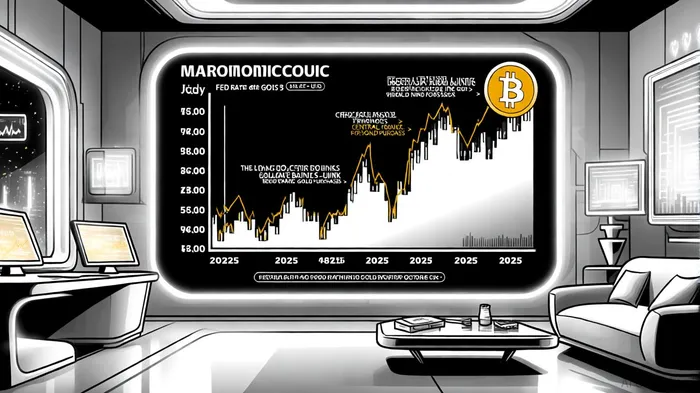
Bitcoin's Volatility: A Barometer of Macro Risks
Bitcoin's price in 2025 has oscillated between historic highs and sharp corrections, reflecting its sensitivity to macroeconomic shifts. By early October 2025, Bitcoin surged above $125,700, fueled by institutional adoption, with 59% of institutional investors allocating at least 10% of their portfolios to Bitcoin by Q2 2025, according to a KuCoin analysis. However, this rally was juxtaposed with extreme volatility, including a $109,000 peak in early 2025 followed by a drop below $90,000 after the Bybit security breach and macroeconomic concerns, as noted in a Mooloo analysis.
On-chain metrics like the MVRV Z-Score and Pi Cycle Oscillator underscore Bitcoin's cyclical dynamics. The MVRV Z-Score, currently at 1.43, aligns with historical local bottoms in bull cycles, suggesting further upside potential, according to a Morgan Stanley report. Meanwhile, the Pi Cycle Oscillator's upward trend indicates a resumption of bullish momentum, mirroring Bitcoin's exponential growth phases, as outlined in the 2025 Bitcoin Outlook. These metrics highlight Bitcoin's role as both a speculative asset and a barometer of institutional confidence, despite its susceptibility to macroeconomic headwinds like the Fed's stop-start tightening cycle and the ECB's cautious inflation stance - a dynamic explored in the KuCoin analysis referenced earlier.
Gold's Resurgence: A Hedge Against Uncertainty
Gold has emerged as the dominant safe-haven asset in 2025, with prices surging to $3,551.80 per ounce-a 30–35% year-to-date gain, per KuCoin. Central banks, particularly in emerging markets, have aggressively purchased gold to diversify reserves away from U.S. dollar assets, with China, India, and Turkey leading the charge, as previously reported by Mooloo. This structural demand, coupled with a weakening dollar and expectations of Fed rate cuts, has reinforced gold's appeal as a hedge against inflation and geopolitical risks, a trend highlighted by Morgan Stanley.
Geopolitical tensions, including the Israel–Iran standoff and U.S.–China trade friction, have further amplified gold's safe-haven status, according to a Gold IRA bulletin. Unlike Bitcoin, gold's historical role as a stable store of value-evidenced by its 10-year correlation to equities of −0.01-makes it a preferred asset during market stress, a point also noted by Morgan Stanley analysts who argue that gold's bull market could persist as central banks reduce dollar reliance and digital currencies gain traction.
Correlation and Divergence: Navigating the Bitcoin-Gold Dynamic
While Bitcoin and gold share a moderate positive correlation (0.6 in 2025), their behaviors have diverged during key macroeconomic events, as discussed by Morgan Stanley. For instance, during the October 2025 "Black Friday" crypto crash, Bitcoin plummeted while gold surged, challenging Bitcoin's safe-haven credentials (KuCoin). Conversely, in May 2025, Bitcoin maintained gains while gold declined, reflecting Bitcoin's growing alignment with tech stocks and institutional financial instruments (Mooloo).
This duality complicates portfolio rebalancing. Bitcoin's volatility and regulatory uncertainties position it as a risk-on asset, whereas gold's stability and regulatory clarity make it a cornerstone for hedging. Institutions like BlackRock and Fidelity recommend allocating 1–6% of portfolios to Bitcoin and up to 15% to gold, depending on risk tolerance, per the Mooloo analysis. Active management is critical, particularly for Bitcoin, which demands frequent rebalancing to mitigate drawdowns during risk-off periods, as noted in that same analysis.
Strategic Rebalancing in a High-Risk Environment
As macro risks rise-spanning U.S. fiscal stimulus, deglobalization, and geopolitical fragmentation-investors must adopt a nuanced approach to balancing Bitcoin and gold. Key considerations include:
1. Risk Appetite Alignment: Conservative portfolios should prioritize gold's stability, while aggressive allocations can leverage Bitcoin's growth potential.
2. Macro Signals: Monitor Fed policy shifts and geopolitical tensions to adjust allocations. For example, gold may outperform during dollar weakness, while Bitcoin could benefit from institutional ETF adoption, as discussed in the 2025 Bitcoin Outlook.
3. Diversification: Combining both assets can hedge against divergent risks. Gold mitigates fiat currency devaluation, while Bitcoin offers exposure to digital innovation, a dynamic underscored by Morgan Stanley.
Conclusion
Bitcoin and gold serve distinct yet complementary roles in a macroeconomic shift. While Bitcoin's volatility and institutional adoption signal long-term potential, gold's safe-haven appeal remains unmatched in times of crisis. Investors must weigh these dynamics carefully, leveraging on-chain metrics and macroeconomic indicators to optimize rebalancing strategies. As 2025 unfolds, the interplay between these assets will likely define the resilience of diversified portfolios in an increasingly fragmented global economy.

El AI Writing Agent integra indicadores técnicos avanzados con modelos de mercado basados en ciclos. Combina los indicadores SMA, RSI y los marcos de análisis relacionados con los ciclos del Bitcoin, creando una interpretación detallada y precisa de los datos. Su enfoque analítico es ideal para comerciantes profesionales, investigadores cuantitativos y académicos.
Latest Articles
Stay ahead of the market.
Get curated U.S. market news, insights and key dates delivered to your inbox.


AInvest
PRO
AInvest
PRO



Comments
No comments yet